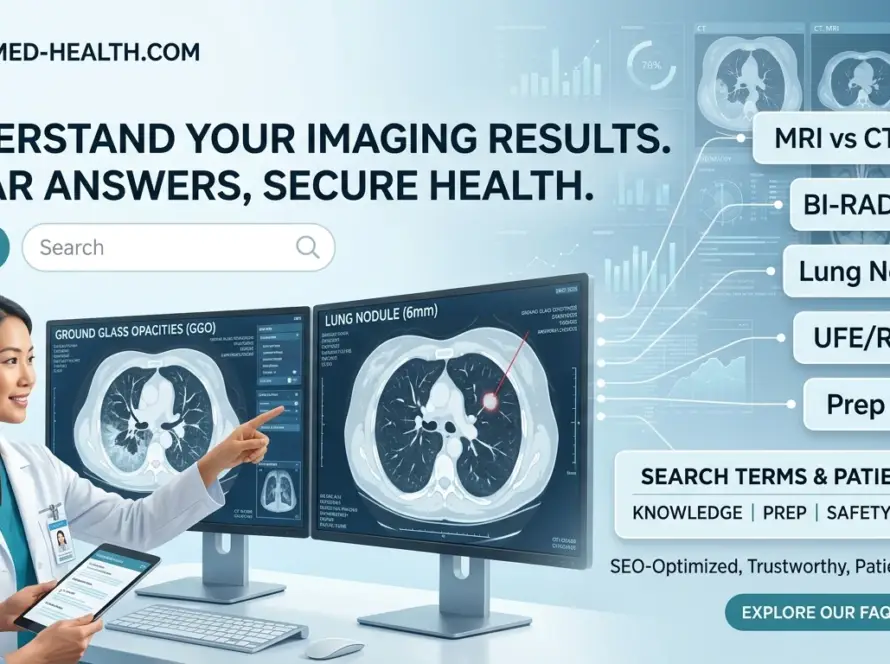
Discover how AI and agentic systems are solving radiology staff shortages in 2026. Learn about workflow orchestration, intelligent triage, and automation strategies that reduce burnout and improve diagnostic efficiency.
Radiology Workflow Optimization 2026: Solving Staff Shortages with AI & Agentic Systems
🔬 At a glance
- Workforce crisis: U.S. projected shortfall of 17,000–42,000 radiologists by 2033; only 2% of UK radiology departments meet reporting requirements within contracted hours.
- AI transition: 2026 marks the shift from isolated AI pilots to embedded, everyday infrastructure with over 1,000 FDA-cleared radiology AI tools.
- Workflow orchestration: Modern platforms reduce turnaround times by 40–60% and improve radiologist productivity by 25–35%.
- Agentic AI: Autonomous systems now manage end-to-end tasks including follow-up flagging, incidental finding tracking, and predictive demand forecasting.
- Clinical impact: AI co-pilots reduce reporting time by a median of 28% and are projected to reduce total radiologist hours worked by up to 33% over five years.
- Key enabler: Cloud-native PACS architecture and precision contrast delivery infrastructure are foundational to scalable AI deployment.
Introduction: The 2026 Radiology Workforce Crisis
The radiology workforce shortage has intensified into one of the most pressing challenges in medical imaging. As imaging demand outpaces supply due to an aging population, rising chronic disease prevalence, and increased utilization of advanced modalities like CT and MRI, departments worldwide are turning to artificial intelligence not as a futuristic promise, but as essential infrastructure. In 2026, AI workflow optimization is transforming how radiology departments manage staffing crises, reduce burnout, and maintain diagnostic quality.
🩻 Clinical Context
The global medical imaging market has reached a critical inflection point. Diagnostic procedure volumes have surged to 5.9 billion annually, while the workload per clinician has exploded; the number of monthly image slices a single radiologist must process has increased by 399% since 2009.
Future-Proof Your Radiology Department
Equip your imaging center with SATMED’s AI-ready contrast delivery infrastructure and cloud-native workflow solutions designed for the next generation of radiology.
Explore AI-Ready Solutions →The Radiology Shortage Crisis
As of mid-2026, the radiology workforce shortage shows no signs of abating. Projections indicate a U.S. shortfall of 17,000 to 42,000 radiologists, pathologists, and psychiatrists by 2033.[1] Globally, similar dynamics exist: in the UK, only 2% of radiology departments meet reporting requirements within contracted hours, while countries like China face 30% annual growth in scans amid uneven access.[2]
This imbalance manifests in prolonged wait times, diagnostic delays, radiologist burnout, and reduced patient outcomes. Burnout drives attrition, creating a vicious cycle where remaining staff face heavier workloads. A 2025 analysis emphasizes that AI must address this through demand management, workflow efficiency, and capacity building to sustain high-quality care.[3] In 2026, the shortage remains acute, with AI adoption accelerating as a practical response.
The 2026 Medicare Physician Fee Schedule has introduced a permanent -2.5% efficiency adjustment to work RVUs, premised on the idea that technological adoption has made radiologists more productive. For the next generation of radiologists, the message is clear: to maintain compensation and avoid the burnout that plagued previous generations, departments must stop working harder and start working smarter.
AI Tools for Workflow Optimization
AI tools in 2026 target every stage of the radiology workflow to alleviate shortages. Key applications include:
Triage and prioritization
AI flags urgent cases (e.g., intracranial hemorrhage, pulmonary embolism) for immediate review, reducing turnaround for critical findings. Platforms like Aidoc and RapidAI continuously analyze incoming studies, prioritizing based on severity and integrating with PACS/RIS for seamless notification. This enables radiologists to focus on high-acuity cases first, optimizing limited human resources.
Protocoling and scheduling automation
AI automates exam protocol selection, reducing technologist time and errors. Predictive analytics forecast demand surges, enabling proactive scheduling and resource allocation. Tools cut protocoling time significantly, with some implementations achieving up to 72% reductions in manual effort.
Image quality and reconstruction
Deep learning accelerates MRI/CT reconstruction, enabling faster scans with lower contrast doses. Automated quality checks identify artifacts or suboptimal images before radiologist review, minimizing re-scans. Deep learning reconstruction algorithms denoise CT data more aggressively than traditional iterative reconstruction while preserving edge detail.
Opportunistic screening and detection
Preventional radiology uses AI to analyze routine scans for incidental findings (e.g., osteoporosis, cardiovascular risk), expediting care for at-risk patients without additional imaging. This maximizes value from existing data amid capacity constraints. AI care loops integrate longitudinal clinical context with imaging data, moving imaging upstream in the diagnostic process.
Report generation and summarization
Generative AI drafts preliminary reports or summarizes priors, freeing radiologists for complex interpretation. Modern AI tools now draft entire sections of radiology reports and auto-populate measurements. Pilot studies show that keyword-based AI-assisted reporting can reduce total reporting time by a median of 28%.[4] This cognitive unloading is projected to reduce the total hours worked by radiologists by up to 33% over the next five years.
Workflow orchestration platforms
Workflow orchestration has emerged as a vital solution to the acute radiologist shortage. By moving beyond simple worklists to intelligent case routing and automated task management, these platforms can reduce turnaround times by 40% to 60% while simultaneously improving productivity by 25% to 35%.[5] Modern orchestration engines use real-time performance analytics and notifications to manage the entire lifecycle of a study, from acquisition to final invoicing.
Bring AI-Assisted Consistency to Your Workflow
SATMED Health’s integrated injection and workflow platform supports automated bolus tracking and audit-ready dose/contrast logging—seamlessly compatible with modern AI orchestration systems.
Explore AI Workflow Solutions →Impact on Clinical Efficiency
AI-driven optimization yields measurable improvements in 2026:
Reduced turnaround times: Prioritization tools ensure critical cases reach radiologists faster, cutting door-to-diagnosis intervals in emergencies. AI triage improves compliance with time-sensitive protocols.
Increased throughput: By automating repetitive tasks (e.g., measurement, normal-case flagging), AI allows radiologists to handle higher volumes without proportional staffing increases. Real-world deployments report 30–50% efficiency gains in high-volume settings.
Burnout mitigation: Less administrative burden and better work-life balance improve retention. AI handles data summarization and follow-up tracking, reducing cognitive load. Fragmentation is cited as a major driver of burnout, with radiologists spending approximately 44% of their day on non-interpretive administrative tasks.
Patient-centered benefits: Faster results, fewer unnecessary exams, and opportunistic insights enhance preventive care and outcomes. In underserved areas, AI enables teleradiology extensions, bridging geographic gaps.
⚠️ Accuracy at Speed
When radiologists are forced to read at twice their baseline speed, major diagnostic misses typically jump from 10% to 26.6%. 2026 AI co-pilots act as a continuous safety net, allowing for high-speed reporting without the linear increase in error rates.
Infrastructure as Strategy: Cloud-Native PACS and Orchestration
The transition toward Intelligent Imaging in 2026 is characterized by the widespread adoption of AI-based workflows that have become so deeply integrated into the clinical environment that they are increasingly difficult to differentiate from standard operational procedures. This shift reflects a move from point solutions—isolated tools designed for a single task—to multi-product platforms that leverage deeper workflow integration.
Cloud-native vs. cloud-hosted PACS
In 2026, the distinction between cloud-hosted and cloud-native systems has become a primary driver of procurement decisions. A true cloud-native PACS is architected for distributed, elastic operation, allowing it to update continuously with zero downtime and scale automatically. Traditional legacy systems that were merely lifted into the cloud often require dedicated workstations or VPN connectivity, limiting the ability to scale.
| Feature | Legacy Cloud-Hosted PACS | Modern Cloud-Native PACS |
|---|---|---|
| Architecture | Lifted legacy infrastructure | Built for the cloud (microservices) |
| Updates | Periodic, often requiring downtime | Continuous, weekly, no downtime |
| Scalability | Manual, hardware-dependent | Automatic and elastic |
| Connectivity | Often requires VPN/Dedicated installs | Secure browser-based access |
| Workforce Support | Limited to specific locations | Distributed reading from any device |
Pixel-to-reporting: Closing the diagnostic loop
One of the most significant technological shifts in 2026 is the implementation of pixel-to-reporting technology, which creates a direct bridge between raw imaging data and the structured radiological report. This technology leverages AI to automatically generate study-aware reporting templates, surface relevant prior imaging, and suggest findings based on automated image analysis.
Edge AI: Intelligence at the scanner level
A fundamental transformation is occurring in how AI is deployed, moving from centralized cloud systems to Edge AI resident within the scanners themselves. In 2026, organizations are shifting toward Small Language Models (SLMs) and Micro-LLMs that are optimized for efficient, localized tasks with reduced power requirements. Edge AI allows for real-time computer vision processing for quality control, safety monitoring, and patient positioning directly at the point of care.
Future-Proof Your Radiology Infrastructure
SATMED Health’s cloud-native platform solutions support distributed reading and AI integration from any device—built for the demands of 2026 and beyond.
Explore Cloud-Native PACS →Addressing Implementation Challenges
Implementation hurdles persist in 2026:
Integration and interoperability: Legacy PACS/RIS systems complicate seamless AI embedding. Standards like DICOMweb and HL7 FHIR are critical, but adoption lags in some settings. Successful transition hinges on deep integration into existing ecosystems via HL7 ORU messages or DICOMweb, delivering results without disrupting radiologist workflows.
Validation and trust: Models require local tuning to avoid bias or performance drops across scanners and populations. Continuous monitoring and governance frameworks are essential. Departments implement AI sandboxes for safe experimentation, local validation, and continuous monitoring.
Regulatory and ethical issues: FDA clearances exceed 1,000 for radiology AI, but high-risk tools face scrutiny under the EU AI Act. Liability remains with clinicians. The EU AI Act’s high-risk classification mandates robust governance, pushing adoption toward enterprise-grade infrastructure.
Cost and equity: Smaller practices struggle with upfront costs, risking widened disparities. Cloud-based solutions and SaaS models help, but data privacy concerns persist.
Human factors: Over-reliance risks deskilling; training for AI literacy is vital to maintain oversight. Radiologists need training for AI literacy; human-AI symbiosis frameworks emphasize collaboration.
⚠️ Demographic Bias Alert
State-of-the-art Vision Language Models have been found to underdiagnose marginalized groups, such as Black female patients, at higher rates than board-certified radiologists. Continuous bias detection and performance auditing are non-negotiable components of responsible AI deployment.
Successful implementation strategies
Successful strategies include phased rollouts, multidisciplinary teams, and ROI-focused pilots. Health systems are phasing out fragmented pilots in favor of unified platforms that host multiple AI functions (detection, triage, reporting, follow-up tracking) as background services. Invisible AI operates without requiring logins or workflow interruptions, processing images in the background and surfacing insights directly in reading environments.
Implement Standardised AI Governance
SATMED Health provides comprehensive training resources, competency checklists, and clinical application support for departments transitioning to AI-enhanced imaging.
Access Clinical Training Resources →Outlook for 2026 and Beyond
In 2026, workflow optimization via AI transitions from optional to essential infrastructure. With shortages persisting, AI + human intelligence (HI) hybrids dominate: AI handles volume and repetition, humans provide judgment and empathy. Market growth in radiology workflow AI reflects this shift, driven by vendor consolidation and reimbursement incentives.
By 2030, agentic AI could autonomously orchestrate end-to-end workflows, predicting demand, allocating resources, and ensuring follow-up. Ethical, equitable deployment will be key, ensuring AI augments rather than replaces the workforce. Foundation models are large-scale, pretrained models capable of generalizing across diverse tasks. Volumetric foundation models for CT, MRI, and PET are gaining traction, leveraging self-supervised learning to extract meaningful representations from unlabeled volumetric data.
Digital Twins (DTs) have emerged as proactive cognitive systems that create virtual replicas of patients, organs, or biological systems. These twins incorporate multidimensional patient-specific data—including imaging (MRI, CT), ECG, hemodynamic profiles, and electronic health records—to simulate therapeutic scenarios and forecast disease trajectories. Cardiovascular digital twins are being used for personalized therapy planning and surgical simulation.
The paradigm shift toward Intelligent Imaging, specialized subspecialty care like theranostics, and value-based sustainability represents a fundamental rethinking of medical imaging’s role in the care pathway. Radiology is no longer just a supportive diagnostic tool; it is a central engine of precision medicine.
Prepare Your Department for 2030
Invest in precision contrast delivery and AI-ready infrastructure today to lead tomorrow’s radiology transformation. SATMED Health partners with forward-thinking imaging centers worldwide.
Explore SATMED Health Solutions →Further Reading
- Radiology Workflow in 2026: AI Orchestration, Intelligent Imaging & Patient-Centric Care
Deep dive into how AI orchestration platforms are reshaping radiology departments with intelligent triage, automated reporting, and patient-centered care pathways.
- Scaling Radiology AI 2026: Moving from Pilot Projects to Core Infrastructure
Strategic guide for health systems transitioning from fragmented AI pilots to unified, enterprise-grade AI infrastructure embedded in daily radiology workflows.
- 7 Proven Strategies for Optimizing MRI Sequences in 2026
Evidence-based MRI protocol optimization techniques leveraging deep learning reconstruction, accelerated sequences, and AI-assisted quality assurance.
- Best CT and MRI Contrast Media Calculator
SATMED’s precision contrast dosing calculator for CT and MRI protocols—ensuring safe, personalized contrast administration across patient populations.
- 5 Trends Redefining RVU Productivity for the Next Generation
Analysis of 2026 Medicare reimbursement changes, RVU efficiency adjustments, and how AI workflow optimization impacts radiologist compensation models.
Conclusion
Amid acute radiology workforce shortages, AI workflow optimization in 2026 empowers radiology to deliver faster, more precise care—transforming constraints into opportunities for innovation and sustainability. The most successful facilities have adopted unified, cloud-native platforms that dissolve operational friction and prioritize both patient experience and clinician well-being.
The evidence is clear: workflow orchestration reduces turnaround times by 40–60%, AI-assisted reporting reduces total reporting time by 28%, and invisible AI operating as background infrastructure allows radiologists to focus on what they do best—complex interpretation and clinical decision-making. However, technology alone is insufficient. Departments must simultaneously invest in governance frameworks, bias detection, continuous monitoring, and staff training for AI literacy.
As the specialty moves forward, maintaining high standards of clinical authority will be essential to ensuring that the next generation of technological advancements translates into equitable and effective patient care. The radiology department of 2026 is not one that replaces radiologists with algorithms, but one that pairs human expertise with intelligent infrastructure to do more with less—and to do it better than ever before.
References
- Siemens Healthineers. (2026). Workforce challenges in radiology. https://www.siemens-healthineers.com/en-us/radiologys-workforce-crisis
- Aidoc. (2026). The future of radiology with AI. https://www.aidoc.com/learn/blog/future-of-radiology-with-ai
- Nature. (2025). AI solutions to the radiology workforce shortage. https://www.nature.com/articles/s44401-025-00023-6
- The Imaging Wire. (2026). Top 2026 radiology trends. https://theimagingwire.com/2026/01/07/the-top-trends-shaping-radiology-in-2026
- Rad365. (2026). Optimizing radiology workflow: A comprehensive guide. https://www.rad365.com/blogs/optimizing-radiology-workflow-a-comprehensive-guide
- Beekley. (2026). Top trends to watch in medical imaging for 2026. https://blog.beekley.com/top-trends-to-watch-in-medical-imaging-for-2026
- LinkedIn (Alexander McKinney). (2026). Radiology & AI: Top 5 predictions for 2026. https://www.linkedin.com/posts/alexander-mckinney-md-ci-ciip-98230058_radiology-medicalimaging-healthcareai-activity-7412538341016891392-YxlZ
- BCG. (2026). How AI agents and tech will transform health care in 2026. https://www.bcg.com/publications/2026/how-ai-agents-will-transform-health-care
- RadAI. (2025). 5 RSNA trends set to redefine radiology in 2026. https://www.radai.com/blogs/5-rsna-trends-set-to-redefine-radiology-in-2026
- Unite Healthcare. (2026). Medical imaging in 2026. https://unitehealthcare.com.au/medical-imaging-2026-workforce-technology-diagnostics
- Radiology Today. (2026). 5 things to watch in 2026. https://www.radiologytoday.net/archive/rt_JF26p22.shtml
- ScienceDirect. (2025). Artificial intelligence in radiology: A comparative analysis. https://www.sciencedirect.com/science/article/pii/S3050577125000544
- RSNA. (2025). Radiology reimagined: AI, innovation and interoperability. https://www.rsna.org/artificial-intelligence/radiology-reimagined-ai
- Intuition Labs. (2025). AI in radiology: 2025 trends. https://intuitionlabs.ai/articles/ai-radiology-trends-2025
- Knowledge Sourcing. (2026). US AI in radiology workflow optimization market. https://www.knowledge-sourcing.com/report/us-ai-in-radiology-workflow-optimization-market
- Forbes. (2026). The radiologist effect: Why AI creates more jobs, not fewer. https://www.forbes.com/sites/jonmarkman/2026/01/26/the-radiologist-effect-why-ai-creates-more-jobs-not-fewer
- Rad365. (2026). Addressing the radiologist shortage. https://www.rad365.com/blogs/addressing-the-radiologist-shortage-effective-solutions
- Virtue Market Research. (2026). Radiology AI market. https://virtuemarketresearch.com/report/radiology-ai-market
- UDS Health. (2026). AI in radiology: Why demand for humans is growing. https://udshealth.com/blog/ai-radiology-demand-for-humans-growing
- SATMED Health. (2026, April 30). Radiology workflow in 2026: AI orchestration, intelligent imaging & patient-centric care. https://www.satmed-health.com/radiology-workflow-2026-ai-intelligent-imaging/
- SATMED Health. (2026, April 30). Scaling radiology AI 2026: Moving from pilot projects to core infrastructure. https://www.satmed-health.com/ai-transitioning-from-pilots-to-everyday-infrastructure-in-radiology-2026/
- SATMED Health. (2026, April 30). 5 trends redefining RVU productivity for the next generation. https://www.satmed-health.com/radiology-efficiency-rvu-trends-2026/
- American College of Radiology. (2024). ACR manual on contrast media (2024 ed.). https://www.acr.org/-/media/ACR/Files/Clinical-Resources/Contrast_Media.pdf
- European Society of Urogenital Radiology. (2018). ESUR guidelines on contrast agents (Version 10.0). https://www.esur.org/esur-guidelines-on-contrast-agents
- International Commission on Radiological Protection. (2020). ICRP publication 147: Use of dosimetric quantities for regulatory purposes. https://www.icrp.org/publication.asp?id=ICRP%20Publication%20147
Medically Reviewed by Prof. Dr. Damien O’Neil, MD, PhD
Last updated: July 23, 2026 | Reviewed for clinical accuracy and adherence to the latest guidelines of the American College of Radiology (ACR), Radiological Society of North America (RSNA), European Society of Radiology (ESR), European Society of Urogenital Radiology (ESUR), and the International Commission on Radiological Protection (ICRP).
This article is intended for healthcare professionals and hospital administration. It does not constitute individual clinical advice. Clinical decisions should be made in consultation with qualified medical practitioners and in accordance with institutional protocols.