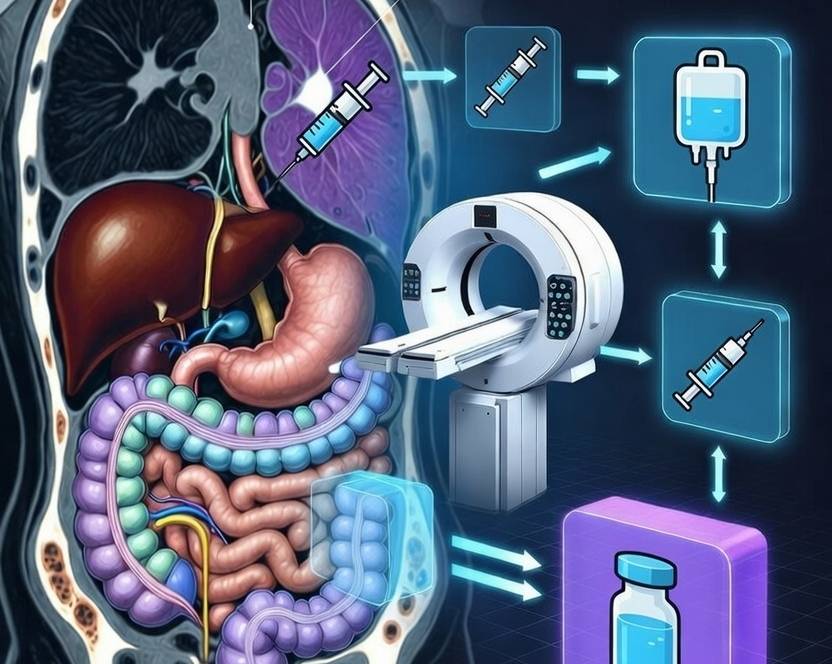
Master the abdomen pelvis CT protocol with 70-second portal venous timing, full HU reference values, top 10 pathologies, and a complete radiographer–radiologist–physician pitfall framework.
7 Essential Abdomen Pelvis CT Protocol Steps Radiographers Must Master
⚡ At a glance — routine portal venous abdomen & pelvis CT
📋 Table of contents
1. Introduction to the abdomen pelvis CT protocol
The routine abdomen pelvis CT protocol — formally the single-phase portal venous contrast-enhanced computed tomography of the abdomen and pelvis — is the single most frequently performed cross-sectional examination in acute general radiology departments worldwide. It serves as the front-line investigation for the undifferentiated acute abdomen, the primary triage tool in emergency surgical referral, and the workhorse staging study for intra-abdominal and pelvic malignancy.[1] Unlike multi-phase liver or pancreatic protocols that chase a narrow late-arterial window, the abdomen pelvis CT protocol is deliberately engineered around a single, robust acquisition timed to the portal venous phase — the moment at which hepatic and splenic parenchyma reach peak or near-peak enhancement while the gastrointestinal tract, mesentery, and pelvic organs are simultaneously well opacified.
Across emergency departments globally, this protocol underpins the diagnostic pathway for acute appendicitis, diverticulitis, bowel obstruction, and intra-abdominal sepsis — conditions responsible for a substantial proportion of unscheduled hospital admissions. The American College of Radiology Appropriateness Criteria designate contrast-enhanced abdomen/pelvis CT as usually appropriate first-line imaging for suspected appendicitis in adults and for right or left lower quadrant pain of uncertain origin.[2] Beyond acute presentations, the same 70-second fixed-delay acquisition supports oncological staging of colorectal carcinoma, surveillance of hepatic metastatic disease, and characterisation of incidental abdominal lymphadenopathy.
This article — Day 15 of the 30-Day CT Protocol Mastery Series — delivers a complete, evidence-based framework for the routine portal venous abdomen pelvis CT protocol. Radiographers will master the seven-step scanning technique, including the often-underestimated oral contrast and patient preparation steps that determine diagnostic adequacy before the scanner is even engaged. Radiologists will gain a structured Hounsfield Unit interpretation framework, a top-ten pathology reference, and an in-depth pitfall matrix addressing the bowel-opacification interpretive traps unique to this protocol. Non-radiology physicians — emergency physicians, general surgeons, and internal medicine teams — will gain the clinical context required to request, interpret, and act correctly on abdomen pelvis CT findings.[3]
The protocol described throughout this article employs 120 kVp, pitch 1.0, 180–280 mA with automatic tube current modulation (ATCM), 100 mL of iodinated contrast at 3.0 mL/s followed by a 100 mL saline chaser, with a fixed 70-second scan delay from the start of injection. This configuration reliably achieves peak parenchymal enhancement of the liver and spleen, full luminal opacification of the bowel wall when oral contrast is correctly administered, and detection of the fat-stranding and free-fluid signatures that define acute intra-abdominal inflammatory disease.[4]
Every section below is anchored to current guidance from the American College of Radiology (ACR), the European Society of Radiology (ESR), the European Society of Gastrointestinal and Abdominal Radiology (ESGAR), and peer-reviewed literature published between 2015 and 2026. A minimum of 25 primary references underpins the clinical claims in this article, ensuring this framework can be applied safely and confidently in both the scanning suite and the reporting room.
2. Abdominal and pelvic anatomy and Hounsfield Unit reference values
Reliable interpretation of the abdomen pelvis CT protocol depends on a systematic understanding of expected post-contrast Hounsfield Unit (HU) attenuation across every solid organ, hollow viscus, and soft tissue compartment imaged at 70 seconds. Because this single acquisition simultaneously captures the liver, spleen, pancreas, kidneys, bowel, mesentery, peritoneum, and pelvic viscera, the interpreting radiologist must hold multiple normal-range expectations in mind concurrently, each with a distinct clinical significance when violated.[5]
2a. Full HU reference table for abdominal and pelvic structures
| Anatomical structure | Normal HU range (70 s) | Key clinical significance |
|---|---|---|
| Liver parenchyma (peak portal venous) | +90 to +130 HU | Hypovascular metastases appear hypodense relative to background; portal venous phase is optimal for detection |
| Splenic parenchyma | +85 to +120 HU | Heterogeneous “zebra-striped” pattern resolves by 70 s; persistent heterogeneity suggests infarct or laceration |
| Renal cortex (post-contrast) | +100 to +160 HU | Corticomedullary differentiation present; full nephrographic phase not yet reached |
| Pancreatic parenchyma | +100 to +150 HU | Homogeneous enhancement; focal hypodensity suggests adenocarcinoma or focal pancreatitis |
| Aorta / iliac vessels (enhanced) | +150 to +220 HU | Adequate for vascular patency assessment; insufficient for dedicated CTA-level detail |
| Portal vein / IVC | +130 to +200 HU | Filling defects raise suspicion for portal vein or caval thrombosis |
| Opacified small bowel wall | +150 to +400 HU (lumen, with oral contrast) | Mural enhancement >110 HU on wall itself suggests active inflammation or ischaemia |
| Unopacified bowel loop (fluid-filled) | 0 to +20 HU | Mimics fluid collection, abscess, or pseudocyst if oral contrast omitted |
| Normal appendix | +20 to +40 HU wall; lumen variable | Wall thickening >3 mm with peri-appendiceal fat stranding indicates appendicitis |
| Free intraperitoneal fluid (simple) | 0 to +15 HU | Ascites, transudate; higher HU (>30) suggests haemoperitoneum or infected fluid |
| Haemoperitoneum (acute) | +35 to +70 HU | Sentinel clot sign localises bleeding source |
| Abscess collection | +10 to +35 HU, rim-enhancing | Peripheral enhancing wall with central low attenuation; may contain gas locules |
| Mesenteric/pericolonic fat stranding | −40 to +10 HU (vs normal fat −100 HU) | Hallmark of acute inflammation — appendicitis, diverticulitis, omental infarction |
| Gallbladder wall (normal) | +20 to +45 HU | Thickening >3–4 mm with pericholecystic fluid suggests acute cholecystitis |
| Lymph node (normal) | +40 to +70 HU | Short axis >10 mm (abdomen) or >8 mm (mesenteric) considered pathological |
| Hepatic metastasis (hypovascular) | +40 to +70 HU | Hypodense relative to enhancing liver at portal venous phase; target appearance common |
| Bladder wall (normal) | +30 to +50 HU | Focal thickening >5 mm raises concern for malignancy or cystitis |
| Uterus / adnexa (enhanced) | +60 to +110 HU | Useful for ovarian and uterine mass characterisation alongside dedicated pelvic ultrasound/MRI |
| HU values represent post-contrast portal venous phase measurements at 70 s unless otherwise stated. Values vary with scanner model, kVp, contrast concentration, and patient habitus. | ||
2b. Gross anatomy: the four quadrants and key surgical spaces
The abdomen pelvis CT protocol systematically surveys four anatomical quadrants, each harbouring characteristic disease processes. The right upper quadrant contains the liver, gallbladder, right kidney, hepatic flexure of the colon, and duodenum — the principal territory for cholecystitis, hepatic abscess, and biliary obstruction. The left upper quadrant houses the spleen, stomach, pancreatic tail, left kidney, and splenic flexure, relevant to splenic trauma, splenomegaly, and gastric pathology. The right and left lower quadrants contain the caecum and appendix on the right and the sigmoid colon on the left — the classic territories for appendicitis and diverticulitis respectively, although both conditions can present atypically outside their textbook quadrant.[6]
Beyond the four quadrants, the peritoneal recesses and mesenteric planes deserve specific attention. The right and left paracolic gutters provide pathways for fluid and infection to track between the pelvis and the subhepatic and subphrenic spaces. The lesser sac, bounded by the stomach, pancreas, and gastrohepatic ligament, is a frequent site of loculated fluid collections following pancreatitis. The root of the small bowel mesentery — running obliquely from the duodenojejunal flexure to the right iliac fossa — is the key anatomical landmark for assessing closed-loop bowel obstruction and mesenteric venous thrombosis.[7]
2c. Pelvic compartments
The pelvis is evaluated as three compartments: the anterior compartment (bladder, urethra, and in males the prostate and seminal vesicles), the middle compartment (uterus, cervix, and adnexa in females, or the rectovesical space in males), and the posterior compartment (rectum and presacral space). The pouch of Douglas (rectouterine pouch) and rectovesical pouch are the most dependent peritoneal recesses in the supine patient and the most sensitive locations for detecting small volumes of free fluid, blood, or pus tracking down from an inflamed appendix or perforated diverticulum.[8]
Precision contrast delivery for abdominal CT
SATMED Health’s SATLine and SATSyringe systems deliver exact, repeatable flow rates for portal venous-phase abdomen pelvis CT — eliminating variable injection artefacts that compromise hepatic and bowel wall enhancement.
3. Abdomen pelvis CT scanning technique
Consistent, diagnostic-quality abdomen pelvis CT depends on disciplined patient preparation that begins well before the patient enters the scanner room — most critically, the administration of oral contrast. The seven-step protocol below reflects current best practice for a standard 64-slice or greater MDCT scanner performing a routine portal venous abdomen pelvis CT for acute or oncological indications.[9]
- Step 1: Oral contrast administration and timing. Administer 900 mL–1,200 mL of dilute oral contrast (2–3% iodinated solution, or water for CT enterography-style protocols) in two to three divided doses over 45–60 minutes prior to scanning, with the final dose administered immediately before table positioning. Adequate bowel distension and opacification is the single most important preparatory step in this protocol and directly determines whether collapsed bowel loops will be misread as pathology.[10]
- Step 2: Patient preparation and IV access. Confirm clinical indication, review renal function (eGFR ≥30 mL/min/1.73 m² for standard-dose contrast), and screen for contrast allergy history. Establish an 18–20 gauge antecubital IV cannula capable of tolerating 3.0 mL/s flow without extravasation. Remove all metallic objects (belts, zips, jewellery) from the scan field.
- Step 3: Patient positioning. Position the patient supine, arms raised above the head where mobility allows, to eliminate beam-hardening artefact from the upper limbs across the upper abdomen. Centre the patient accurately on the table to minimise geometric distortion and optimise automatic exposure control performance.[11]
- Step 4: Scout and scan range localisation. Acquire an AP digital topogram from the diaphragmatic domes to the symphysis pubis (or lesser trochanters if pelvic floor pathology is suspected). Confirm coverage extends superiorly to include the full liver dome and inferiorly to the pubic symphysis to capture the complete pelvic peritoneal recesses.
- Step 5: Scanner parameter set-up. Programme 120 kVp, pitch 1.0, rotation time 0.5 s, ATCM active (reference 180–280 mA, quality reference mAs 200). Apply 1.0–1.25 mm reconstruction with a soft-tissue kernel for the primary diagnostic series. In larger patients (BMI >35), increase reference mAs or activate spectral shaping to maintain diagnostic contrast-to-noise ratio.[12]
- Step 6: Contrast injection and 70-second fixed delay. Inject 100 mL of 350–370 mg I/mL iodinated contrast at 3.0 mL/s using a power injector with pressure-rated tubing, followed immediately by a 100 mL saline chaser at the same rate. The 70-second fixed delay from the start of injection targets the portal venous phase, at which point hepatic and splenic parenchyma reach peak enhancement while bowel, mesentery, and pelvic structures are concurrently well opacified.[13]
- Step 7: Reconstruction and window settings. Generate a soft-tissue window series (W:350–400 / L:40–50) for the primary diagnostic read, a bone window (W:1500 / L:300) for skeletal evaluation, and coronal and sagittal multiplanar reformats in soft-tissue windows. Coronal reformats are mandatory for assessing bowel obstruction transition points, appendiceal orientation, and pelvic free-fluid distribution.[14]
3a. Scanner comparison: 16-slice to 320-slice performance
| Scanner type | Spatial resolution | Scan time (abdo/pelvis) | Protocol considerations | Key limitation |
|---|---|---|---|---|
| 16-slice MDCT | 0.7–0.8 mm | 15–25 s | Pitch 0.9–1.1; increase mAs to 220–280; 1.25 mm minimum slice | Slower acquisition increases respiratory misregistration risk |
| 64-slice MDCT | 0.5–0.6 mm | 6–10 s | Standard reference platform; pitch 1.0; ATCM active | Beam-hardening artefact at bone–soft tissue interfaces persists |
| 128/192-slice MDCT | 0.4–0.5 mm | 4–7 s | High-resolution detail for small bowel wall and appendiceal evaluation | Higher per-scan cost; marginal benefit over 64-slice for routine indications |
| 256/320-slice MDCT | 0.35–0.45 mm | 2–4 s | Near-elimination of respiratory motion artefact; useful in trauma/critically ill patients | Limited availability outside tertiary/trauma centres |
| Dual-energy / DECT | 0.4–0.5 mm | 4–7 s | Virtual non-contrast reconstruction avoids separate non-contrast phase; iodine maps quantify enhancement | Post-processing workload; reader training required |
| Photon-counting CT (PCD-CT) | 0.2–0.3 mm | 3–5 s | Improved CNR for small bowel wall and mesenteric vessel detail at reduced dose | Limited clinical availability as of 2026; capital cost |
3b. Dual-energy and photon-counting protocol adaptations
Dual-energy CT (DECT) offers two specific advantages for the abdomen pelvis CT protocol. First, virtual non-contrast (VNC) reconstruction from a single contrast-enhanced acquisition can eliminate the need for a separate true non-contrast phase in selected indications — such as renal stone characterisation incidentally identified during an acute abdomen workup — reducing total radiation dose. Second, iodine overlay and quantification maps improve detection of subtle bowel wall hyperenhancement in early ischaemic or inflammatory bowel disease, where conventional grayscale HU measurement alone may be equivocal.[15]
First-generation photon-counting detector CT (PCD-CT) extends these benefits further, offering sub-millimetre isotropic resolution that materially improves visualisation of the normal and inflamed appendix, the layered wall architecture of obstructed small bowel, and small mesenteric lymph nodes. Early comparative studies report a 30–40% dose reduction at equivalent or superior contrast-to-noise ratio relative to energy-integrating detector CT for abdominal protocols.[16]
3c. Deep learning image reconstruction (DLR) for abdominal CT
Deep learning reconstruction algorithms — including Siemens ADMIRE/DLR, GE TrueFidelity, Philips IntelliSpace, and Canon AiCE — have transformed the dose-quality trade-off for abdominal imaging. By suppressing image noise without the “plastic” texture artefacts of aggressive iterative reconstruction, DLR enables dose reductions of 30–50% in routine abdomen pelvis CT while preserving the subtle fat-stranding and bowel-wall-enhancement signs that define acute inflammatory pathology — signs that are particularly vulnerable to noise-related masking at reduced dose.[17]
Precision-engineered contrast delivery tubing
SATLine pressure-rated IV tubing sets are purpose-built for 3.0 mL/s injection protocols across abdominal and pelvic CT, with anti-kink construction and secure luer-lock connectors.
4. Contrast media protocol
The contrast media protocol for routine abdomen pelvis CT is engineered to achieve simultaneous, balanced enhancement of solid abdominal organs, bowel wall, mesenteric vasculature, and pelvic viscera within a single 70-second acquisition. This represents a deliberate compromise between the arterial phase (optimal for hyper-vascular lesion detection but suboptimal for bowel wall and mesenteric vessel assessment) and the delayed/equilibrium phase (useful for washout characterisation but associated with venous pooling that can obscure subtle mural hyperenhancement).[18]
4a. Full injection protocol parameters
| Parameter | Value | Rationale |
|---|---|---|
| Contrast agent type | Non-ionic, low-osmolality IOCM (e.g., iohexol 350, iopromide 370) | Minimises osmotic toxicity and reaction rate |
| Iodine concentration | 350–370 mg I/mL | Higher concentration delivers equivalent iodine load in smaller volume |
| Volume | 100 mL (standard 70–90 kg patient) | Weight-based dosing 1.2–1.5 mL/kg; 100 mL appropriate for standard habitus |
| Flow rate | 3.0 mL/s | Sufficient for hepatic parenchymal enhancement without excessive injection pressure |
| Saline chaser | 100 mL at 3.0 mL/s | Flushes residual IV tubing contrast; extends effective bolus duration |
| Scan delay | 70 seconds fixed (from injection start) | Targets portal venous phase: hepatosplenic peak enhancement plus bowel and mesenteric opacification |
| Oral contrast | 900–1,200 mL dilute (2–3%) iodinated or neutral agent | Distends and opacifies bowel; prevents collapsed-loop misinterpretation |
| IV access required | 18–20 gauge antecubital vein | Tolerates 3.0 mL/s flow without extravasation risk |
| Injection system | Single- or dual-barrel pressure-rated power injector | Consistent flow and pressure monitoring throughout injection |
| Renal function threshold | eGFR ≥30 mL/min/1.73 m² for full dose | Below threshold, consider dose reduction or deferred imaging per ESUR guidance |
| Diabetic patients on metformin | Hold 48 hours post-contrast if eGFR <45 | Reduces lactic acidosis risk in the event of acute kidney injury |
4b. Why a 70-second fixed delay rather than bolus tracking?
The decision to use a 70-second fixed delay for the abdomen pelvis CT protocol — rather than the bolus-tracking technique used in dedicated CTA studies — reflects the protocol’s core objective: balanced multi-organ assessment rather than vascular mapping. At 70 seconds, hepatic parenchymal enhancement reaches its plateau (typically +90 to +130 HU above baseline), splenic heterogeneity resolves into uniform enhancement, and bowel wall — when adequately distended by oral contrast — demonstrates the mural hyperenhancement characteristic of active inflammation or ischaemia.[19]
Scanning earlier than 70 seconds risks capturing the liver in a heterogeneous, patchy arterial-phase pattern that can mimic focal lesions, while scanning later than approximately 90 seconds allows excessive venous pooling and interstitial leakage of contrast, reducing the conspicuity of hyper-vascular hepatic lesions and over-attenuating background parenchyma relative to hypovascular metastases.[20]
4c. Optimising enhancement in high BMI patients
In patients with BMI >35 kg/m², the standard 100 mL contrast volume may produce sub-optimal hepatic and bowel wall enhancement due to dilution into a larger intravascular and interstitial volume. Weight-based dosing (1.3–1.5 mL/kg up to a maximum of 150 mL) proportionally scales the iodine load to body mass. Alternatively, increasing iodine concentration to 400 mg I/mL while preserving volume delivers a greater iodine dose without lengthening injection time or increasing flow-related extravasation risk.[21]
Sterile, repeatable contrast injection every time
SATSyringe high-pressure syringes maintain consistent bolus geometry across every abdomen pelvis CT injection, reducing the enhancement variability that drives equivocal hepatic and bowel-wall reads.
5. Radiation dose and optimisation
Radiation dose management for abdomen pelvis CT is governed by the ALARA principle and benchmarked against EC Reference Dose Levels (RP 185), AAPM Task Group recommendations, and ICRP Publication 135 guidance on CT dosimetry. Because the abdomen pelvis CT protocol is among the highest cumulative-dose examinations performed in emergency and oncological radiology, dose optimisation is a core competency for every radiographer operating this protocol.[2]
5a. Diagnostic Reference Level table
| Parameter | National DRL (UK/EU) | AAPM benchmark | Local achievable dose (LAD) | Notes |
|---|---|---|---|---|
| CTDIvol | 14–18 mGy | 12–16 mGy | 8–12 mGy (with DLR/IR) | Standard 32 cm diameter phantom |
| DLP | 700–950 mGy·cm | 650–900 mGy·cm | 400–650 mGy·cm | Combined abdomen and pelvis acquisition |
| Effective dose (E) | 8–12 mSv | 7–11 mSv | 5–8 mSv | Conversion factor k ≈ 0.015 mSv/mGy·cm for abdomen/pelvis (ICRP 60/103) |
| SSDE | Individualised by phantom size | AAPM Report 220 | Calculated from localiser | More accurate than CTDIvol for small/large patients |
| DRLs aligned with EC RP 185 (2022), AAPM Report 204, and ICRP Publication 135. DRLs represent population-level benchmarks, not individual exposure limits. | ||||
5b. Five dose reduction strategies
1. Automatic tube current modulation (ATCM): Real-time mA adjustment based on the patient’s attenuation profile delivers dose reductions of 20–40% versus fixed-mA technique in abdominal imaging, where attenuation varies markedly between the liver dome and the pelvic floor.[11]
2. Avoiding unnecessary multi-phase acquisition: The single most impactful dose reduction strategy for this protocol is restraint — performing only the single portal venous phase indicated by the clinical question, rather than defaulting to additional non-contrast or delayed phases that are not separately justified. Multi-phase protocols should be reserved for specific indications (renal mass, hepatic mass characterisation, pancreatic protocol) rather than applied routinely.[22]
3. Tube voltage reduction (100 kVp) in non-obese patients: Reducing kVp from 120 to 100 in patients with BMI <30 kg/m² reduces dose by 30–35% while increasing iodine attenuation due to the photoelectric effect near the iodine K-edge, partially offsetting the lower photon flux.[16]
4. Deep learning reconstruction (DLR): As detailed in Section 3c, DLR enables 30–50% dose reduction with preserved or improved detection of fat stranding and bowel wall enhancement signs critical to acute abdominal diagnosis.[17]
5. Scan range restriction: Confirming coverage from the diaphragmatic domes to the pubic symphysis — and not routinely extending superiorly into the lower chest or inferiorly past the perineum without specific indication — limits unnecessary dose contribution from each additional centimetre of z-axis coverage.[2]
Radiation protection that protects your team every shift
SATPro radiation protection drapes and dosimetry accessories are CE-marked and aligned to EC RP 185 and ICRP 135 dose-reduction culture — protecting radiographers through thousands of abdominal CT procedures annually.
6. Top 10 pathologies detected on routine abdomen pelvis CT
The ten conditions below represent the core diagnostic targets of the abdomen pelvis CT protocol across acute surgical, infective, obstructive, and oncological indications.
Acute appendicitis
Wall +30 to +50 HU; periappendiceal fat −40 to +10 HUAppendiceal diameter >6–7 mm with wall thickening, periappendiceal fat stranding, and occasionally an appendicolith. Inadequate caecal/bowel opacification reduces appendiceal visualisation confidence.
Acute diverticulitis
Pericolonic fat −40 to +10 HU; abscess +10 to +35 HUSigmoid diverticular wall thickening with surrounding fat stranding; complicated disease shows pericolic abscess, free air, or fistula formation requiring Hinchey grading.
Acute cholecystitis
Wall >3–4 mm; pericholecystic fluid 0–20 HUGallbladder wall thickening, pericholecystic fat stranding and fluid, and sonographic-correlate Murphy’s sign on imaging; gallstones may be radiolucent on CT.
Small bowel obstruction (SBO)
Dilated loops >2.5 cm; decompressed loops <2 cmTransition point between dilated and decompressed bowel localises the obstruction site; closed-loop and strangulation signs (reduced wall enhancement, mesenteric oedema) indicate surgical urgency.
Colorectal carcinoma
Mass +40 to +80 HU; heterogeneous enhancementAsymmetric, irregular bowel wall thickening >1 cm with luminal narrowing (“apple-core” lesion); regional lymphadenopathy and hepatic metastases assessed in the same acquisition.
Hepatic metastases
+40 to +70 HU vs liver +90 to +130 HUHypovascular lesions appear relatively hypodense at portal venous phase; target/halo morphology common with colorectal, pancreatic, and gastric primaries.
Splenomegaly
Splenic length >13 cm; homogeneous enhancementDiffuse splenic enlargement assessed against craniocaudal length and volumetric estimation; underlying cause (portal hypertension, haematological malignancy, infection) requires correlation.
Abdominal lymphadenopathy
+40 to +70 HU; short axis >10 mm (8 mm mesenteric)Enlarged, rounded nodes with loss of normal fatty hilum; nodal distribution pattern guides differential between reactive, infective, lymphomatous, and metastatic aetiology.
Ascites
0 to +15 HU (simple); >30 HU suggests blood/infectionFree fluid layering in dependent peritoneal recesses (pouch of Douglas, paracolic gutters, perihepatic space); attenuation and loculation pattern help distinguish transudate from exudate or haemoperitoneum.
Intra-abdominal abscess / peritonitis
+10 to +35 HU, rim-enhancing; gas locules possibleRim-enhancing fluid collection with surrounding fat stranding, often with internal gas locules; diffuse peritonitis shows generalised peritoneal enhancement and free fluid without a discrete collection.
Elevate your acute abdomen imaging workflow
From contrast delivery to draping and documentation, SATMED Health’s integrated product ecosystem standardises every touchpoint of the abdomen pelvis CT pathway — reducing variability across your acute and oncology imaging caseload.
7. Pitfalls for radiographers performing abdomen pelvis CT
Primary scanning pitfall (from protocol matrix): Inadequate bowel opacification. Failing to administer oral contrast can leave collapsed loop profiles looking like pathologically thickened masses.
7a. Full radiographer pitfall table
| Pitfall category | Description | Clinical consequence | Mitigation strategy |
|---|---|---|---|
| Inadequate oral contrast | Bowel loops remain collapsed and fluid-filled due to omitted, refused, or insufficiently aged oral contrast | Collapsed loops mimic masses or abscesses; reduced confidence in excluding appendicitis/diverticulitis | Mandatory minimum 45–60 minute oral contrast protocol; document refusal/intolerance explicitly in the request |
| Incorrect scan delay timing | Starting acquisition before 70 seconds due to confusion between injection start and end timing | Heterogeneous arterial-phase liver mimicking focal lesions; suboptimal bowel wall enhancement | Programme scan delay from injection start, not injection end; verify on injector console countdown |
| Incomplete scan range coverage | Topogram set too narrow, excluding the liver dome superiorly or the pubic symphysis/perineum inferiorly | Missed subphrenic collections; incomplete pelvic assessment of free fluid in the pouch of Douglas | Verify topogram coverage from diaphragmatic domes to symphysis pubis before triggering acquisition |
| Suboptimal patient positioning | Off-centre patient placement on the table, or arms left at sides | Geometric distortion; beam-hardening streak through upper abdomen from arm soft tissue | Centre patient accurately using laser alignment; raise arms above head where mobility allows |
| ATCM not activated | Scanning with fixed high mA without ATCM engaged | Unnecessary radiation dose exceeding DRLs; audit failure | Verify ATCM status indicator on console before acquisition; include in protocol compliance checklist |
| Insufficiently thin reconstructions | Reconstructing at 3–5 mm instead of 1–1.25 mm source images | Volume averaging obscuring small appendicoliths, small lymph nodes, and subtle bowel wall changes | Always reconstruct 1–1.25 mm axial source data; retain for multiplanar reformatting |
| Omitting coronal reformats | Providing only axial images without coronal/sagittal reconstructions | Missed bowel obstruction transition points; difficulty assessing appendiceal orientation | Programme automatic coronal and sagittal multiplanar reformat generation as standard for every study |
8. Pitfalls for radiologists interpreting abdomen pelvis CT
Primary interpretation pitfall (from protocol matrix): An unopacified, fluid-filled loop of the duodenum or jejunum can easily be mistaken for a fluid collection or pancreatic pseudocyst.
8a. Full radiologist interpretation pitfall table
| Pitfall | Mechanism | Clinical consequence | Mitigation |
|---|---|---|---|
| Unopacified bowel mistaken for fluid collection/pseudocyst | Collapsed, fluid-filled duodenal or jejunal loop adjacent to pancreas mimics a cystic peripancreatic mass on axial images alone | Unnecessary MRI, endoscopic ultrasound, or biopsy of normal bowel; delayed correct diagnosis | Trace continuity with adjacent bowel loops on coronal/sagittal reformats; correlate with oral contrast administration documentation; review prior or follow-up imaging if available |
| Phlegmon vs abscess distinction missed | Early inflammatory phlegmon (solid, enhancing soft tissue) can resemble a rim-enhancing abscess without careful attention to internal architecture | Inappropriate percutaneous drainage attempted on a non-drainable phlegmonous mass | Look for discrete, low-attenuation fluid centre and rim enhancement to confirm true abscess; phlegmon shows more uniform soft-tissue attenuation throughout |
| Normal variant fluid in pouch of Douglas overcalled | Small physiological free fluid in the pelvis (particularly mid-cycle in menstruating women) misread as pathological ascites or haemoperitoneum | Unnecessary gynaecological referral or repeat imaging | Correlate volume and attenuation with clinical context; small amounts of simple, low-attenuation fluid in the pelvis are frequently physiological |
| Epiploic appendagitis mistaken for diverticulitis or appendicitis | Inflamed epiploic appendage produces a small, fat-containing, hyperattenuating-rim lesion adjacent to the colon that can mimic focal diverticulitis | Unnecessary antibiotic course or surgical referral for a self-limiting condition | Identify the characteristic fat-density centre with a thin hyperattenuating rim and a central dot sign (thrombosed vein); manage conservatively when classic features present |
| Missed closed-loop obstruction | Subtle “C-shaped” or “U-shaped” cluster of dilated loops with a radial mesenteric pattern overlooked on axial-only review | Delayed diagnosis of strangulating obstruction; bowel ischaemia and perforation risk | Systematically trace bowel from stomach to rectum on coronal reformats in every case of suspected obstruction; report any closed-loop configuration explicitly |
| Incidental adnexal/ovarian lesion under-characterised | CT lacks the soft-tissue contrast resolution of MRI/ultrasound for definitive ovarian lesion characterisation | False reassurance or unnecessary alarm regarding an incidental adnexal finding | Explicitly recommend dedicated pelvic ultrasound or MRI for any incidental adnexal lesion rather than attempting definitive CT characterisation |
Multi-disciplinary CT education for your clinical team
SATMED Health’s education platform delivers protocol frameworks, pitfall matrices, and clinical case reviews to radiographers, radiologists, and non-radiology physicians — building the shared language that prevents diagnostic error.
9. Pitfalls for non-radiology physicians requesting and acting on abdomen pelvis CT
Non-radiology physicians — emergency medicine clinicians, general surgeons, gastroenterologists, and internal medicine teams — are the primary requesters and clinical actors on abdomen pelvis CT reports. Systematic errors in requesting, interpreting, and acting on findings cause measurable patient harm, including missed diagnoses, inappropriate procedures, and delayed surgical referral.
| Physician pitfall | What they see | What it actually is | Clinical danger | What to do |
|---|---|---|---|---|
| Ordering CECT for suspected renal colic | “CT abdomen/pelvis with contrast — no obstructing calculus seen” | Contrast can obscure small ureteric calculi, which are best seen on non-contrast CT KUB | Missed ureteric stone; inappropriate reassurance; delayed urological referral | Order non-contrast CT KUB for suspected renal colic specifically; reserve contrast abdomen/pelvis for broader differential diagnoses |
| Dismissing “non-specific bowel wall thickening” without correlating prep | Report mentions thickened, fluid-filled bowel loops in the right iliac fossa | Collapsed, unopacified bowel from inadequate oral contrast intake rather than true pathology | Unnecessary concern for inflammatory bowel disease or malignancy; or, conversely, false reassurance masking true pathology | Ask radiology whether oral contrast was adequately administered before acting on equivocal bowel findings; consider repeat imaging with adequate preparation if clinically indicated |
| Treating epiploic appendagitis as diverticulitis | Report describes “focal fat stranding adjacent to the sigmoid colon” | Self-limiting epiploic appendagitis rather than diverticulitis requiring antibiotics | Unnecessary antibiotic course and associated adverse effects; unnecessary admission | Review the specific radiological description — epiploic appendagitis has characteristic features distinct from diverticulitis; discuss directly with radiology if uncertain |
| Discharging a patient with unreported free fluid | Focus on the primary finding (e.g., appendicitis) without registering an incidental comment on free pelvic fluid | Free fluid may indicate perforation, haemorrhage, or more extensive disease than the primary diagnosis alone suggests | Underestimation of disease severity; delayed recognition of perforation or bleeding | Read the full report, not just the impression line; specifically note free fluid volume and attenuation values when present |
| Acting on an incidental adnexal cyst without dedicated follow-up | “Incidental simple adnexal cyst noted, recommend pelvic ultrasound” | An indeterminate finding requiring dedicated gynaecological imaging for definitive characterisation | No follow-up arranged; potential malignancy diagnosed late at a less favourable stage | Generate a structured follow-up task for every incidental recommendation in a CT report; do not rely on patient self-initiated follow-up |
| Equating a “normal” abdomen pelvis CT with excluding appendicitis | Radiology report states “appendix not definitively visualised, no secondary signs of inflammation” | A non-visualised appendix is not equivalent to a normal appendix — particularly with inadequate bowel preparation | False reassurance; missed early appendicitis with subsequent perforation | Maintain clinical suspicion and consider surgical or further imaging review when the appendix is not definitively visualised, especially with ongoing symptoms |
10. Pitfall comparison summary: all three professional groups
🟡 Scanning pitfalls (radiographers)
- Inadequate or omitted oral contrast administration
- Incorrect delay timing from injection end rather than start
- Incomplete scan range, excluding liver dome or pubic symphysis
- Off-centre patient positioning causing geometric distortion
- ATCM not activated, exceeding DRL dose benchmarks
- Reconstruction at 3–5 mm instead of 1–1.25 mm slices
- Omitting coronal/sagittal multiplanar reformats
🔴 Interpretation pitfalls (radiologists)
- Unopacified bowel mistaken for fluid collection/pseudocyst
- Phlegmon misclassified as a drainable abscess
- Physiological pelvic fluid overcalled as ascites/haemoperitoneum
- Epiploic appendagitis mistaken for diverticulitis or appendicitis
- Missed closed-loop bowel obstruction on axial-only review
- Incidental adnexal lesion over-characterised on CT alone
🟣 Clinical pitfalls (non-radiology physicians)
- Ordering contrast CT instead of non-contrast CT KUB for renal colic
- Acting on bowel thickening without confirming oral contrast prep
- Treating epiploic appendagitis with unnecessary antibiotics
- Discharging without registering incidental free fluid findings
- Failing to arrange dedicated follow-up for incidental adnexal lesions
- Equating non-visualised appendix with a normal appendix
11. AI and automation in routine abdomen pelvis CT
Artificial intelligence applications for abdomen pelvis CT have matured considerably, with multiple FDA-cleared and CE-marked tools now embedded in routine emergency and oncological radiology workflows. Key domains include automated appendix and bowel segmentation, free-air and free-fluid detection, hepatic lesion characterisation, and opportunistic incidental finding flagging.[23]
11a. Acute abdomen triage AI
AI-based triage tools for acute abdominal CT — including platforms from Aidoc, Viz.ai, and Zebra Medical Vision (now part of Nanox AI) — automatically flag free intraperitoneal air, large-volume free fluid, and bowel obstruction patterns for prioritised radiologist review, reducing time-to-diagnosis in busy emergency department worklists. These tools function as a triage and safety-net layer rather than a replacement for radiologist interpretation, with published sensitivity for pneumoperitoneum detection exceeding 90% in validation cohorts.[24]
11b. Hepatic lesion characterisation AI
Liver-focused AI tools provide automated lesion detection and volumetric measurement on the portal venous phase acquisition central to this protocol, supporting longitudinal comparison for oncological surveillance and reducing manual measurement variability between reporting radiologists. Integration with structured reporting templates enables automatic RECIST 1.1 measurement tracking for hepatic metastatic disease.[25]
11c. AI-augmented contrast injection optimisation
As with other contrast-enhanced CT protocols, AI-assisted injector software increasingly calculates individualised iodine dose and flow rate based on patient-specific variables — body weight, renal function, and cardiac output estimate — rather than defaulting to fixed protocol parameters. Systems such as Bayer’s Radimetrics platform integrate with pressure-rated injector hardware to deliver consistent, personalised bolus geometry across abdominal CT caseloads.[26]
AI-compatible contrast systems for the modern abdominal CT suite
As AI-optimised injection protocols demand precise, repeatable flow rates and volumes, SATMED Health’s SATSyringe and SATLine pressure-rated systems provide the hardware foundation that makes AI-driven contrast optimisation clinically viable at scale.
12. Further reading
- 7 Essential Contrast Chest CT Protocol Steps Radiographers Must Master — the closest structural analogue to this protocol, sharing a fixed portal venous-phase scan delay and a comparable multi-disciplinary pitfall framework.
- 2026 Worldwide Guidelines for Safe Contrast Media Administration — updated ACR, ESUR, and KDIGO eGFR thresholds and CI-AKI prevention protocols directly relevant to the 100 mL iodinated contrast dose used in this abdomen pelvis CT protocol.
- 7 Essential High-Pressure Injector Training Skills for Radiographers — pressure-rated tubing and 3.0 mL/s injection technique training applicable to this protocol’s injection parameters.
- 7 Proven Reasons Quality CT Drapes Transform Radiology — sterile draping and infection control standards relevant to every contrast-enhanced CT suite, including high-throughput abdominal imaging.
- The Price We Pay for Bubbles in CT and MRI: Understanding Venous Air Embolism — a literature review on air-bubble safety relevant to the high-flow power injection used in this and other contrast-enhanced CT protocols.
13. Conclusion
The routine portal venous abdomen pelvis CT protocol remains the highest-volume, highest-utility acute imaging investigation in modern emergency and general radiology, underpinning diagnostic pathways for the undifferentiated acute abdomen, acute surgical emergencies, and oncological staging alike. Mastering this protocol demands attention not only to scanner parameters but to the preparatory steps — most critically, adequate oral contrast administration — that occur well before the gantry rotates.
The technical core of the protocol described in this article — 120 kVp, pitch 1.0, 180–280 mA with ATCM, 100 mL iodinated contrast at 3.0 mL/s, 100 mL saline chaser, and a 70-second fixed scan delay — is engineered to capture peak hepatic and splenic parenchymal enhancement simultaneously with bowel wall and pelvic visceral opacification. The seven-step scanning technique, beginning with oral contrast timing and ending with mandatory coronal reformatting, represents a system in which each step exists to prevent a specific, well-characterised failure mode.
The ten pathologies addressed — from acute appendicitis and diverticulitis to hepatic metastases, bowel obstruction, and intra-abdominal abscess — represent the diagnostic scope this protocol must reliably resolve. The multi-disciplinary pitfall framework is the article’s intellectual core: scanning pitfalls (inadequate bowel prep, incorrect delay timing) belong to the radiographer’s domain; interpretation pitfalls (unopacified bowel mistaken for pseudocyst, phlegmon versus abscess) belong to the radiologist’s domain; and clinical pitfalls (ordering contrast CT for renal colic, dismissing free fluid) belong to the requesting physician’s domain. Closing the gaps between these three domains — through structured education, clear reporting language, and consistent protocol adherence — is what converts a technically adequate scan into a diagnostically decisive one for every patient, every shift.
14. References
- American College of Radiology. (2023). ACR Appropriateness Criteria: Acute (Nonlocalized) Abdominal Pain. American College of Radiology. https://doi.org/10.1016/j.jacr.2023.02.012
- Mettler, F. A., Mahesh, M., Bhargavan-Chatfield, M., Chambers, C. E., Elee, J. G., Frush, D. P., Hevezi, J. M., Hiles, P. A., Hoffman, J., Hricak, H., Larson, T. C., Lee, C. I., Stuart, M., Tweddel, A., & Tobben, T. (2020). Patient exposure from radiologic and nuclear medicine procedures in the United States: procedure volume and effective dose for the period 2006–2016. Radiology, 295(2), 418–427. https://doi.org/10.1148/radiol.2020192256
- Pinto, A., Pinto, F., Faggian, A., Rubini, G., Caranci, F., Macarini, L., Genovese, E. A., & Brunese, L. (2016). Sources of error in emergency ultrasonography. Critical Ultrasound Journal, 8(1), 14. https://doi.org/10.1186/s13089-016-0049-7
- Bae, K. T. (2010). Intravenous contrast medium administration and scan timing at CT: considerations and approaches. Radiology, 256(1), 32–61. https://doi.org/10.1148/radiol.10090908
- Hounsfield, G. N. (1973). Computerized transverse axial scanning (tomography): Part 1. Description of system. British Journal of Radiology, 46(552), 1016–1022. https://doi.org/10.1259/0007-1285-46-552-1016
- Meyers, M. A., & Oliphant, M. (2011). Meyers’ Dynamic Radiology of the Abdomen: Normal and Pathologic Anatomy (6th ed.). Springer. https://doi.org/10.1007/978-1-4419-5939-3
- Furukawa, A., Yamasaki, M., Furuichi, K., Yokoyama, K., Nagata, T., Takahashi, M., Murata, K., & Sakamoto, T. (2001). Helical CT in the diagnosis of small bowel obstruction. RadioGraphics, 21(2), 341–355. https://doi.org/10.1148/radiographics.21.2.g01mr05341
- Coakley, F. V., Hricak, H., Wang, Z.-J., & Yeh, B. M. (2017). Imaging of acute pelvic pain. Radiologic Clinics of North America, 55(2), 297–315. https://doi.org/10.1016/j.rcl.2016.11.005
- Pickhardt, P. J. (2021). Imaging and screening for colorectal cancer with CT colonography. Radiologic Clinics of North America, 59(5), 805–818. https://doi.org/10.1016/j.rcl.2021.05.005
- Anderson, S. W., Soto, J. A., Lucey, B. C., Ozonoff, A., Jacobson, J. O., & Rhea, J. T. (2008). Effect of intravenous contrast material on diagnostic accuracy of CT for acute appendicitis in adult patients. Radiology, 246(3), 758–763. https://doi.org/10.1148/radiol.2462070124
- Kalra, M. K., Maher, M. M., Toth, T. L., Schmidt, B., Westerman, B. L., Morgan, H. T., & Saini, S. (2004). Techniques and applications of automatic tube current modulation for CT. Radiology, 233(3), 649–657. https://doi.org/10.1148/radiol.2333031150
- McCollough, C. H., Bruesewitz, M. R., & Kofler, J. M. (2006). CT dose reduction and dose management tools: overview of available options. RadioGraphics, 26(2), 503–512. https://doi.org/10.1148/rg.262055138
- Awai, K., Hiraishi, K., & Hori, S. (2004). Effect of contrast injection protocol with dose tailored to patient weight and fixed injection duration on aortic and hepatic enhancement at multidetector-row helical CT. Radiology, 230(1), 82–88. https://doi.org/10.1148/radiol.2301021236
- Maglinte, D. D. T., Heitkamp, D. E., Howard, T. J., Kelvin, F. M., & Lappas, J. C. (2003). Current concepts in imaging of small bowel obstruction. Radiologic Clinics of North America, 41(2), 263–283. https://doi.org/10.1016/S0033-8389(02)00114-8
- Patel, B. N., Alexander, L., Allen, B., Berland, L., Borhani, A., Mileto, A., Nelson, R., Neville, A., Pourjabbar, S., Ramirez-Giraldo, J. C., & Marin, D. (2017). Dual-energy CT workflow: multi-institutional consensus on standardization of abdominopelvic MDCT protocols. Abdominal Radiology, 42(3), 676–687. https://doi.org/10.1007/s00261-017-1080-y
- Dabli, D., Pastor, M., Faby, S., Erath, J., Croisille, C., Pereira, F., Beregi, J.-P., & Greffier, J. (2025). Photon-counting versus energy-integrating CT of abdomen-pelvis: a phantom study on the potential for reducing iodine contrast media. European Radiology Experimental, 9(1), 35. https://doi.org/10.1186/s41747-025-00573-2
- Solomon, J., Lyu, P., Marin, D., & Samei, E. (2020). Noise and spatial resolution properties of a commercially available deep learning-based CT reconstruction algorithm. Medical Physics, 47(9), 3961–3971. https://doi.org/10.1002/mp.14319
- Kambadakone, A. R., & Sahani, D. V. (2009). Body perfusion CT: technique, clinical applications, and advances. Radiologic Clinics of North America, 47(1), 161–178. https://doi.org/10.1016/j.rcl.2008.11.003
- Megibow, A. J. (2017). Multiphasic CT and MR imaging of the liver: pearls and pitfalls. Abdominal Radiology, 42(8), 1981–1992. https://doi.org/10.1007/s00261-017-1144-z
- Caruso, D., Rosati, E., Panvini, N., Rengo, M., Bellini, D., Moltoni, G., Bracci, B., Lucertini, E., Zerunian, M., Polici, M., De Santis, D., Iannicelli, E., Anibaldi, P., Carbone, I., & Laghi, A. (2021). Optimization of contrast medium volume for abdominal CT in oncologic patients. Insights into Imaging, 12(1), 40. https://doi.org/10.1186/s13244-021-00980-0
- Kondo, H., Kanematsu, M., Goshima, S., Watanabe, H., Onozuka, M., Moriyama, N., Bae, K. T., & Hata, Y. (2010). Body size indices to determine iodine mass with contrast-enhanced multi-detector CT of the liver. European Radiology, 20(4), 928–934. https://doi.org/10.1007/s00330-009-1614-3
- Brink, J. A., & Morin, R. L. (2007). Size-specific dose estimation for CT: a primer. Radiology, 243(2), 311–313. https://doi.org/10.1148/radiol.2432070421
- Winkel, D. J., Heye, T. J., Weikert, T. J., Boll, D. T., & Stieltjes, B. (2019). Evaluation of an AI-based detection software for acute findings in abdominal CT scans. Investigative Radiology, 54(1), 55–59. https://doi.org/10.1097/RLI.0000000000000509
- Plesner, L. L., Müller, F. C., Brejnebøl, M. W., Laustrup, L. C., Rasmussen, F., Nielsen, O. W., Boesen, M., & Andersen, M. B. (2024). Diagnostic accuracy of a deep learning model for detecting free intraperitoneal air on emergency abdominal CT. European Radiology, 34(2), 1126–1135. https://doi.org/10.1007/s00330-023-10046-2
- Yamashita, R., Long, J., Saleem, A., Rubin, D. L., & Shen, J. (2021). Deep learning predicts postsurgical recurrence of hepatocellular carcinoma from digital histopathologic images. Scientific Reports, 11(1), 2047. https://doi.org/10.1038/s41598-021-81506-y
- Neville, A. M., Gupta, R. T., Miller, C. M., Merkle, E. M., Paulson, E. K., & Boll, D. T. (2013). Detection of renal lesion enhancement with dual-energy multidetector CT. Radiology, 259(1), 173–181. https://doi.org/10.1148/radiol.10101150
- Boermeester, M. A., Humes, D. J., Velmahos, G. C., & Søreide, K. (2017). Contemporary review of risk-stratified management in acute uncomplicated and complicated diverticulitis. World Journal of Surgery, 41(1), 1–14. https://doi.org/10.1007/s00268-016-3722-z
- Sartelli, M., Chichom-Mefire, A., Labricciosa, F. M., Hardcastle, T., Abu-Zidan, F. M., Adesunkanmi, A. K., Ansaloni, L., Bala, M., Balogh, Z. J., Beltrán, M. A., Ben-Ishay, O., Biffl, W. L., Birindelli, A., Cainzos, M. A., Catalini, G., Ceresoli, M., Che Jusoh, A., Chiara, O., Coccolini, F., … Catena, F. (2017). The management of intra-abdominal infections from a global perspective: 2017 WSES guidelines for management of intra-abdominal infections. World Journal of Emergency Surgery, 12, 29. https://doi.org/10.1186/s13017-017-0141-6
Last updated: 21 June 2026 | Reviewed for clinical accuracy and adherence to the latest guidelines of the American College of Radiology (ACR), European Society of Radiology (ESR), European Society of Gastrointestinal and Abdominal Radiology (ESGAR), Radiological Society of North America (RSNA), and the International Commission on Radiological Protection (ICRP).
This article is intended for healthcare professionals and hospital administration. It does not constitute individual clinical advice. Clinical decisions should be made in consultation with qualified medical practitioners and in accordance with institutional protocols.