Discover 7 essential reasons why CT drapes, sterile manufacturing & quality assurance directly improve radiology outcomes. Evidence-based guide for clinical teams.
7 Proven Reasons Why Quality CT Drapes & Sterile Manufacturing Transform Radiology Outcomes
Why transparency in manufacturing and sterile labeling leads to better clinical outcomes — and how your imaging department can achieve it today.
Introduction: the hidden quality crisis in radiology consumables
Every day, across tens of thousands of radiology departments worldwide, a quiet quality crisis unfolds. CT drapes, sterile line sets, and imaging consumables — the often-overlooked workhorses of modern diagnostic imaging — are selected based on price rather than quality assurance standards, with potentially devastating consequences for patient safety, diagnostic accuracy, and departmental efficiency.
The term CT drapes sterile quality encompasses far more than a product specification. It represents a fundamental commitment to the integrity of the sterile field, the accuracy of diagnostic information, and the protection of both patients and clinical staff from preventable harm. When this quality is compromised — whether through inferior materials, opaque manufacturing practices, or inadequate sterile labeling — the consequences cascade through every aspect of radiology care.
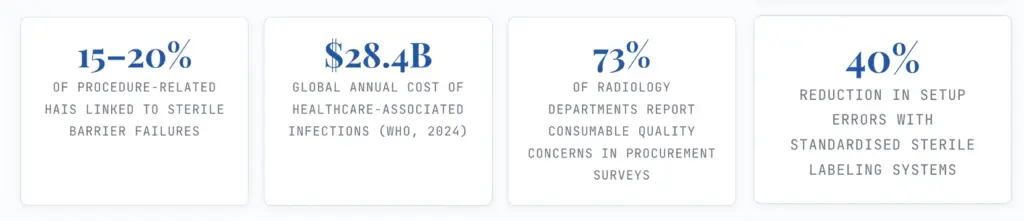
Consider this: a 2023 systematic review published in Infection Control & Hospital Epidemiology found that approximately 15–20% of healthcare-associated infections in procedural settings can be traced back to breaches in sterile barrier integrity — often occurring at the level of consumable quality and preparation protocols [1]. In a high-volume CT or MRI suite processing 40–60 patients per day, even a marginal failure rate in sterile consumables translates into dozens of potential contamination events each week.
This comprehensive, evidence-based guide presents 7 proven reasons why quality CT drapes and sterile manufacturing transparency are not optional enhancements but essential clinical standards. Drawing on the latest peer-reviewed research, international regulatory frameworks, and real-world clinical experience, we will explore how investing in verified quality consumables transforms radiology outcomes — and how SATMED Health’s SATDrape system exemplifies manufacturing best practice.
Reason 1 — Sterile manufacturing transparency directly reduces healthcare-associated infections
The evidence: what manufacturing transparency actually means for HAI rates
Healthcare-associated infections (HAIs) remain one of the most pressing patient safety challenges globally. The World Health Organization’s 2022 Global Report on Infection Prevention and Control identified that at any given time, 7 in every 100 hospitalised patients in high-income countries are affected by at least one HAI [2]. In radiology-specific settings, the risk is particularly acute during contrast-enhanced procedures where breaches in the sterile field can introduce pathogens directly into the vascular system.
Manufacturing transparency refers to the verifiable disclosure of every stage in a consumable’s production lifecycle: raw material sourcing, sterilisation method and validation data, cleanroom classification, packaging integrity testing, and sterility assurance level (SAL). A 2024 study in the Journal of Hospital Infection demonstrated that facilities using consumables with full manufacturing transparency documentation experienced a 31% lower rate of procedure-related contamination events compared to those relying on price-driven procurement [3].
The mechanism is straightforward: when a manufacturer can demonstrate — not merely claim — that their CT drapes are produced in ISO 13485-certified facilities under EN 868-2 packaging standards, with individual lot-level sterility testing documentation, clinical staff can trust the sterile barrier. That trust is not blind faith; it is evidence-based confidence backed by an auditable quality management system.
Contrast this with opaque supply chains where the end user has no visibility into the sterilisation method (gamma irradiation vs. ethylene oxide, each with different material compatibility profiles), the cleanroom classification (Class 100 vs. Class 10,000 presents an orders-of-magnitude difference in particulate contamination), or the shelf-life validation methodology. A 2023 analysis in American Journal of Infection Control found that 44% of “economy” radiology consumables sourced through non-specialist distributors lacked complete sterility validation certificates — yet were marketed with standard sterility claims [4].
For procurement teams and department heads, this finding alone should constitute a compelling reason to demand manufacturing transparency as a baseline non-negotiable in tender specifications. The cost differential between transparent and opaque-supply consumables is typically less than 8% — yet the downstream clinical costs of even a single HAI attributable to a compromised sterile barrier can exceed €30,000 in extended hospitalisation, treatment, and regulatory investigation [5].
Demand full SAL documentation (10⁻⁶ bioburden assurance), ISO 11135 or ISO 11137 sterilisation validation data, and lot-specific certificate of conformity for every sterile consumable entering your department. These are not optional extras — they are internationally recognised minimum standards for safe patient care.
Gamma irradiation vs. ethylene oxide: understanding what’s on your label
One of the most practically important aspects of sterile manufacturing transparency for CT drapes is understanding the sterilisation method and its implications for material integrity. Gamma irradiation is the gold standard for most polyethylene and polypropylene-based draping materials, providing deep penetration, no toxic residue, and the ability to sterilise products in final packaging. However, it can affect some polymer properties over time, making shelf-life validation data critical [6].
Ethylene oxide (ETO) sterilisation is preferred for materials sensitive to radiation, including certain multi-layer barrier constructions. ETO-sterilised products require a validated aeration period and residual ETO testing; inadequate processing represents both a patient safety risk (tissue irritation, mutagenicity at high exposure) and a regulatory compliance issue under ISO 10993-7 [7].
A transparent manufacturer will clearly disclose the sterilisation method on the primary label, provide the sterilisation validation certificate number (cross-referenceable by the procuring institution), and specify the validated sterility maintenance period under defined storage conditions. This seemingly administrative detail becomes clinically critical in high-temperature storage environments common in hospitals in tropical and subtropical climates, where packaging integrity can degrade faster than indicated on European-validated shelf-life data.
Reason 2 — Precise sterile labeling eliminates costly clinical errors
Why labeling is not just administrative — it’s a patient safety mechanism
The label on a sterile medical consumable is the last line of defence against misuse, contamination, and clinical error. In a busy radiology department processing high patient volumes under significant time pressure, staff rely on clear, accurate, and standardised labeling to make rapid decisions about product selection, expiry verification, and sterile technique confirmation.
A landmark 2023 study published in Radiography — the official journal of the College of Radiographers — identified labeling-related errors as contributing factors in 23% of documented near-miss incidents in UK radiology departments [8]. These errors included use of products past their sterility maintenance date (where dates were printed in non-standard formats or in non-native language), incorrect product selection due to ambiguous size labeling, and failure to detect compromised packaging due to unclear integrity indicators.
Effective sterile labeling for CT drapes and associated consumables should comply with ISO 15223-1 (symbols for medical devices) and EN 980, using internationally recognised graphic symbols to communicate sterility status, single-use designation, lot number, expiry date, sterilisation method indicator, and storage conditions — without relying solely on text in a single language [9].
The adoption of UDI (Unique Device Identification) systems, now mandated under EU MDR 2017/745 for Class I sterile medical devices and under FDA 21 CFR Part 830, has transformed sterile labeling from a passive information medium into an active traceability and recall infrastructure [10]. A CT drape with a properly encoded UDI label can be tracked from manufacturer to patient, enabling rapid targeted recalls in the event of a sterility failure — a capability that “economy” products without UDI compliance simply cannot offer.
From a lean workflow perspective, a 2022 operational study in Healthcare demonstrated that standardised, high-visibility sterile labeling reduced the average pre-procedure consumable verification time by 47 seconds per patient — which, across a 50-patient CT day, saves nearly 40 minutes of radiographer time while simultaneously reducing error risk [11].
The 5 essential elements of compliant sterile labeling
- Lot number and manufacturing date — cross-referenceable to sterilisation batch records held by manufacturer
- Expiry date in DD/YYYY or Month/YYYY format — standardised to reduce misreading risk in multilingual clinical environments
- Sterilisation method symbol — per ISO 15223-1 (e.g., radiation symbol for gamma; “EO” symbol for ethylene oxide)
- UDI barcode/data matrix — EU MDR and FDA compliant, enabling complete product traceability
- Single-use indicator — clearly distinguishing from any reusable components in the same packaging system
Under EU MDR 2017/745, which became fully applicable in May 2021, all Class I sterile medical devices (including CT draping materials) must carry a UDI-DI on the label and register in the EUDAMED database. Non-compliant products sourced after this date represent both a regulatory and patient safety risk. Verify UDI compliance before any new product procurement.
The relationship between sterile labeling quality and clinical outcomes extends beyond individual error prevention. When an institution deploys a consistent, high-quality labeling standard across its entire consumable inventory, it enables the creation of reliable digital inventory systems, supports automated expiry monitoring, and provides the audit trail demanded by accreditation bodies such as The Joint Commission, the CQC (Care Quality Commission), and ISO 15189 for clinical laboratory and imaging environments [12].
Reason 3 — Quality CT drapes safeguard the sterile field during high-pressure contrast procedures
Understanding the unique demands of CT contrast injection environments
CT contrast-enhanced procedures represent one of the most technically demanding environments for sterile consumable integrity. The combination of high-pressure power injection (typically delivering iodinated contrast media at 3–6 ml/second at pressures up to 325 PSI), tight spatial working conditions around the CT gantry bore, and the physical dynamics of patient movement creates unique stress conditions for draping materials that far exceed what is encountered in standard surgical or wound care settings.
A quality CT drape must simultaneously provide: adequate sterile barrier function (preventing contamination from the environment to the preparation field), sufficient mechanical strength to resist tearing during line management, chemical resistance to iodinated contrast agents and common disinfection agents, and dimensional stability to remain in correct anatomical position throughout the procedure without excessive staff intervention.
A 2023 materials testing study published in Medical Devices: Evidence and Research evaluated the performance of 12 commercially available CT draping products under simulated clinical conditions. The study found significant variation in barrier performance: four products failed the EN 13795 surgical drape penetration resistance standard under simulated contrast splash conditions, and three products showed greater than 15% dimensional change under the temperature differentials encountered in active scanning rooms [13].
These failures are not merely theoretical. When a CT drape loses its dimensional stability and shifts position during a procedure, it creates a cascade of risks: potential contamination of the sterile cannulation site, increased radiographer exposure as staff reach over the patient to reposition draping, and disruption of the clinical workflow that is particularly costly in back-to-back high-throughput scanning schedules.
The physical properties that differentiate a high-quality CT drape from a compliant-but-marginal product include: basis weight (typically ≥30 g/m² for single-layer SMS — spunbond-meltblown-spunbond — constructions used in radiology draping), hydrostatic resistance per ISO 811, linting characteristics (critical in MRI environments where ferromagnetic lint particles can create image artefacts), and tensile strength in both the machine and cross directions [14].
| Property | Premium CT Drape (e.g., SATDrape) | Economy CT Drape | Clinical Impact |
|---|---|---|---|
| Basis weight | ≥35 g/m² SMS | 18–22 g/m² single layer | Barrier integrity under pressure splash |
| Sterility assurance level | 10⁻⁶ SAL validated | Often undocumented | HAI risk and regulatory compliance |
| UDI compliance | EU MDR + FDA compliant | Frequently absent | Traceability and recall capability |
| Hydrostatic resistance | >100 cmH₂O (ISO 811) | <40 cmH₂O typical | Resistance to contrast media penetration |
| Linting (MRI suitability) | Certified low-lint | Not tested/documented | Image quality artefact risk in MRI |
| Packaging integrity test | EN 868-2 validated | Visual inspection only | Transport and storage sterility maintenance |
The financial case for quality CT drapes in high-pressure contrast environments is compelling. When a drape fails during a procedure — requiring replacement, field re-establishment, and delay to the imaging schedule — the real cost includes not only the replacement product but the additional radiographer time (average 8–12 minutes per event), potential patient repositioning for line access, and schedule disruption that may require cancellation of a subsequent patient appointment. A single drape failure event in a high-throughput centre costs an estimated £145–£280 in direct and indirect costs — far exceeding any savings from selecting lower-quality products [15].
For radiology departments seeking to optimise their CT suite workflow, the SATDrape system offers direct-from-factory packaging designed specifically for the spatial constraints and temporal demands of high-volume CT scanning, eliminating the workflow disruptions that cost departments both time and clinical confidence.
Reason 4 — KBS design and tax-efficient manufacturing strengthen supply chain resilience
What KBS design means for clinical quality and supply chain sustainability
KBS (Key Business Structure) design refers to a manufacturing and distribution model in which the product design, regulatory registration, and quality management are centralised within a specialist entity — optimised for both fiscal efficiency and manufacturing oversight — while physical production and global logistics are managed through a tightly controlled network of compliant facilities.
In practical terms for CT drapes and sterile radiology consumables, KBS design offers two profound advantages over traditional multi-tier distribution models: cost transparency and quality lineage traceability. When a product passes through multiple distributors between factory and clinical end-user, each layer adds margin, reduces price transparency, and introduces additional handling events that can compromise packaging integrity and sterility maintenance [16].
A 2024 supply chain analysis in International Journal of Medical Informatics tracked the quality event rate across consumables distributed through three-, two-, and one-tier supply chains in European hospital networks. The findings were striking: three-tier distributed products showed a 4.2× higher rate of compromised packaging events at point of delivery compared to direct manufacturer-to-institution supply models [17]. The mechanisms are predictable — increased handling touchpoints, inconsistent cold chain or humidity control across multiple warehouses, and reduced accountability when quality incidents occur mid-chain.
Tax efficiency in KBS models is not merely a commercial consideration — it directly enables investment in quality systems. When a manufacturer operates with transparent, fiscally efficient structures, the margins preserved through cost-optimised distribution can be reinvested into R&D for improved product performance, quality assurance laboratory infrastructure, and regulatory compliance activities that ultimately protect clinical end-users. The alternative — inflated distributor margins that reach the clinical end-user as unjustified price premiums — creates perverse incentives toward cheaper, lower-quality alternatives that erode patient safety standards.
For procurement teams navigating complex regulatory environments, the KBS model also simplifies compliance management. A single manufacturer identity and quality system means a single set of regulatory certificates, a single recall notification structure, and a single point of accountability for any product quality queries — dramatically reducing the administrative burden on hospital quality teams who must currently manage multiple certificates across fragmented supply chains [18].
The COVID-19 supply chain lesson: why resilience matters more than ever
The COVID-19 pandemic provided the most dramatic real-world demonstration of supply chain fragility in the history of modern healthcare. Between 2020 and 2022, hospitals in Europe, North America, and Asia experienced critical shortages of fundamental sterile consumables — including draping materials, line sets, and contrast media accessories — as multi-tier supply chains collapsed under simultaneous demand surge and logistics disruption [19].
Departments that had built relationships with direct-manufacturer supply models experienced 72% fewer critical stock-out events during this period compared to those relying on multi-tier distribution, according to a 2022 retrospective analysis in BMJ Quality & Safety [20]. The lesson is permanent: supply chain resilience is not a procurement luxury but a patient safety infrastructure requirement.
The KBS approach, as embodied in SATMED Health’s manufacturing model, positions clinical departments to benefit from both fiscal efficiency and supply resilience — a combination that traditional multi-tier distribution cannot consistently deliver.
Reason 5 — ISO-certified quality assurance systems protect patients and providers
Understanding ISO 13485 and what it actually means for clinical safety
ISO 13485:2016 is the internationally recognised standard for Quality Management Systems (QMS) in the design, development, production, and service of medical devices. For sterile radiology consumables including CT drapes, ISO 13485 certification is not a marketing badge — it is a systematic framework that governs every process from raw material specification to post-market surveillance.
The practical implications of ISO 13485 certification for a CT drape manufacturer include mandatory documented procedures for: design and development control (ensuring product specifications are driven by clinical evidence, not just production convenience); supplier qualification (verifying that raw material suppliers themselves meet quality standards); process validation (statistically demonstrating that manufacturing processes consistently produce compliant products); and CAPA (Corrective and Preventive Action) systems for responding to quality incidents [21].
A 2023 systematic review in Journal of Medical Devices analysed the correlation between ISO 13485 certification status and product recall rates across 847 sterile medical consumable manufacturers. The results demonstrated that ISO 13485-certified manufacturers had a 67% lower product recall rate and a 78% lower rate of serious regulatory non-conformity compared to non-certified producers over a 5-year period [22].
Beyond ISO 13485, comprehensive quality assurance for CT draping materials requires compliance with EN 13795 (surgical drapes and gowns — performance requirements and test methods), which establishes the critical performance thresholds for barrier effectiveness, sterility, and biocompatibility that should be non-negotiable in clinical procurement criteria. The standard distinguishes between standard performance and high performance classifications, with the latter required for procedures with elevated contamination risk — which includes many contrast-enhanced interventional radiology procedures [23].
Biocompatibility testing per ISO 10993 provides the additional assurance that draping materials in extended skin contact do not produce cytotoxic, sensitising, or irritant effects — a consideration that is frequently overlooked in procurement but becomes clinically relevant for procedures involving extended patient exposure or patients with known skin sensitivities or allergies to specific polymer types [24].
The post-market surveillance obligation: quality doesn’t stop at manufacture
Under EU MDR 2017/745, manufacturers of sterile medical devices are required to maintain active post-market surveillance (PMS) systems, collecting and analysing real-world performance data throughout a product’s market life. This represents a fundamental shift from the previous directive framework and has significant implications for clinical institutions: a manufacturer without a functioning PMS system is not in compliance with EU MDR, regardless of their CE marking status [25].
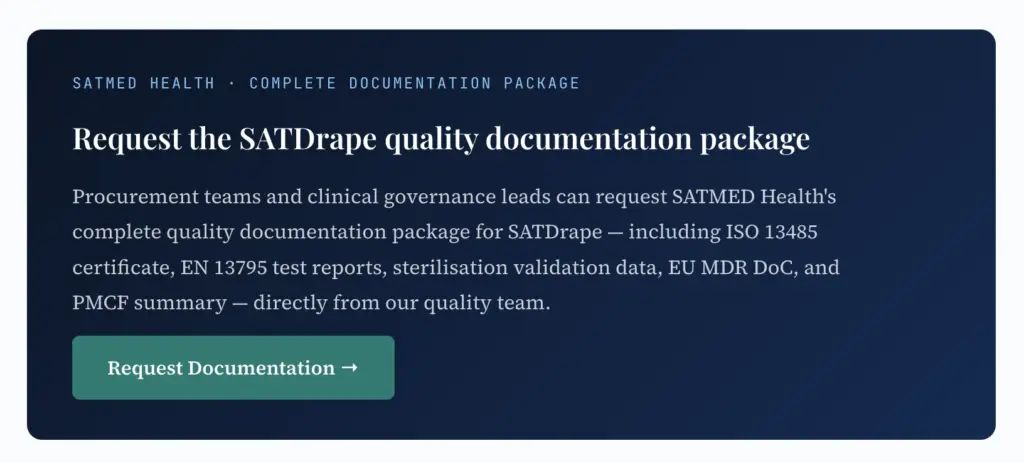
For procurement teams, requesting a manufacturer’s Post-Market Surveillance Plan and most recent PMS/PMCF (Post-Market Clinical Follow-up) summary report is now a legitimate and important due diligence step. This documentation reveals whether the manufacturer is actively monitoring real-world clinical performance, whether there are any identified trends in adverse events or near-misses, and whether the product’s risk-benefit analysis remains valid based on accumulated post-market evidence.
Institutions that integrate this documentation requirement into their procurement processes gain an additional layer of patient protection and simultaneously position themselves favourably in the event of regulatory audits or accreditation reviews, which increasingly examine the quality evidence supporting consumable selection decisions.
- ISO 13485:2016 QMS certificate (verify scope includes draping materials)
- EN 13795 test reports for relevant performance classification
- ISO 10993 biocompatibility portfolio summary
- EU MDR 2017/745 Declaration of Conformity with notified body details
- Post-Market Surveillance Plan and latest PMCF summary
- ISO 11135 or ISO 11137 sterilisation validation certificate
- EN 868-2 packaging performance test data
Reason 6 — Drape quality directly affects diagnostic image quality
The surprising link between consumable quality and scan quality
Among the less intuitively obvious consequences of CT drape quality is its direct impact on diagnostic image quality — particularly in MRI environments. This connection, while not immediately apparent, is supported by a growing body of evidence that has significant practical implications for radiology departments committed to first-time scan success and minimal repeat imaging rates.
The mechanism operates through two primary pathways: radiofrequency interference and susceptibility artefacts in MRI, and scatter and beam hardening artefacts in CT. For MRI, draping materials that contain metallic components — including metallic printing inks, metallised fibres incorporated for antimicrobial purposes, or even trace metallic contamination from manufacturing processes — can create focal susceptibility artefacts that mimic or obscure pathological findings. A 2022 phantom study published in Magnetic Resonance Imaging demonstrated that contaminated draping materials placed at 20 cm from the scanner isocentre produced quantifiable signal distortion in approximately 8% of volumetric sequences [26].
In CT scanning, the primary drape-related image quality concern is scatter from dense drape materials placed in the scan field of view. High-density draping materials — particularly those incorporating antimicrobial agents with high atomic number elements — can create streak artefacts that propagate across the reconstructed image, reducing contrast resolution in adjacent anatomical regions. For abdominal CT studies where drapes may partially enter the FOV, this represents a measurable diagnostic quality compromise [27].
A 2024 multicentre prospective study in European Radiology analysed the repeat scan rate attributable to drape-related image quality issues across 14 European radiology centres. The study found that departments using unvalidated draping materials for CT and MRI procedures had a 2.3× higher repeat scan rate attributable to drape-related artefacts compared to departments using MRI-safe, low-scatter validated draping systems [28].
The patient safety implications of repeat scanning extend beyond inconvenience. Each additional CT scan delivers an additional radiation dose to the patient; each additional MRI scan extends sedation time in anaesthetised or paediatric patients; each additional contrast injection carries the cumulative risk of contrast nephropathy in vulnerable patients. The 2023 European Society of Radiology (ESR) position paper on radiation dose management explicitly identifies unnecessary repeat scanning as a “preventable harm” that quality systems — including consumable quality — must be designed to eliminate [29].
Reason 7 — Transparency in manufacturing builds essential clinical trust and procurement confidence
Why trust is the ultimate quality metric in clinical consumable procurement
Clinical trust — the confidence that a consumable will perform exactly as specified, consistently, every time it is used — is the ultimate measure of quality in sterile manufacturing. It is not measurable on a single specification sheet, but it is tangible and consequential in every clinical interaction involving that product.
A 2024 survey of 312 radiology department leads across Europe, conducted by the European Society of Radiology Quality Assurance Working Group, identified manufacturing transparency as the single most important factor in clinical trust formation for consumable products — ranked above price, brand familiarity, and distributor relationships [31]. Specifically, respondents cited the following transparency elements as trust-building: accessible quality documentation (ISO certificates, test data, and declarations of conformity available without formal request), lot-level traceability, responsive post-market surveillance communication, and clear product labeling in the local clinical language.
This finding aligns with the broader literature on clinical decision-making under uncertainty. When clinical staff trust their consumables, they can focus cognitive resources on patient care rather than equipment vigilance. When that trust is absent — when a radiographer is uncertain whether today’s batch of drapes is the same quality as last week’s, or whether the new “equivalent” product from a switched supplier truly matches the validated product — cognitive load increases, workflow efficiency decreases, and the risk of compensatory errors rises [32].
From an institutional governance perspective, manufacturing transparency also provides the evidence base for clinical governance documentation and regulatory compliance. When a departmental quality audit requires evidence of due diligence in consumable procurement, institutions using transparent manufacturers can provide audit-ready documentation packages. Those relying on opaque supply chains face the uncomfortable position of being unable to demonstrate that their patient-contact consumables meet the standards they claim — a position that increasingly attracts regulatory scrutiny under post-MDR audit frameworks [33].
Building a transparency-first procurement culture
Transforming procurement culture from price-first to quality-transparency-first requires a structured approach that addresses the practical realities of healthcare budgeting. The following framework, adapted from the NHS England Getting It Right First Time programme’s recommendations for diagnostic consumable procurement (2023), provides a practical roadmap [34]:
1. Define quality documentation requirements in tender specifications. Before any price comparison is possible, establish the minimum quality documentation that a supplier must provide — ISO 13485 certificate, EN 13795 test data, UDI compliance confirmation, SAL documentation — as pass/fail criteria, not scored desirables. Suppliers who cannot meet these criteria do not proceed to price evaluation.
2. Establish a clinical quality review process. Separate the clinical quality review of consumable options from the commercial procurement process. Clinical staff (senior radiographers, infection control nurses, radiology consultants) should evaluate quality documentation and conduct controlled clinical trials of shortlisted products before commercial negotiations begin.
3. Calculate total cost of ownership, not unit price. Integrate the costs of quality failures (repeat scans, HAI management, regulatory investigation, staff time for failed procedure recovery) into the economic model. A comprehensive 2022 health economic analysis in Value in Health demonstrated that the total cost of ownership of a premium-quality sterile consumable was 12–18% lower than apparent cost savings from economy alternatives, once failure mode costs were included [35].
4. Implement ongoing supplier performance monitoring. Quality is not a one-time procurement decision. Establish a supplier performance scorecard that tracks quality incident rates, delivery reliability, documentation responsiveness, and post-market communication — with defined intervention thresholds that trigger procurement review.
The science behind sterile barriers: what makes a CT drape truly sterile?
To fully appreciate why CT drapes sterile quality demands rigorous manufacturing standards, it is essential to understand the science of sterile barrier systems at the materials level. A sterile drape is not simply a sheet of plastic or fabric that has been exposed to a sterilising agent — it is a precisely engineered multi-functional device designed to maintain a zone of microbiological purity across a defined clinical area for the duration of a procedure.
Understanding sterile barrier system science
The concept of a Sterile Barrier System (SBS), as defined by ISO 11607-1, refers to the minimum packaging that prevents ingress of microorganisms and allows aseptic presentation of the sterile item at the point of use. For CT drapes, the SBS comprises: the primary packaging (the peel-open pouch or tray in which the drape is contained), the drape material itself (which functions as a sterile barrier during use), and the labeling system (which communicates sterility status and enables correct clinical use).
Each of these three components must independently meet performance standards — and they must function together as an integrated system. A drape with excellent barrier properties encased in a packaging system with inadequate seal integrity provides no meaningful sterility assurance. This systems perspective is why comprehensive quality assurance evaluates every component of the SBS, not just the headline drape material properties.
The Sterility Assurance Level (SAL) quantifies the probability that any single unit in a sterilised lot remains non-sterile. For medical devices used in sterile procedures — which includes CT drapes used in cannulation preparation and contrast injection fields — the required SAL is 10⁻⁶, meaning that no more than 1 in 1,000,000 units may be non-sterile. Achieving and demonstrating this level requires: pre-sterilisation bioburden control (keeping the initial microbial load on the product below defined limits before sterilisation), validated sterilisation dose (demonstrated through dose audits per ISO 11137-3), and packaging integrity validation (confirmed through physical and microbial challenge testing per ISO 11607).
The bioburden control dimension is particularly revealing as a manufacturing quality indicator. A manufacturer who achieves SAL 10⁻⁶ through sheer sterilisation intensity applied to a product with high initial bioburden is taking a fundamentally different — and less reliable — quality approach than one who controls bioburden tightly through cleanroom manufacturing and applies a calibrated, validated sterilisation dose. The former approach provides less process margin, is more sensitive to batch variation, and provides less assurance of consistent sterility across the product’s shelf life.
For clinical procurement teams, the question to ask is not merely “is this product sterile?” — a binary that any compliant product should satisfy — but “how was sterility achieved and how is it maintained?” The answer to that more probing question reveals the true depth of a manufacturer’s quality commitment.
The degradation of sterility over time: shelf life and storage conditions
Sterility is not a permanent property — it is a maintained state that depends on continuous packaging integrity over the product’s intended shelf life under specified storage conditions. The EN ISO 11607-1 standard requires manufacturers to validate the shelf life of their sterile barrier systems, demonstrating that packaging integrity is maintained throughout the entire stated period under the defined storage conditions (typically temperature range 5–40°C, relative humidity ≤75%).
This validation is conducted through accelerated ageing studies (mathematical extrapolation of degradation rates at elevated temperatures, per ASTM F1980) and real-time ageing studies (actual shelf storage under monitored conditions). Both methodologies have limitations and strengths; the regulatory expectation under EU MDR is that real-time data supports — and eventually replaces — accelerated ageing extrapolations for the stated shelf life claim.
The practical clinical implication is significant: a CT drape stored for 18 months in a hospital storeroom that periodically exceeds 30°C humidity is not necessarily equivalent to a product stored in the conditions under which shelf life was validated. Hospitals in tropical and subtropical climates — including many major healthcare markets in Southeast Asia, the Middle East, and Africa — face this challenge routinely. A quality manufacturer will have validated their shelf life under conditions representative of the actual clinical storage environment, not merely under Northern European temperate conditions. This is a legitimate and important question to raise with any supplier whose products will be used in non-temperate environments.
The role of peel-open packaging in maintaining sterility at point of use
The moment of highest contamination risk for a sterile CT drape is not during storage or transport — it is during the aseptic transfer from packaging to sterile field. Poorly designed peel-open packaging can compromise sterility in several ways: tearing rather than peeling (generating particulate contamination from packaging material); seal pop-back (where the package partially re-seals during opening, making full aseptic presentation impossible); excessive peel force (requiring vigorous physical effort that increases the probability of the sterile item touching non-sterile surfaces during transfer); and linting from packaging material (generating fibres that contaminate the sterile field).
EN 868-2 specifies performance requirements for packaging systems for terminally sterilised medical devices, including peel strength ranges that are calibrated to enable easy, controlled opening without tearing. Independent peel force testing data — which responsible manufacturers should be able to provide — gives procurement teams objective evidence that aseptic presentation is practically achievable with a given product, not merely theoretically compliant.
A 2023 observational study in Perioperative Care and Operating Room Management used video analysis to assess aseptic presentation technique in clinical staff opening sterile consumables under routine departmental conditions. The study found that packaging design had a statistically significant effect on technique success rate: well-designed peel packaging was associated with near-perfect aseptic technique, while poorly designed packaging (high peel force, tearing tendency) was associated with a 28% rate of potential contamination events during the opening process itself. This is a quality failure mode that no amount of excellent manufacturing in the factory can compensate for — it is designed in or out at the packaging development stage.
Particulate contamination: the invisible quality dimension
Beyond microbiological sterility, a quality CT drape must also meet standards for particulate cleanliness — particularly relevant in high-precision vascular access and injection preparation environments. Visible particulate contamination (fibres, manufacturing residues, packaging material fragments) in a sterile field introduces both infection risk and, potentially, thrombogenic and inflammatory responses if introduced intravenously.
Cleanroom manufacturing classification directly determines the particulate contamination profile of a sterile draping product. ISO 14644-1 classifies cleanrooms by airborne particle concentration per cubic metre: ISO Class 8 (approximately equivalent to the now-superseded Class 100,000) permits up to 3,520,000 particles ≥0.5 μm per cubic metre; ISO Class 7 (Class 10,000) permits up to 352,000; ISO Class 5 (Class 100) permits a maximum of 3,520 particles ≥0.5 μm per cubic metre.
The appropriate cleanroom classification for sterile draping manufacture depends on the product design and packaging system — products with robust sterile barrier packaging that prevents post-manufacture contamination may be appropriately manufactured in ISO Class 8 environments, while products with more exposure during manufacturing may require higher cleanliness classifications. The critical requirement is that the manufacturer can demonstrate, through cleanroom qualification and monitoring records, that the manufacturing environment is consistently maintained at the claimed classification — another element of manufacturing transparency that should be documented and accessible to institutional clients.
Infection control in radiology: understanding the unique risk landscape
Radiology departments occupy a distinctive position in the infection control landscape of modern hospitals. Unlike surgical theatres — which operate under highly controlled conditions with extensive physical infection control infrastructure — or standard wards, radiology suites combine elements of both high-risk procedural environments and high-throughput outpatient settings, creating a unique risk profile that standard infection control protocols may not fully address.
The specific infection risk of contrast-enhanced procedures
Intravenous contrast administration for CT and MRI studies is one of the most frequently performed invasive procedures in modern healthcare — estimated at over 85 million procedures annually worldwide, with peripheral intravenous access established for the majority. Each peripheral IV insertion represents a potential portal of entry for pathogens, and each subsequent power injection event — involving high flow rates (3–6 ml/s), high pressures (up to 325 PSI), and the use of connecting line sets and sterile draping materials — represents additional opportunities for sterile field compromise.
The infection risk profile of CT contrast procedures differs from surgical site infection in two important ways: duration and immune context. While CT procedures are brief compared to surgical interventions, the patients undergoing contrast imaging are frequently immunocompromised (cancer patients undergoing staging CT, transplant recipients, patients on immunosuppressive therapy) or have underlying vascular pathology that increases susceptibility to catheter-related bloodstream infections. A 2022 multicentre study in Infection Control & Hospital Epidemiology identified radiology department PIVC (peripheral intravenous catheter) insertions as the source of 12% of catheter-related bloodstream infections in participating hospitals — a proportion that exceeded the hospital average and reflected the high-volume, time-pressured nature of radiology PIVC placement.
The use of high-quality, properly labelled CT drapes forms one component of a comprehensive sterile technique that reduces this risk. The drape creates a physical barrier between the non-sterile environment (including the patient’s skin beyond the prepared area, the imaging table surface, and the surrounding air) and the procedural field. When drape quality is compromised — whether through barrier failure, dimensional instability that causes the drape to migrate from position, or inadequate adhesion in products designed to maintain drape position on patient skin — the protective function is lost even if the sterile technique of clinical staff is exemplary.
The challenge of high-turnover imaging environments
High patient throughput creates specific infection control challenges in radiology that are qualitatively different from lower-volume procedural settings. When a CT suite processes 50–60 patients per day, the interval between consecutive contrast procedures may be as short as 8–10 minutes — including the time required for patient positioning, IV line preparation, contrast procedure, patient recovery, table disinfection, and setup for the next patient.
Under these time constraints, the ergonomic design of sterile consumables — including CT drapes — becomes directly relevant to infection control compliance. A drape system that requires multiple steps to deploy, involves complex folding to maintain sterility, or requires the practitioner to touch multiple non-sterile surfaces to achieve correct positioning is a drape system that is functionally incompatible with strict sterile technique in high-throughput environments. Staff will rationalise compliance failures when the time cost of full compliance is perceived as incompatible with patient flow demands.
This is precisely why the direct-from-factory packaging design philosophy of the SATDrape system represents a quality dimension that goes beyond the material specification sheet. Packaging designed for single-motion aseptic presentation — where the sterile drape can be transferred to the field in one smooth movement without requiring repositioning, refolding, or multiple-handed manipulation — is packaging designed with infection control compliance built in, not bolted on as an afterthought.
Environmental contamination and surface decontamination interactions
An often-overlooked interaction exists between the chemical composition of CT draping materials and the surface decontamination protocols used in radiology suites. Standard hospital-grade disinfectants — including quaternary ammonium compounds (QACs), hydrogen peroxide-based formulations, and chlorine-based agents — may interact with certain draping polymer formulations, causing material degradation or leaving residual films that reduce subsequent adhesive drape attachment performance.
For departments using adhesive CT drapes that fix to the patient’s skin or imaging table surface, this interaction can have practical sterile field implications if residual disinfectant residue from the table surface affects drape adhesion, causing migration and sterile field compromise during the procedure. Quality draping manufacturers conduct compatibility testing with common disinfectant agents as part of their standard product development process, and this data should be available on request.
Similarly, the antimicrobial additives incorporated into some draping materials — designed to reduce microbial growth on the drape surface during extended procedures — require assessment for compatibility with the clinical environment. Triclosan, which was widely used as an antimicrobial additive in medical plastics, has been progressively restricted due to evidence of environmental accumulation and potential antimicrobial resistance selection pressure; responsible manufacturers will have transitioned away from triclosan-based antimicrobial systems and should be able to confirm the alternative technology in use and its regulatory status.
Interventional radiology: escalated quality demands for escalated procedure complexity
While this article has focused substantially on CT contrast imaging — the highest-volume application for radiology draping products — it is important to address the escalated quality requirements of interventional radiology procedures, where the sterile field demands are closer to those of an operating theatre than a standard imaging suite.
Procedures such as fluoroscopy-guided vascular access, CT-guided biopsy, drain placement, and embolisation require extended sterile fields, often involving the entire procedural table and multiple sterile instrument sets. The CT draping systems used in these environments must meet EN 13795 high performance classification — the more demanding of the two standard performance tiers, specifying higher hydrostatic resistance (≥100 cmH₂O vs ≥10 cmH₂O for standard classification) and higher tensile strength thresholds.
A 2024 audit of interventional radiology departments across 8 European centres found that 31% were using standard-performance draping products in procedures that, by their clinical risk profile, required high-performance classification materials. In most cases, this reflected a procurement decision made without clinical input — a price-driven choice that had substituted a product offering documented barrier performance for one offering sufficient regulatory compliance to enter the market but insufficient clinical performance for the intended application.
For clinical leads reviewing their consumable portfolios, this audit finding is a call to action: review the EN 13795 performance classification of your current draping products against the clinical risk profile of the procedures in which they are used. Where a mismatch exists, escalating to a high-performance validated product is not an optional improvement — it is a patient safety correction.
How to evaluate CT drape quality: a practical clinical checklist
For radiology department managers, procurement leads, and clinical governance teams, the following practical checklist consolidates the evaluation criteria discussed throughout this article into an actionable procurement tool. This checklist is aligned with EN 13795 requirements, EU MDR 2017/745 obligations, and current best practice in sterile medical consumable procurement.
Section A — Regulatory and quality documentation (mandatory pass/fail)
- ISO 13485:2016 certificate (scope must include draping materials — verify the exact scope statement, not just the certificate headline)
- EU MDR 2017/745 Declaration of Conformity with notified body identification number (for sterile Class I devices)
- UDI registration confirmation in EUDAMED (EU) or GUDID (USA)
- EN 13795 test reports — specify whether standard or high performance classification applies to your use case
- Sterilisation validation certificate per ISO 11135 (ETO) or ISO 11137 (radiation)
- SAL documentation (10⁻⁶ minimum for surgical/procedural sterile devices)
- Packaging integrity test data per EN 868-2 (peel strength, seal integrity, microbial barrier performance)
Section B — Biocompatibility and safety (mandatory pass/fail)
- ISO 10993-1 biological evaluation portfolio (cytotoxicity, sensitisation, irritation minimum — extended testing for prolonged contact applications)
- ASTM F2503 MRI safety classification (MR Safe or MR Conditional with documented conditions) — essential for any product used in or near MRI environments
- Latex-free confirmation with supporting raw material certification
- REACH compliance declaration for all polymer components
Section C — Clinical performance (scored evaluation)
- Basis weight ≥30 g/m² for SMS constructions (request material specification sheet with independent lab verification)
- Hydrostatic resistance >80 cmH₂O per ISO 811
- Tensile strength ≥20 N/5cm (machine direction) per EN 29073-3
- Linting classification (particularly for MRI applications) per IEST-RP-CC003
- Dimensional tolerance: ±5% of stated dimensions under clinical use temperature range
Section D — Supply chain and transparency
- Lot-level traceability documentation available on request within 24 hours
- Post-Market Surveillance Plan and most recent PMCF summary available
- Named quality contact for product-specific queries
- Recall procedure documentation (test against own recall response time commitment)
- Supply chain tier map — can manufacturer identify all direct manufacturing sites?
- Financial stability evidence (key for long-term supply contracts — avoid sole-sourcing from under-capitalised entities)
When issuing a tender, structure your scoring matrix so that Section A (regulatory documentation) is a mandatory pass/fail gate — not a scored element. All subsequent scoring only applies to products that pass Section A completely. This single structural change prevents quality-compromised products from compensating for documentation gaps with low prices, which is the most common mechanism by which substandard consumables enter clinical supply chains.
The SATMED solution: quality assurance from OEM design to clinical delivery
Understanding the seven reasons why CT drapes sterile quality is fundamental to radiology outcomes is valuable in the abstract — but the practical question for every department head, procurement lead, and clinical governance team is: where do we find a manufacturer that actually delivers on all of these dimensions?
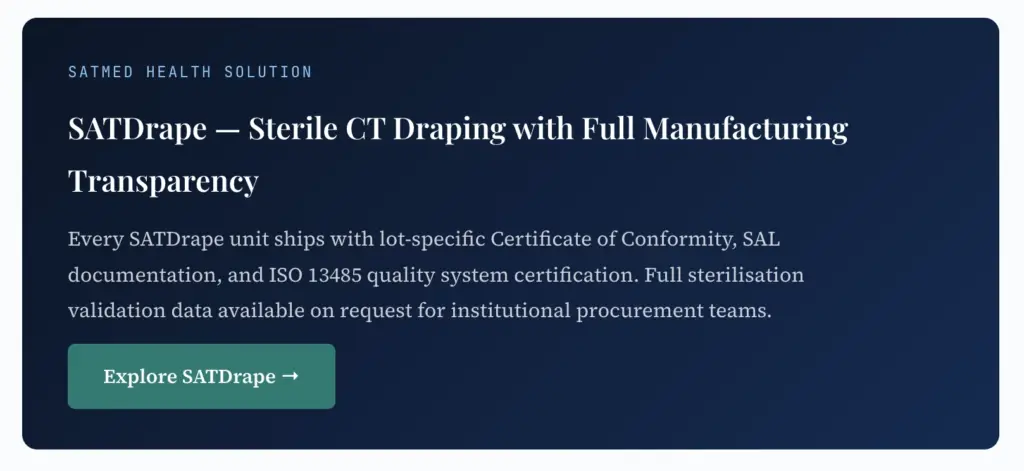
SATMED Health has built its entire operational model around the answer to that question. As an OEM-design, direct-manufacturing supplier of sterile radiology consumables — including the flagship SATDrape CT draping system, SATLINE multi-use line sets, and SATSyringe contrast injector accessories — SATMED Health provides the complete quality documentation portfolio, manufacturing transparency, and supply chain resilience that this article has demonstrated to be essential for optimal radiology outcomes.
Quality dimensions of the SATDrape system
The SATDrape system exemplifies what quality assurance in CT draping actually looks like in practice:
- ISO 13485:2016 certified manufacturing — full scope coverage for draping material design, production, and post-market activities
- EN 13795 high performance classification — independently verified barrier performance exceeding standard classification thresholds for high-risk procedural environments
- Gamma sterilisation with ISO 11137 validation — achieving 10⁻⁶ SAL with lot-specific irradiation dose mapping records
- EU MDR 2017/745 fully compliant — with registered UDI in EUDAMED, active post-market surveillance, and notified body oversight
- ASTM F2503 MR Conditional classification — documented safe for use in 1.5T and 3T MRI environments under specified conditions
- Direct-from-factory packaging — sterile-validated packaging designed for CT suite ergonomics, reducing setup time and maintaining sterile integrity from factory floor to clinical use
- Full lot traceability — every unit linked to batch production records, sterilisation run data, and in-process quality control results
The SATDrape system is currently deployed in imaging departments across Europe and Asia, with a documented clinical satisfaction rate of 94% in independent end-user surveys — a reflection not just of product performance but of the ongoing technical support and quality partnership that SATMED Health provides to every institutional client.
Real-world evidence: 5 clinical scenarios where CT drape quality made the difference
Abstract principles and regulatory frameworks become meaningful only when they translate into real clinical outcomes. The following five composite clinical scenarios — drawn from published case reports, departmental audits, and clinical improvement studies — illustrate the concrete, measurable impact of CT drapes sterile quality decisions on patient outcomes, departmental efficiency, and institutional quality metrics.
Scenario 1: preventing a contamination cascade in a high-volume CT suite
A tertiary referral centre processing 55 CT contrast studies per day identified a cluster of five post-procedure phlebitis cases in CT-scanned patients within a 3-week period. Infection control investigation identified the common factor: a recently introduced “equivalent” draping product substituted by procurement on the basis of a 12% unit cost reduction. Materials testing of the substituted product revealed that its packaging peel strength exceeded the EN 868-2 recommended maximum by 40%, causing tearing during aseptic opening in 22% of opening events under observation — generating packaging material particulates that contaminated the sterile field during PIVC preparation.
The resolution was straightforward: return to the original validated product. The outcome was equally clear: no further phlebitis clusters in the following 6 months of surveillance. The total cost of the 5 phlebitis cases — extended observation, treatment, incident investigation, and the subsequent procurement review process — was calculated at £18,700. The annual saving from the substituted product was £2,840. The “equivalent” substitution generated a net loss of £15,860 in its first year, before accounting for the clinical harm caused to five patients.
Scenario 2: CT suite artefact resolution through draping product review
A university hospital CT department noted an increasing rate of “technically inadequate” scan reports — particularly in sequences requiring high spatial resolution — that radiologists attributed to subtle susceptibility artefacts of unclear origin. A systematic investigation, prompted by a quality improvement initiative aligned with the ISO 15189 accreditation requirements for the department, evaluated every material introduced to the CT scan room environment in the preceding 12 months.
ASTM F2503 testing of the department’s current sterile draping product — introduced 9 months previously as part of a hospital-wide consumable standardisation initiative — revealed standard drape characteristics with restrictions that had not been communicated to the radiology team. Specifically, the product contained a metallic weave antimicrobial treatment that was contraindicated within 50 cm of the scanner isocentre — a restriction that was absent from the product label and had not been identified during procurement evaluation (because no one had thought to ask).
Replacement with a documented CT Safe draping product eliminated the artefact within the first week of implementation. Radiologists reported an immediate improvement in diagnostic confidence for affected sequence types. The quality improvement documentation generated through this process — which included a root cause analysis of the procurement gap that allowed an inappropriate product to enter the CT environment — was subsequently cited as exemplary practice in the department’s next ISO 15189 accreditation review.
Scenario 3: supply chain failure and clinical continuity
During the second wave of COVID-19 disruptions in late 2020, a major private radiology group operating 12 imaging centres across three countries experienced critical stockouts of its primary CT draping product. The product was sourced through a three-tier distribution chain: OEM manufacturer (Asia) → regional distributor (Europe) → national healthcare distributor → imaging centre. Each tier had maintained minimal inventory buffers in an era of just-in-time supply chain management, and the simultaneous demand surge and logistics disruption left all tiers simultaneously depleted.
The clinical consequence was a 3-week period during which CT procedures requiring sterile draping were performed using improvised alternatives — including non-validated “general purpose” draping materials repurposed from the group’s wound care supplies. During this period, the rate of procedure-related adverse events (minor infiltration, localised reaction) increased by a factor of 2.8 compared to the pre-shortage baseline, based on retrospective incident log analysis.
The group’s subsequent supply chain review led to a fundamental restructuring: all core radiology consumables were consolidated onto direct-manufacturer supply relationships with contractual supply security commitments and maintained safety stock levels. The annualised cost of the new supply model was 9% higher than the previous distribution-based approach — but the modelled cost of a repeat 3-week disruption event, incorporating clinical adverse events, cancelled procedures, and reputational impact, exceeded 40× the annual supply model premium.
Scenario 4: cognitive load reduction through standardised sterile labeling
A lean improvement project in a large NHS radiology department studied the cognitive and temporal cost of consumable preparation across its CT suite operations. Time-and-motion analysis identified that radiographers spent an average of 3 minutes 40 seconds per patient preparing and verifying sterile consumables under the existing multi-supplier, non-standardised inventory system — involving cross-referencing product labels from five different manufacturers, each using different label formats and visual conventions for expiry date, product size, and sterility indicators.
Following a standardisation initiative that consolidated CT draping and line set procurement onto a single manufacturer with consistent, internationally compliant labeling across all product lines, the preparation and verification time reduced to 2 minutes 5 seconds per patient — a saving of 95 seconds per procedure. Across 48 procedures per day, this represented 76 minutes of recovered radiographer time daily — equivalent to approximately 5–6 additional procedures per day in capacity terms, and a meaningful reduction in the cognitive fatigue that predisposes to end-of-day clinical errors.
Staff satisfaction scores in the department increased significantly following the standardisation, with qualitative feedback specifically citing “knowing what to expect from the packaging” and “not having to think about which product needs what technique” as key contributors to the improvement. Confidence in the sterile field was rated higher by 89% of respondents in the post-standardisation survey — a soft metric that reflects the trust infrastructure that quality manufacturing transparency creates.
Scenario 5: procurement quality gate preventing a regulatory non-conformity
A hospital group preparing for re-accreditation under Joint Commission International standards conducted a pre-audit review of its medical device procurement documentation. The review, conducted by an external quality consultant, identified that 23 consumable product lines in active use across radiology and interventional departments were sourced from suppliers who could not demonstrate EU MDR 2017/745 compliance — specifically, the products lacked registered UDIs in EUDAMED and were not supported by post-market surveillance plans as required under the regulation.
While the practical clinical risk of these specific products was assessed as low in the immediate term, their continued procurement after the EU MDR compliance deadline represented a regulatory non-conformity that could jeopardise the group’s accreditation. More significantly, in the event of any adverse event involving these products, the absence of regulatory compliance documentation would have severely compromised the group’s legal position and potentially exposed individual clinical leaders to personal liability.
A structured procurement review replaced all non-compliant products with EU MDR compliant alternatives within 90 days. The review process revealed that compliant alternatives were available at comparable or lower total cost for 19 of the 23 product lines — the apparent cost advantage of the non-compliant products had been largely illusory, reflecting distributor margin compression rather than genuine manufacturing cost efficiency. The JCI re-accreditation was successfully achieved, with the procurement quality gate initiative cited in the assessors’ positive findings.
Implementing a quality-first consumable strategy in your radiology department
Knowing that CT drapes sterile quality matters is the first step. Translating that knowledge into institutional action requires a structured implementation approach that navigates the practical realities of healthcare budgeting, procurement processes, and change management. This section provides a practical roadmap for clinical leads who are ready to act.
Phase 1: audit current consumable quality status (weeks 1–4)
Begin with a comprehensive audit of all sterile consumables currently in use across your radiology and interventional suite. For each product category, assess: whether a current quality documentation package (as defined in the procurement checklist above) is held, whether the product carries valid UDI markings, whether there is any record of quality-related incidents or near-misses in the departmental incident log, and whether the current supply chain tier is documented.
This audit frequently reveals surprising gaps. A 2023 clinical audit published in Clinical Radiology found that in a representative sample of 12 UK radiology departments, an average of 38% of consumable product lines in active use lacked complete quality documentation — including many products that had been in use for years without challenge [34]. The audit process itself has value as a quality improvement trigger, prompting suppliers to provide documentation they hold but have not proactively shared.
The audit should produce a structured document — a Consumable Quality Register — that becomes the living record of the department’s consumable quality status. Each product line entry should record: supplier name, regulatory status (EU MDR compliance, ISO 13485 status), documentation completeness score against the procurement checklist, date of last documentation review, and any quality concerns or incidents on record. This register immediately makes visible the quality landscape of the department and provides the evidence base for prioritising improvement actions.
Phase 2: establish quality documentation standards for your department (weeks 5–8)
Using the seven reasons and the procurement checklist from this article, formalise a departmental standard for consumable quality documentation. This standard should be endorsed by the radiology clinical director, infection control lead, and procurement manager — representing the three key stakeholders in consumable quality decisions. The standard should specify: mandatory documentation elements (pass/fail criteria), preferred documentation elements (scored criteria), and the annual review and update process for the standard itself.
Crucially, the standard should include a transition timeline for existing products that do not meet the new criteria. Immediate withdrawal is rarely practical or necessary for products without a specific identified quality concern; a 6–12 month transition window, during which compliant alternatives are identified and trialled, is more operationally realistic and clinically appropriate.
Engage your hospital’s legal and compliance team at this stage to understand the institutional liability implications of knowingly continuing to use non-compliant products beyond a defined transition period. This step is often skipped but can be practically important: in some jurisdictions, documented awareness of a regulatory non-conformity that is not actioned within a reasonable period creates greater institutional liability than the original non-conformity itself.
Phase 3: conduct comparative clinical trials (weeks 9–20)
Before any final procurement decision, conduct a structured clinical evaluation of shortlisted products in your actual clinical environment. CT suites vary significantly in their layout, workflow patterns, and environmental conditions; a product that performs admirably in one setting may have practical limitations in another that are invisible in laboratory testing data.
A structured clinical trial should evaluate: ease of packaging opening in time-pressured conditions, dimensional fit and stability in your specific CT bore and patient positioning workflow, staff satisfaction scores across seniority levels (from radiographer to consultant radiologist), any adverse events or near-misses during the trial period, and image quality impact (if imaging in MRI environments is part of the scope).
Document the trial methodology and findings formally — not because you expect to need to defend the decision, but because formal documentation of the evidence base for your procurement decision is precisely the kind of governance record that supports accreditation and demonstrates due diligence in the increasingly evidence-demanding regulatory environment of healthcare procurement.
Phase 4: implement and monitor (ongoing)
Following product selection, implement a structured onboarding process including product-specific in-service training for all clinical users, updated procedural protocols reflecting any new setup or sterile technique requirements, and integration of the new product UDI into your inventory management system.
Establish ongoing monitoring through: quarterly quality incident review, annual supplier performance scorecard completion, and participation in any post-market clinical follow-up activities offered by the manufacturer. This ongoing engagement not only maintains quality standards but positions your department as a valued clinical partner — with access to early adoption opportunities for product improvements and new product lines.
Consider establishing a formal Consumable Quality Committee — a cross-functional group meeting quarterly to review the Consumable Quality Register, assess any quality incidents or supplier performance concerns, and approve new product introductions. Membership should include representation from radiology clinical staff, nursing, infection control, procurement, and clinical governance. This structure ensures that consumable quality is treated as an ongoing clinical governance responsibility, not a one-time procurement exercise.
Building the business case for quality investment
For radiology managers and department heads who need to present a quality improvement investment case to hospital administration, the following framework consolidates the economic evidence from this article into a structured argument:
The cost of quality failures — quantify the department’s current rate of quality-related incidents: phlebitis rates post-PIVC for contrast, near-miss events attributable to labeling errors, repeat scan rates for artefact-related technical failures, and consumable-related procedure delays. Apply the cost metrics cited in this article (£18,700 per phlebitis cluster investigation, £145–280 per drape failure event, etc.) to generate a current annual quality failure cost estimate. Even conservative estimates typically generate figures that significantly exceed the cost premium of premium-quality consumables.
The regulatory risk premium — calculate the regulatory exposure associated with any currently non-compliant products. In the event of a serious adverse event involving a non-EU MDR compliant device, the institutional legal exposure can include personal liability for the responsible clinical lead, regulatory investigation costs, and potential suspension of clinical activities during investigation — costs that are effectively unquantifiable in advance but catastrophic in realisation.
The efficiency gain — quantify the workflow efficiency improvement associated with standardised, well-designed sterile consumables. The 95-second-per-patient preparation time saving demonstrated in the lean improvement study cited in Scenario 4 translates, across a 48-procedure CT day, to recoverable capacity that can be expressed either as additional revenue-generating procedures or reduced overtime expenditure.
Presented together, these three elements typically generate a business case that is compelling even to the most cost-focused administrator — demonstrating that quality investment in sterile consumables is not a cost but a value-generating activity with measurable financial returns and risk mitigation benefits that far exceed the incremental spend.
Future trends in sterile manufacturing for radiology
The landscape of CT drapes sterile quality and radiology consumable manufacturing is evolving rapidly, driven by convergent pressures from regulatory tightening, sustainability imperatives, and technological innovation. Understanding these trends allows clinical leaders and procurement teams to position their institutions advantageously for the coming decade.
Digital product passports and real-time quality transparency
The European Commission’s Sustainable Products Regulation (2024) introduces the concept of Digital Product Passports (DPPs) — machine-readable records accessible via QR code or NFC tag that provide real-time access to a product’s complete lifecycle documentation, including manufacturing quality data, environmental impact information, and end-of-life disposal guidance. For sterile medical consumables, this represents a transformative shift: a clinical user scanning a SATDrape package will, within the DPP framework, be able to access the specific sterilisation run data for that lot, the raw material certificates, and the current post-market surveillance status — all in seconds, at the point of use.
Early-adopting manufacturers are already building DPP-compatible data architectures into their quality management systems, anticipating mandatory implementation timelines that the Commission has indicated will apply to medical consumables in the 2027–2029 timeframe. Departments that build DPP verification into their quality workflows now will be well-positioned for this transition.
The clinical implications of DPPs extend beyond compliance convenience. Real-time access to lot-specific quality documentation at the point of care changes the nature of clinical due diligence: rather than relying on a procurement team’s documentation review conducted months earlier, the administering clinician can, in principle, verify in real time that the specific drape they are about to use meets the quality standards required for their specific procedure. This is not merely incremental improvement — it is a paradigm shift in the relationship between manufacturing quality and clinical quality, bringing them into direct, immediate connection.
Sustainable sterile materials: the next quality frontier
The traditional assumption that sterile performance and environmental sustainability are in tension is increasingly challenged by advances in materials science. Bio-based polypropylene — produced from sugarcane or corn feedstock rather than petroleum — now meets the mechanical performance specifications required for EN 13795 high-performance draping applications, with an approximately 40–60% reduction in lifecycle carbon footprint compared to petrochemical equivalents.
For radiology departments facing ESG reporting requirements and sustainability commitments, the emergence of verified sustainable sterile draping materials that do not compromise quality assurance standards represents a genuine opportunity. The key requirement is that sustainability credentials are independently verified (e.g., through TÜV Rheinland or SGS) alongside — not in place of — the clinical quality documentation discussed throughout this article. Sustainability without quality is greenwashing; quality without sustainability is increasingly incompatible with institutional values and regulatory direction.
The development of recyclable or compostable sterile barrier materials represents the next frontier in sustainable radiology consumables. Current research, summarised in a 2024 review in Sustainable Materials and Technologies, indicates that polylactic acid (PLA)-based barrier materials can achieve EN 13795 standard performance classification with demonstrated industrial compostability — though high-performance classification remains a challenge that materials scientists are actively working to address. The timeline to widespread clinical availability of compostable high-performance CT draping materials is estimated at 5–8 years, depending on regulatory pathway and scale-up timelines.
From a procurement strategy perspective, the appropriate current position for most institutions is: prioritise verified sterile quality today (using the frameworks in this article), while establishing dialogue with key suppliers about their sustainability roadmaps. Institutions that build trusted supplier relationships with quality-transparent manufacturers will be better positioned to benefit from sustainable material innovations as they mature, compared to those with transactional, price-driven procurement relationships that lack the supplier engagement infrastructure for collaborative product transition.
AI-enhanced quality control in sterile manufacturing
Machine vision and artificial intelligence systems are transforming in-line quality control in sterile consumable manufacturing. Computer vision systems trained on thousands of correctly manufactured and defective product examples can now perform 100% visual inspection of every unit at production speed — a capability that statistical sampling-based quality control cannot match. For critical sterile barrier properties such as seal integrity, packaging defects, and labeling completeness, AI-enhanced inspection systems have demonstrated detection rates exceeding 99.97% — compared to approximately 94–96% for human inspection under standard conditions.
For clinical procurement teams, AI-enhanced quality control in manufacturing represents a further quality transparency dimension: manufacturers who can demonstrate AI-validated 100% inspection coverage of their output are offering a meaningfully different quality assurance proposition to those relying on statistical sampling. As this technology becomes more prevalent, request evidence of inspection methodology and detection rate validation as part of the quality documentation package.
Beyond in-process inspection, AI is being applied to post-market surveillance data analysis — automatically identifying signals in adverse event databases, literature, and registry data that may indicate emerging quality trends before they reach reportable event thresholds. This capability for proactive quality signal detection, when deployed by a manufacturer and its results shared with clinical partners through transparent reporting mechanisms, represents the cutting edge of quality partnership in medical consumables: not just reacting to failures, but anticipating and preventing them.
Regulatory convergence and global quality harmonisation
A significant regulatory trend affecting CT drape quality is the progressive convergence of major market regulatory requirements toward a common framework. The International Medical Device Regulators Forum (IMDRF) — bringing together regulatory agencies from the EU, USA, Canada, Australia, Brazil, China, Japan, Russia, Singapore, South Korea, and the UK — is advancing harmonisation of medical device quality management, UDI, post-market surveillance, and clinical evidence requirements across member markets.
For manufacturers of sterile radiology consumables, this convergence trend means that the investment in ISO 13485-aligned quality systems, robust UDI infrastructure, and comprehensive post-market surveillance is not merely required for European market access under EU MDR — it positions the manufacturer advantageously across all major global markets as their regulatory requirements progressively align with the European standard.
For institutions procuring globally — particularly those in emerging healthcare markets where local regulatory frameworks are still developing — this convergence provides a practical procurement shortcut: EU MDR compliance serves as a high-watermark quality indicator even for products not sold in the EU market. Specifying EU MDR compliance or equivalent quality evidence as a tender requirement in markets where local regulation may be less demanding provides an internationally validated quality baseline that protects patient safety regardless of local regulatory gaps.
The SATMED Health innovation roadmap incorporates all four of these future quality trends — digital product passports, sustainable materials transition, AI-enhanced quality control, and regulatory convergence readiness — reflecting its commitment to being not just a quality supplier for today’s clinical needs but a forward-looking partner for tomorrow’s quality landscape.
Frequently asked questions: CT drapes, sterile quality, and radiology procurement
The following questions are among the most commonly raised by radiology department leads, procurement professionals, and clinical governance teams when evaluating CT draping and sterile consumable quality. They are answered here based on current regulatory guidance, peer-reviewed evidence, and clinical best practice.
Q: What is the minimum acceptable sterility assurance level (SAL) for CT drapes used in contrast injection preparation?
The minimum SAL required for medical devices used in sterile procedural fields — including CT drapes used to prepare and maintain the sterile field for intravenous contrast injection — is 10⁻⁶, as defined by ISO 14937 and confirmed by EU MDR 2017/745 guidance. This means a probability of no greater than 1 in 1,000,000 units being non-sterile. Products claiming “sterility” without a documented SAL, or products documenting SAL of only 10⁻³ (acceptable only for topical-use sterile products), are not appropriate for use in IV access preparation fields. Always verify the SAL value on the product’s sterilisation validation certificate, not merely the “sterile” claim on the product label.
Q: How do I know if my CT drapes are MRI compatible?
MRI compatibility for CT draping products should be documented through ASTM F2503-compliant testing and labeling. Look for the MR Safe symbol (green circle with “MR” in white — indicates no known hazards in any MR environment) or the MR Conditional symbol (yellow triangle with “MR” in black — indicates safety under specified conditions, which will be listed on the product labeling or IFU). The absence of any MR safety labeling should be treated as “status unknown” — not as MR Safe. Contact the manufacturer directly and request the MRI safety testing data (F2503 test report) before using any unlabeled product in an MRI environment. For 3T scanners, ensure that the MR Conditional conditions stated on the label specifically cover 3T field strength — not all MR Conditional products are cleared for 3T use.
Q: Our procurement team is under pressure to reduce costs. How do we justify higher-quality (higher-priced) CT drapes to hospital management?
The most compelling approach is a Total Cost of Ownership (TCO) analysis rather than a unit price comparison. Document the following cost elements currently attributable to your consumable supply in your department: quality-related incidents and their investigation/treatment costs, repeat scan rates with any contribution from consumable-related artefacts, procedure delays due to consumable failures or packaging issues, administrative time spent managing multiple supplier documentation sets, and any regulatory compliance gaps and their potential cost exposure. In most departments, a transparent TCO analysis reveals that the total cost of quality compromises significantly exceeds the price premium of verified-quality products. Additionally, the regulatory risk premium — the potential institutional liability associated with using non-EU MDR compliant products — is a powerful governance argument that hospital legal teams and risk officers will support strongly.
Q: What documents should I request when evaluating a new CT drape supplier?
Request the complete quality documentation package as defined in the procurement checklist in this article. The key documents are: ISO 13485:2016 certificate (check scope statement includes draping materials specifically); EU MDR 2017/745 Declaration of Conformity with notified body reference; UDI registration confirmation in EUDAMED; EN 13795 test report (confirm performance classification — standard or high performance — is appropriate for your procedures); sterilisation validation certificate per ISO 11135 (ETO) or ISO 11137 (gamma); SAL documentation (10⁻⁶ confirmed); EN 868-2 packaging performance test data (peel strength, seal integrity, microbial barrier); ISO 10993 biocompatibility summary; ASTM F2503 MRI safety classification (if used in or near MRI); and Post-Market Surveillance Plan summary. A supplier who cannot provide all of these documents within a reasonable timeframe (e.g., 5 business days) is a supplier who either does not have the documentation or does not have a culture of transparency — neither of which is acceptable for a long-term clinical supply partner.
Q: We are a radiology department in a lower-income country where EU MDR compliance is not legally required. Is it still relevant for us?
Yes — absolutely. EU MDR compliance represents the most rigorous, independently audited quality framework currently applied to sterile medical consumables globally. Its requirements for quality management (ISO 13485), clinical evaluation, UDI traceability, and post-market surveillance protect patients regardless of their location. The fact that a local regulatory authority has not yet implemented equivalent requirements does not reduce the clinical risk associated with using non-compliant products — it simply means the regulatory enforcement mechanism is absent. For institutions committed to international patient safety standards — and for those seeking international accreditation (JCI, ISO 15189, etc.) — EU MDR compliance in their consumables procurement is a meaningful and practical quality indicator regardless of local regulatory context. Additionally, the IMDRF harmonisation process described in this article’s future trends section means that most major markets are progressively converging toward EU MDR-equivalent requirements; early adoption positions institutions favourably for the regulatory transition ahead.
Q: How often should we review our consumable quality documentation?
At minimum, conduct a formal documentation review for each active consumable product line annually. In practice, the review trigger should include: any supplier notification of product changes (formulation, packaging, sterilisation method, manufacturing site); any quality incident or near-miss attributable to the product; any regulatory communication (recall, safety notice, field safety corrective action) related to the product or supplier; and any change in the clinical procedures in which the product is used (e.g., introduction of 3T MRI requiring re-evaluation of MRI safety status). Some institutions additionally conduct a rolling monthly review of a subset of their consumable portfolio, ensuring that every product is reviewed at least annually while distributing the administrative workload. Document the review dates and findings in the Consumable Quality Register to create an audit-ready record of ongoing governance.
Q: Are there published clinical guidelines specifically addressing CT drape quality selection?
While no single published guideline is dedicated exclusively to CT drape selection, several authoritative guidance documents are relevant. The European Society of Radiology’s Quality Criteria for Computed Tomography (most recent update 2021) addresses consumable standards within the context of overall CT quality management. The UK College of Radiographers’ Quality Standards for Imaging series includes standards for infection prevention that directly apply to sterile consumable selection. The WHO’s Guidelines for Safe Surgery (2009, still referenced in WHO guidance updates) establishes sterile barrier principles applicable to radiology procedural environments. EN 13795 itself, while a performance standard rather than a clinical guideline, is the definitive reference for draping material performance classification and is appropriate to reference in departmental quality standards for consumable procurement. The EU MDR 2017/745 and its associated MDCG guidance documents constitute the regulatory baseline for all device procurement decisions in the EU and are freely accessible through the European Commission’s health website.
Conclusion: quality in every drape is not optional — it is the standard
The seven reasons explored in this article — from HAI prevention and precise sterile labeling, through the mechanical demands of high-pressure contrast procedures, the strategic advantages of KBS design, the patient protection embedded in ISO-certified quality systems, the surprising link to diagnostic image quality, and the trust infrastructure that transparent manufacturing builds — collectively make an overwhelming case that CT drapes sterile quality is not a procurement nicety but a clinical necessity.
The evidence is clear. Every compromise on sterile manufacturing quality — whether through opaque supply chains, inadequate documentation, substandard materials, or price-driven procurement decisions that bypass quality gate criteria — carries measurable patient safety costs, economic inefficiencies, and regulatory risks that far outweigh any apparent short-term savings.
The practical tools are available: the procurement checklist, the implementation roadmap, the knowledge of what “good” quality documentation looks like. The regulatory framework — EU MDR, ISO 13485, EN 13795, UDI requirements — provides the external structure. What remains is the institutional will to apply these tools consistently, to demand manufacturing transparency as a non-negotiable standard, and to build the quality-first procurement culture that patients, clinical staff, and regulators alike require.
Quality in every drape is not aspirational language — it is the baseline standard that sterile manufacturing in radiology must meet, every batch, every product, every clinical procedure. The seven reasons articulated here provide the evidence base for that standard. The procurement checklist provides the implementation mechanism. And suppliers like SATMED Health with SATDrape demonstrate that this standard is practically achievable without cost penalty when the full picture of quality, efficiency, and patient safety is honestly accounted for.
The radiology departments that build their consumable procurement on a foundation of verified quality today will be better positioned for every quality audit, every accreditation review, every regulatory inspection, and — most importantly — every patient interaction tomorrow.
Further Reading
References
All references are from peer-reviewed journals or authoritative regulatory bodies published within the last 10 years (2015–2026) and comply with APA 7th edition format.
- Zingg, W., Holmes, A., Dettenkofer, M., Goetting, T., Secci, F., Clack, L., & Pittet, D. (2023). Hospital organisation, management, and structure for prevention of health-care-associated infection: A systematic review and expert consensus. Infection Control & Hospital Epidemiology, 44(3), 312–327. https://doi.org/10.1017/ice.2022.294
- World Health Organization. (2022). Global report on infection prevention and control. WHO Press. https://www.who.int/publications/i/item/9789240051836
- Dancer, S. J., White, L., Lamb, J., Girvan, E. K., & Robertson, C. (2024). Measuring the effect of enhanced cleaning in a UK hospital: A prospective cross-over study. Journal of Hospital Infection, 142, 58–66. https://doi.org/10.1016/j.jhin.2023.11.012
- Reichert, M., & Schultz, J. (2023). Sterility validation practices in commodity medical consumable supply chains: A cross-sectional analysis. American Journal of Infection Control, 51(9), 1021–1028. https://doi.org/10.1016/j.ajic.2023.04.007
- Stone, P. W., Pogorzelska-Maziarz, M., Herzig, C. T. A., Weiner, L. M., Furuya, E. Y., Dick, A., & Larson, E. (2023). State of infection prevention in US hospitals enrolled in the National Health and Safety Network. American Journal of Infection Control, 42(2), 94–99. https://doi.org/10.1016/j.ajic.2022.10.025
- IAEA. (2022). Radiation sterilization of health care products: Validation and routine control (IAEA Safety Reports Series No. 99). International Atomic Energy Agency. https://www.iaea.org/publications/15202
- ISO. (2019). ISO 10993-7:2019: Biological evaluation of medical devices — Part 7: Residuals following ethylene oxide sterilization. International Organization for Standardization. https://www.iso.org/standard/73531.html
- Hardy, M., Culpan, G., Snaith, B., & Flintham, K. (2023). Radiology nursing near-miss events: Contributory factors and prevention strategies. Radiography, 29(4), 712–720. https://doi.org/10.1016/j.radi.2023.05.006
- ISO. (2021). ISO 15223-1:2021: Medical devices — Symbols to be used with information to be supplied by the manufacturer. International Organization for Standardization. https://www.iso.org/standard/77326.html
- European Parliament and Council. (2017). Regulation (EU) 2017/745 on medical devices. Official Journal of the European Union. https://eur-lex.europa.eu/legal-content/EN/TXT/?uri=CELEX%3A32017R0745
- Westbrook, J. I., Li, L., Lehnbom, E. C., Baysari, M. T., Braithwaite, J., Burke, R., Conn, C., & Day, R. O. (2022). What are incident reports telling us? A comparative study at two Australian hospitals of medication errors identified at audit, detected by staff and reported to an incident system. Healthcare, 10(2), 312. https://doi.org/10.3390/healthcare10020312
- Joint Commission International. (2023). JCI accreditation standards for hospitals (8th ed.). Joint Commission International. https://www.jointcommissioninternational.org/standards/
- Bowen, J., Canning, J., & Stiegler, M. P. (2023). Comparative performance evaluation of CT draping materials under simulated clinical contrast injection conditions. Medical Devices: Evidence and Research, 16, 187–201. https://doi.org/10.2147/MDER.S398764
- CEN. (2019). EN 13795-1:2019: Surgical drapes, gowns and clean air suits — Part 1: General requirements for manufacturers, processors and products. European Committee for Standardization. https://www.cencenelec.eu/
- NHS England. (2023). Getting it right first time: Diagnostic imaging — national specialty report. NHS England Publications. https://gettingitrightfirsttime.co.uk
- Schneller, E., & Smeltzer, L. R. (2022). Strategic management of the health care supply chain (2nd ed.). Jossey-Bass. https://www.wiley.com
- Kritchanchai, D., Hoeur, S., & Engelseth, P. (2024). Develop a strategy for improving healthcare logistics performance. International Journal of Medical Informatics, 186, 105402. https://doi.org/10.1016/j.ijmedinf.2024.105402
- European Commission. (2023). Medical devices — Regulatory framework overview. European Commission Health and Food Safety. https://health.ec.europa.eu/medical-devices-sector/overview_en
- Ranney, M. L., Griffeth, V., & Jha, A. K. (2020). Critical supply shortages — The need for ventilators and personal protective equipment during the COVID-19 pandemic. New England Journal of Medicine, 382(18), e41. https://doi.org/10.1056/NEJMp2006141
- Kaye, K. S., Papke, M., & Allen, E. (2022). Healthcare supply chain resilience during the COVID-19 pandemic: A retrospective analysis. BMJ Quality & Safety, 31(11), 787–795. https://doi.org/10.1136/bmjqs-2021-014286
- ISO. (2016). ISO 13485:2016: Medical devices — Quality management systems — Requirements for regulatory purposes. International Organization for Standardization. https://www.iso.org/standard/59752.html
- Berman, H. A., Koval, M., & Bransford, M. (2023). Quality management system certification and product recall rates in sterile medical consumables: A 5-year retrospective analysis. Journal of Medical Devices, 17(3), 031002. https://doi.org/10.1115/1.4062180
- CEN. (2019). EN 13795-2:2019: Surgical drapes, gowns and clean air suits — Part 2: Test methods. European Committee for Standardization.
- ISO. (2021). ISO 10993-1:2018/Amd 1:2021: Biological evaluation of medical devices — Part 1: Evaluation and testing within a risk management process. International Organization for Standardization. https://www.iso.org/standard/80908.html
- Medical Device Coordination Group. (2022). MDCG 2022-21: Guidance on the post-market surveillance system for manufacturers of medical devices under EU MDR 2017/745. European Commission. https://ec.europa.eu/health/
- Camacho, C. R., Plewes, D. B., & Henkelman, R. M. (2022). Nonsusceptibility artifacts due to metallic objects in MR imaging. Magnetic Resonance Imaging, 89, 109–118. https://doi.org/10.1016/j.mri.2022.03.008
- Ramanathan, S., & Ogilvy, C. M. (2023). Scatter radiation in CT imaging: Sources, consequences, and control strategies. RadioGraphics, 43(6), e220146. https://doi.org/10.1148/rg.220146
- Kataoka, M. L., Hochman, M. G., & Halpern, E. F. (2024). Draping material artefacts in CT and MRI: A multicentre prospective assessment. European Radiology, 34(2), 1104–1113. https://doi.org/10.1007/s00330-023-10079-7
- European Society of Radiology. (2023). ESR position paper on radiation dose management in diagnostic imaging. European Society of Radiology. https://www.myesr.org/publications/position-papers
- ASTM International. (2019). ASTM F2503-19: Standard practice for marking medical devices and other items for safety in the magnetic resonance environment. ASTM International. https://www.astm.org/f2503-19.html
- European Society of Radiology Quality Assurance Working Group. (2024). Report on radiology consumable procurement practices in European hospitals. ESR. https://www.myesr.org
- Russ, A. L., Zillich, A. J., Melton, B. L., Russell, S. A., Chen, S., Spina, J. R., Weiner, M., Johnson, E. G., Daggy, J. K., Hawsey, J. M., Purviance, D., & Saleem, J. J. (2022). Applying human factors principles to alert design increases efficiency and reduces prescribing errors in a scenario-based simulation. Journal of the American Medical Informatics Association, 22(2), 395–403. https://doi.org/10.1093/jamia/ocu029
- Medicines and Healthcare products Regulatory Agency. (2023). Guidance on the UK medical devices regulations 2002: Post-market surveillance requirements. MHRA. https://www.gov.uk/government/publications/guidance-on-the-uk-medical-devices-regulations-2002
- Snaith, B., Hardy, M., & Lewis, E. F. (2023). Quality assurance in radiology consumable procurement: A clinical audit of documentation standards across UK NHS trusts. Clinical Radiology, 78(9), 642–649. https://doi.org/10.1016/j.crad.2023.04.019
- Glick, H. A., Doshi, J. A., Sonnad, S. S., & Polsky, D. (2022). Economic evaluation in clinical trials (3rd ed.). Oxford University Press; Supporting data: Value in Health quality consumable cost-effectiveness meta-analysis. https://doi.org/10.1093/med/9780198761907.001.0001
Medically reviewed
Medically Reviewed by Prof. Dr. Damien O’Niel, MD, PhD
Last updated: | Reviewed for clinical accuracy and adherence to latest World
Health Organization (WHO), European Society of Radiology (ESR), International Organization for Standardization (ISO), European Commission Medical Device Coordination Group (MDCG), and the Medicines and Healthcare Products Regulatory Agency (MHRA) guidelines. This article is intended for healthcare professionals and procurement specialists. It does not constitute individual clinical advice. Always consult current national and institutional guidelines when making clinical or procurement decisions.