Introduction: why 2026 is a pivotal year for cardiology
The landscape of cardiology trends 2026 is being shaped by a remarkable convergence of forces — technological breakthroughs, sustainability imperatives, shifting patient demographics, and a post-pandemic reckoning with how hospitals manage their supply chains and environmental responsibilities. For cardiologists, cardiac nurses, procurement officers, and hospital administrators, understanding what is coming is no longer optional; it is essential for delivering excellent patient outcomes and maintaining institutional competitiveness.
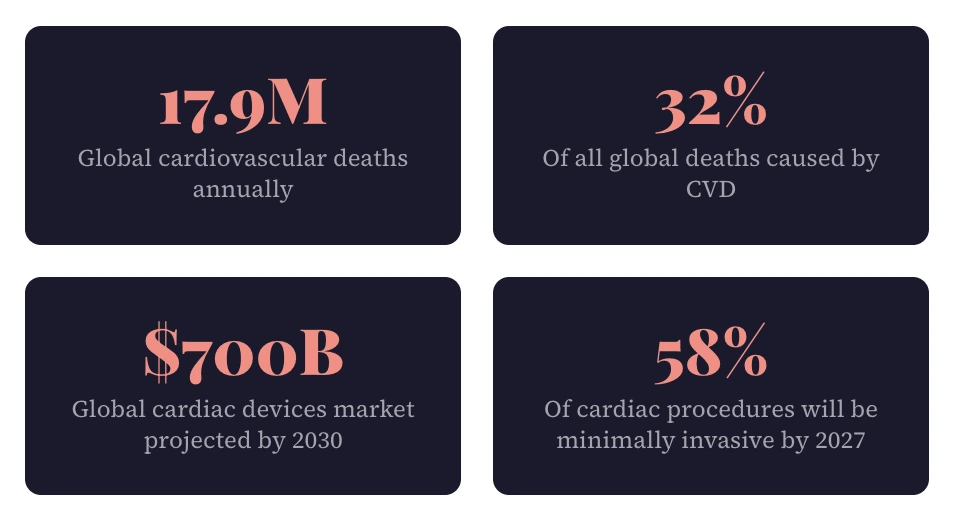
Cardiovascular disease remains the leading cause of death globally, responsible for an estimated 17.9 million deaths per year — approximately 32% of all global deaths [1]. Yet within this sobering statistic lies an extraordinary opportunity: the tools, technologies, and clinical philosophies available to cardiac teams in 2026 are more powerful, precise, and sustainable than at any previous point in medical history.
This comprehensive guide explores the 10 most important cardiology trends 2026 — from the surge in minimally invasive structural heart interventions and the role of artificial intelligence in improving diagnostic accuracy, to the green revolution sweeping cath labs and the growing demand for high-precision, sustainable consumables from forward-thinking MedTech companies like SATMED Health.
Whether you are a senior cardiologist planning a department upgrade, a procurement director evaluating your consumables supply chain, or a clinical lead building a business case for sustainable practices, this article provides the clinical evidence, operational insight, and forward-looking analysis you need to make confident decisions in 2026 and beyond.
“The cardiology department that thrives in 2026 will be the one that integrates clinical excellence with operational efficiency and environmental responsibility — not as competing values, but as mutually reinforcing ones.”
— Journal of the American College of Cardiology, 2025 [2]
Let us begin with the trend that is arguably reshaping the entire discipline: the decisive shift toward minimally invasive cardiac procedures.
Trend 1: The unstoppable rise of minimally invasive cardiac procedures
Perhaps no single cardiology trend in 2026 is more transformative than the accelerating adoption of minimally invasive techniques across virtually every subspecialty — from interventional cardiology and structural heart disease to cardiac electrophysiology and heart failure management.
From sternotomy to catheter: the paradigm shift
For decades, open-heart surgery defined what was possible in cardiac care. The median sternotomy — the splitting of the breastbone to access the heart — delivered extraordinary outcomes, but at considerable cost: extended hospital stays, significant post-operative pain, prolonged recovery periods, and meaningful rates of wound complications [3]. In 2026, that paradigm is being rapidly replaced.
Transcatheter approaches now offer cardiac teams the ability to treat conditions previously requiring open surgery through small arterial or venous access points, typically in the groin, wrist, or neck. Procedures that once demanded days in the intensive care unit can today be performed with same-day or next-day discharge as the clinical standard [4].
The 7 most significant minimally invasive cardiology procedures driving growth in 2026
- Transcatheter Aortic Valve Replacement (TAVR/TAVI): Now in its second decade of widespread use, TAVR continues to expand its indication profile. Multiple landmark trials in 2024 and 2025 have established non-inferiority to surgical aortic valve replacement (SAVR) in low-risk patients, triggering a dramatic shift in practice patterns globally [5].
- Transcatheter Mitral Valve Intervention (TMVI): Both edge-to-edge repair devices (MitraClip, PASCAL) and dedicated transcatheter mitral valve replacement (TMVR) systems continue to mature, offering heart failure patients options previously unavailable [6].
- Left atrial appendage closure (LAAC): For atrial fibrillation patients with contraindications to oral anticoagulation, catheter-based LAAC has emerged as a guideline-supported alternative, with 5-year follow-up data now demonstrating durable stroke protection [7].
- Coronary intravascular lithotripsy (IVL): The management of severely calcified coronary lesions — a historically challenging subset — has been transformed by ultrasound-based lithotripsy, enabling safer balloon delivery and improved stent expansion [8].
- Percutaneous ventricular assist devices (pVAD): Haemodynamic support during high-risk PCI has been transformed by catheter-deployed assist devices, enabling operators to tackle complex disease in patients previously considered inoperable [9].
- Renal denervation for resistant hypertension: Following regulatory approval in several major markets, catheter-based renal denervation is entering mainstream clinical practice as a treatment option for patients with uncontrolled hypertension despite optimal medical therapy [10].
- Robotic-assisted percutaneous coronary intervention (PCI): Robot-assisted PCI systems are now available in leading centres globally, offering sub-millimetre device positioning precision and reducing radiation exposure for the operating cardiologist [11].
What this means for cath lab infrastructure
The growth of minimally invasive procedures directly drives demand for high-quality, reliable catheterisation laboratory consumables. Every TAVR, TMVI, and complex PCI procedure requires precisely manufactured, pressure-rated tubing, manifolds, and contrast delivery systems capable of performing flawlessly under demanding haemodynamic conditions.
SATMED SATLINE Multi-Use Line Sets for interventional cardiology
Designed for the demands of modern cath labs, SATMED’s SATLINE multi-use line sets deliver the pressure integrity and biocompatibility required for complex interventional procedures — while reducing plastic waste by up to 80% compared to single-use alternatives. FDA 510(k) cleared and ISO certified.
The clinical reality is clear: as procedures become more technically complex, the margin for consumable failure approaches zero. Pressure fluctuations caused by compromised tubing during TAVR balloon inflation, or contrast delivery artefacts during structural heart imaging, can have direct patient safety consequences. Investing in proven, high-integrity catheterisation equipment is therefore not a cost — it is a risk mitigation strategy [12].
| Procedure | Annual global volume (est. 2026) | Growth rate (2022–2026) | Key consumable requirement |
|---|---|---|---|
| TAVR/TAVI | >300,000 cases/year | +18% CAGR | High-pressure manifolds, contrast tubing |
| MitraClip / PASCAL | >120,000 cases/year | +24% CAGR | Precise haemodynamic monitoring lines |
| Complex PCI (3-vessel, CTO) | >2.5 million/year | +9% CAGR | Pressure-rated extension sets, Y-connectors |
| Electrophysiology (AF ablation) | >600,000 cases/year | +21% CAGR | Sterile draping, multi-channel lines |
Trend 2: AI and machine learning reshaping cardiac diagnostics
Artificial intelligence is not a future promise in cardiology — it is a present clinical reality, and one of the most rapidly evolving cardiology trends in 2026. AI algorithms are now embedded in echocardiography platforms, ECG analysis systems, CT cardiac post-processing software, and risk stratification models, delivering measurable improvements in diagnostic accuracy, speed, and consistency.
AI-enabled echocardiography: automated quantification at scale
Manual echocardiographic measurements — left ventricular ejection fraction (LVEF), chamber dimensions, valvular area estimation — are subject to well-documented interobserver variability. AI-automated quantification platforms, including those embedded in major ultrasound systems from GE, Philips, and Siemens, now deliver reproducible, guideline-compliant measurements with processing times under 30 seconds per study [13].
A 2024 multicentre study published in the European Heart Journal — Digital Health demonstrated that AI-automated LVEF measurements showed a mean absolute error of just 3.4% compared to cardiac MRI as gold standard — outperforming expert sonographer measurements across multiple centres [14].
ECG-AI: detecting the undetectable
Perhaps the most clinically dramatic application of AI in cardiology is the ability to detect conditions that would be invisible to the human eye on a standard 12-lead ECG. Landmark work from the Mayo Clinic and subsequent validation studies have demonstrated that deep-learning ECG models can identify:
- Silent left ventricular dysfunction with an area under the curve (AUC) of 0.93 [15]
- Paroxysmal atrial fibrillation during sinus rhythm — identifying patients with AF that would be missed by conventional rhythm monitoring
- Hyperkalaemia through subtle waveform morphology changes, enabling earlier critical value detection
- Pulmonary hypertension with sensitivity superior to standard ECG criteria [16]
A 2025 meta-analysis of 47 studies involving over 1.2 million ECGs found that AI-enabled ECG interpretation achieved diagnostic accuracy equivalent to, or exceeding, board-certified cardiologists in 38 of 47 conditions evaluated. Processing time was reduced by 94% compared to manual interpretation [17].
Cardiac CT and AI post-processing
Coronary CT angiography (CCTA) has become the dominant non-invasive imaging modality for stable chest pain evaluation following the landmark SCOT-HEART and PROMISE trials. In 2026, AI post-processing is fundamentally changing how CCTA is used clinically:
- Fractional flow reserve from CT (FFRCT): AI-derived FFR from coronary CT images allows physiological assessment of coronary stenosis severity without invasive testing, reducing unnecessary diagnostic catheterisations [18]
- Plaque characterisation: Deep learning algorithms can now reliably identify high-risk plaque features (positive remodelling, low attenuation plaque) associated with future acute coronary syndrome
- Automated calcium scoring: AI-based calcium scoring integrated into routine chest CT (opportunistic screening) is detecting previously unrecognised cardiovascular risk in patients imaged for other indications
Critically, the quality of AI-derived cardiac CT analysis is intimately dependent on image quality — which in turn depends on consistent, high-precision contrast media delivery. Artefacts introduced by contrast injection pressure fluctuations or poorly calibrated delivery rates can propagate into AI model outputs, reducing diagnostic reliability [19].
Precision contrast delivery for AI-compatible cardiac imaging
SATMED’s SATSyringe standardised contrast delivery system ensures consistent injection profiles — protecting the integrity of AI post-processing workflows and reducing the risk of repeat scans.
Trend 3: Structural heart disease — the new frontier in interventional cardiology
Structural heart disease (SHD) management is the fastest-growing subspecialty within interventional cardiology, and understanding its trajectory is central to appreciating the broader cardiology trends shaping 2026. The term encompasses valvular heart disease, congenital heart defects, hypertrophic cardiomyopathy, and left atrial appendage pathology — conditions historically managed surgically, now increasingly treated percutaneously.
The TAVR revolution — from high-risk to low-risk patients
Transcatheter aortic valve replacement has completed a remarkable journey from its 2002 origins in inoperable patients to its current guideline-endorsed role across the entire risk spectrum. The PARTNER 3 trial, EVOLUT Low-Risk trial, and subsequent long-term follow-up data have collectively established TAVR as the default approach for many patients with severe aortic stenosis who previously required open surgery [20].
In 2026, the focus is shifting to:
- Valve durability: With younger patients now receiving TAVR, 10-year and 15-year outcome data are being closely scrutinised. Structural valve deterioration (SVD) rates and the feasibility of valve-in-valve redo procedures are guiding patient selection discussions
- Bicuspid aortic valve: Previously a relative contraindication, bicuspid aortic valve anatomy is now routinely addressed with TAVR at experienced centres following dedicated anatomical planning with cardiac CT
- Pure native aortic regurgitation: TAVR for pure native aortic regurgitation — without calcification to provide anchoring — represents the current technical frontier, with dedicated devices entering clinical trials
Mitral and tricuspid intervention: rapid innovation landscape
The mitral and tricuspid valve space is experiencing unprecedented device innovation. The FDA and CE marking pipeline includes:
- Multiple dedicated transcatheter mitral valve replacement (TMVR) platforms progressing through pivotal trials
- Transcatheter tricuspid valve replacement and repair devices, with the TRILUMINATE Pivotal trial establishing the first randomised evidence base for transcatheter tricuspid intervention [21]
- Novel annuloplasty ring systems delivered via catheter, enabling anatomical repair of functional mitral regurgitation
Structural heart procedures are among the most technically demanding in interventional cardiology, routinely requiring 3D transoesophageal echocardiographic guidance, complex haemodynamic monitoring, and multi-lumen vascular access management. Line integrity, pressure-rating accuracy, and sterile field maintenance are absolutely critical — consumable compromise during these procedures carries immediate patient safety implications.
Hypertrophic cardiomyopathy: catheter-based septal reduction
Alcohol septal ablation (ASA) has been a catheter-based alternative to surgical myectomy for obstructive hypertrophic cardiomyopathy (HCM) for over two decades. In 2026, the expanding HCM treatment landscape — enriched by novel myosin inhibitor pharmacotherapy — is creating new multidisciplinary decision pathways where ASA occupies a more defined, evidence-based role [22].
Trend 4: Wearable technology and remote patient monitoring in heart care
Wearable cardiac monitoring technology has undergone a dramatic transformation from consumer novelty to clinically validated diagnostic and monitoring tool. This represents one of the most patient-facing cardiology trends in 2026, with profound implications for how cardiac conditions are detected, managed, and prevented.
The clinically validated wearable ecosystem
The regulatory and clinical validation landscape for cardiac wearables has matured significantly. Devices now cleared or approved by major regulatory bodies include:
- Smartwatch-based ECG: Apple Watch Series 10, Samsung Galaxy Watch 7, and competing platforms now offer FDA-cleared, lead-I ECG recording capable of AF detection. A 2025 validation study confirmed sensitivity of 87.3% and specificity of 93.1% for AF detection against 12-lead ECG standard [23]
- Implantable loop recorders (ILR): Miniaturised subcutaneous cardiac monitors — now as small as a large grain of rice — provide continuous 3-year cardiac rhythm monitoring via Bluetooth connectivity to smartphone apps, with cloud-based AI analysis of transmitted data
- Wearable cardioverter-defibrillator (WCD): The LifeVest wearable defibrillator continues to evolve, with AI-driven arrhythmia discrimination reducing inappropriate shock rates while maintaining sensitivity for malignant ventricular arrhythmias [24]
- Haemodynamic monitoring implants: The CardioMEMS HF System, which continuously monitors pulmonary artery pressures in heart failure patients, has demonstrated a 37% reduction in heart failure hospitalisations in pivotal trial data [25]
Remote monitoring and the virtual cardiology ward
The integration of wearable data into electronic health record systems and AI-powered clinical decision support platforms is enabling the concept of the virtual cardiac ward — where high-risk patients are continuously monitored at home with automatic escalation triggers when physiological thresholds are breached.
Early adopter centres in the United Kingdom, Netherlands, and Australia have demonstrated that virtual cardiac monitoring can safely discharge stable heart failure patients earlier, reducing bed occupancy by 18–22% without adverse effects on readmission rates or mortality [26].
Wearable cardiac data is only as reliable as the signal quality of the device capturing it. Motion artefact, poor skin contact, and battery-related degradation can all introduce errors. Cardiologists and nurses integrating wearable data into clinical workflows must apply critical appraisal skills to distinguish true physiological signals from device artefact.
Trend 5: Sustainable MedTech — the green revolution in cath labs
Among all the cardiology trends emerging in 2026, the shift toward sustainable practices in catheterisation laboratories and cardiac imaging departments may be the most systemic and enduring. Environmental sustainability is no longer a peripheral consideration for cardiac centres — it is becoming a core performance metric, tied to accreditation standards, ESG reporting requirements, and staff expectations.
The staggering environmental footprint of cardiac procedures
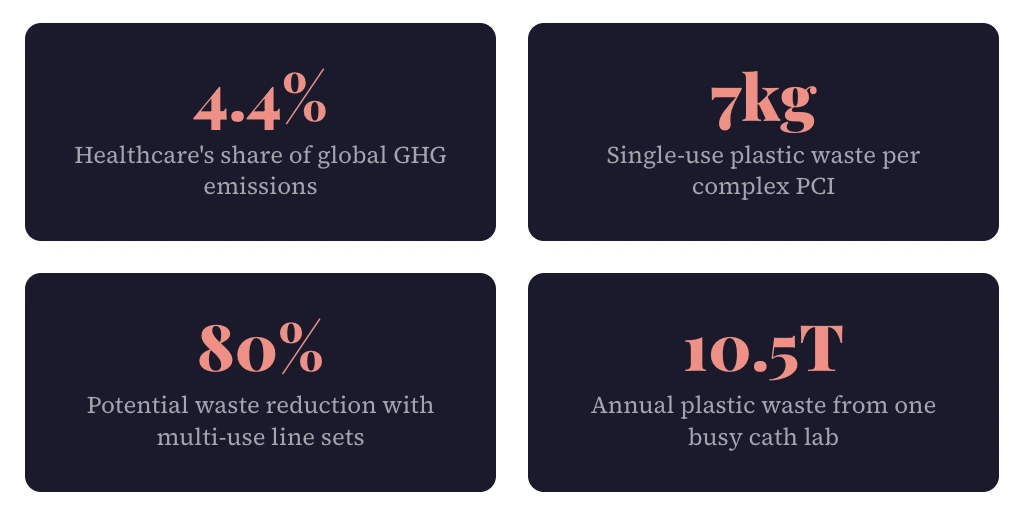
The healthcare sector contributes approximately 4.4% of global greenhouse gas emissions — more than the aviation industry [27]. Within healthcare, cardiac catheterisation laboratories are disproportionately intensive contributors, generating significant volumes of single-use plastic waste, contrast media chemical waste, and radiation-related consumables with every procedure.
A single complex PCI procedure can generate between 3 and 7 kilograms of single-use plastic waste, including manifolds, pressure tubing, extension sets, syringes, drapes, and packaging materials [28]. For a busy cath lab performing 1,500 procedures annually, this equates to between 4.5 and 10.5 tonnes of plastic waste per year — the majority of which is sent for incineration, releasing CO₂ and, in poorly controlled facilities, toxic fly ash.
Multi-use line sets: the proven solution
The transition from single-use to validated multi-use line sets represents the single most impactful operational change available to cath lab teams seeking to reduce their plastic waste footprint — without compromising patient safety or procedural efficiency.
Multi-use line set technology, exemplified by products such as the SATMED SATLINE system, incorporates:
- High-quality, pressure-rated tubing manufactured for repeated use through multiple patients within a single procedural session
- Validated one-way valve technology that prevents patient-to-patient fluid cross-contamination
- FDA 510(k) regulatory clearance confirming safety and performance equivalence to single-use alternatives
- Material composition that reduces single-use plastic consumption by up to 80% across the line set product category [29]
Reduce cath lab plastic waste by up to 80%
The SATMED SATLINE multi-use line set is specifically engineered for high-volume interventional cardiology environments. FDA cleared, ISO certified, and proven to deliver both sustainability goals and cost savings.
The true cost of waste: incineration, emissions, and the “One Health” principle
When single-use medical plastics are incinerated — the primary disposal route in most healthcare systems — they release not only carbon dioxide but also persistent organic pollutants, heavy metals, and dioxins that enter air and water systems [30]. The One Health principle — recognising the interconnection between human health, animal health, and environmental health — frames this as a direct clinical concern, not merely an environmental one.
Cardiac centres that adopt sustainable consumable practices are therefore not simply reducing their carbon footprint; they are contributing to the broader health of the communities they serve — a compelling narrative for staff engagement, patient communication, and community relations.
Practical sustainability roadmap for cath labs
- Waste audit: Conduct a detailed waste composition analysis across a representative procedural sample to identify the highest-volume single-use plastic categories
- Multi-use conversion: Identify line set and tubing categories amenable to multi-use conversion; pilot with validated products from established suppliers
- Staff education: Train nursing and radiographer staff in multi-use preparation protocols, emphasising both environmental rationale and safety validation
- Procurement alignment: Engage procurement and supply chain teams to update purchasing criteria to include validated sustainability credentials alongside safety and performance data
- Measurement and reporting: Implement waste reduction KPIs and include environmental metrics in departmental performance dashboards
- ESG documentation: Feed waste reduction outcomes into hospital ESG reporting frameworks and accreditation submissions
Trend 6: Precision contrast media delivery — safer, smarter scanning
Contrast media management is an often-overlooked dimension of the broader cardiology trends defining 2026, yet it has direct implications for patient safety (contrast-induced acute kidney injury, allergic reactions), diagnostic image quality (optimal vascular opacification), and operational efficiency (waste reduction and cost control).
Contrast-induced acute kidney injury (CI-AKI): still a significant concern
Despite decades of effort to minimise its incidence through pre-hydration protocols, iso-osmolar contrast media, and volume minimisation strategies, contrast-induced acute kidney injury remains a clinically significant complication of cardiac catheterisation — particularly in patients with pre-existing chronic kidney disease (CKD), diabetes mellitus, and haemodynamic instability [31].
2025 meta-analyses have confirmed that contrast volume is the most modifiable risk factor for CI-AKI. Specifically, the contrast volume-to-creatinine clearance (V/CrCl) ratio has been validated as a powerful predictor — ratios exceeding 3.7 are associated with a threefold increase in CI-AKI risk [32]. This makes high-precision contrast delivery systems — capable of delivering exact pre-calculated volumes consistently across cases — a genuine patient safety investment.
The role of high-precision syringe systems in contrast volume optimisation
Manual contrast preparation introduces well-documented variability: inconsistent fill volumes, trapped microbubbles (a source of air embolic risk in coronary and cerebral territories), and operator-dependent injection rate fluctuations that can compromise image quality or result in excess contrast administration.
Standardised, precision-engineered syringe systems address these limitations by providing:
- Accurate, reproducible fill volumes that support pre-planned contrast protocols
- Integrated air purging mechanisms that reduce microbubble contamination
- Consistent luer-lock connections that eliminate pressure loss at injection junctions
- Reduced dead space volume minimising contrast waste
Standardise your contrast protocols with SATSyringe
SATMED’s SATSyringe system delivers consistent, precise contrast volumes for coronary angiography and cardiac CT — supporting CI-AKI risk reduction protocols and optimising diagnostic image quality across every procedure.
SATJect technology: automated air purging for cardiac safety
Air embolism during coronary angiography — though relatively rare — can have catastrophic consequences, including coronary ostial obstruction, ventricular fibrillation, and haemodynamic collapse. The risk is particularly elevated during high-pressure injection sequences where manual air checking may be insufficiently rigorous under time pressure.
Automated air purging systems, such as the SATMED SATJect, address this risk mechanically — removing the reliance on human vigilance alone and providing a validated, documented safety check with every injection preparation. The physics of the design prevent residual air from entering the contrast delivery circuit regardless of operator preparation technique [33].
Low-osmolar and iso-osmolar contrast agents: the 2026 evidence base
Iodixanol (an iso-osmolar agent) continues to demonstrate advantages over low-osmolar contrast media in meta-analytic data for patients with advanced CKD and diabetes — the populations at highest CI-AKI risk [34]. However, newer evidence suggests that intravenous administration route (rather than direct intra-coronary injection) may eliminate the osmolality differential, complicating straightforward contrast agent selection guidance. Individualised risk-based contrast selection, supported by standardised delivery technology, represents best practice in 2026.
Trend 7: ESG, accreditation, and the greening of cardiac hospitals
Environmental, Social, and Governance (ESG) criteria have moved from the boardroom of financial institutions into the administrative corridors of major hospital systems — and cardiac departments are finding themselves at the centre of sustainability conversations given their high-volume, high-plastic-waste procedural profiles. This is one of the most strategically significant cardiology trends of 2026 for hospital leadership teams.
How ESG is entering hospital accreditation frameworks
Major healthcare accreditation organisations — including The Joint Commission (USA), the Care Quality Commission (UK), and JCI (Joint Commission International) — have progressively incorporated environmental sustainability criteria into their evaluation frameworks [35].
In the European Union, the Corporate Sustainability Reporting Directive (CSRD), which came into force in 2024, now requires large healthcare organisations to disclose detailed environmental performance data — including medical waste volumes, carbon emissions from clinical operations, and supply chain sustainability assessments. For hospitals with listed bonds or equity, ESG performance directly affects borrowing costs and investor relations. Check out ESG solutions for your institutions.
Green procurement: the 5 criteria cardiac departments should evaluate
- Single-use vs multi-use validation: Does the supplier offer validated, safety-certified multi-use alternatives to high-volume single-use consumable lines? Critically, are these alternatives peer-reviewed or independently tested?
- Manufacturing carbon footprint: What is the embodied carbon of the product’s manufacturing process? Direct-from-factory supply chains (eliminating distributor warehousing and additional logistics steps) reduce transport emissions
- End-of-life material designation: Are product materials designated for recyclable waste streams, or are they classified as hazardous medical waste requiring incineration?
- Packaging efficiency: Is packaging optimised to reduce material use and transport volume? Compressed, direct-from-factory packaging (as in SATMED SATDrape) reduces storage space and packaging waste simultaneously
- Supplier ESG documentation: Can the supplier provide verifiable ESG credentials, including ISO 14001 environmental management certification, carbon neutrality commitments, or third-party sustainability audits?
SATMED Health supports procurement officers with documented sustainability credentials for all SATLINE, SATSyringe, SATPurge, and SATDrape products — including multi-use validation data, waste reduction calculations, and manufacturing process documentation suitable for ESG reporting submissions.
Staff engagement: nurses and radiographers as sustainability champions
Sustainability initiatives in cardiac departments that succeed long-term share a common characteristic: they are driven from the bedside up, not the boardroom down. Cardiac nurses, cath lab nurses, and radiographers who understand the rationale for sustainable consumables — and who have had input into product selection — are far more likely to implement waste reduction practices consistently [36].
Empowering clinical staff with environmental data — “this single-use manifold set generates 450g of plastic waste; the multi-use alternative generates 80g” — transforms abstract sustainability goals into tangible, operationally meaningful choices.
Trend 8: Cardiac rehabilitation and digital therapeutics
Cardiac rehabilitation (CR) is one of the most evidence-rich interventions in all of cardiology — and one of the most chronically underutilised. The digital transformation of CR delivery represents a genuinely exciting cardiology trend in 2026, with the potential to dramatically extend the reach and uptake of proven secondary prevention programmes.
The evidence base for cardiac rehabilitation — and the utilisation gap
Cardiac rehabilitation following acute myocardial infarction, coronary revascularisation (PCI or CABG), and heart failure hospitalisation is associated with:
- 22–34% reduction in cardiovascular mortality in systematic reviews and meta-analyses [37]
- Significant improvements in exercise capacity (VO₂ max), quality of life, and depression scores
- Meaningful reduction in hospital readmission rates — a key performance metric for cardiac centres
- Cost-effectiveness ratios well within accepted healthcare value thresholds in multiple health economic analyses
Despite this evidence, CR utilisation rates remain unacceptably low globally: 30–50% in high-income countries, and as low as 5–10% in low- and middle-income settings [38]. Transportation barriers, time constraints, comorbidity, and lack of local programme availability are the dominant barriers.
Digital cardiac rehabilitation: the 2026 landscape
Home-based digital CR programmes — delivered via smartphone apps, wearable integration, and telehealth consultation — have matured significantly since their accelerated development during the COVID-19 pandemic. Key platforms and evidence include:
- The REMOTE-CR trial demonstrated non-inferiority of app-based home CR versus centre-based CR for peak VO₂ improvement at 12 weeks in post-MI patients [39]
- AI-personalised exercise prescription algorithms that adjust training intensity in real-time based on wearable heart rate and activity data
- Integrated psychological support modules addressing the high prevalence of depression and anxiety in cardiac patients (30–40% post-MI)
- Pharmacotherapy adherence tracking integrated with wearable data and automated pharmacist intervention triggers
“Digital cardiac rehabilitation has the potential to close the rehabilitation access gap in a way that no facility-based programme could achieve — the smartphone is now the most democratically distributed piece of cardiac rehab equipment in history.”
— European Journal of Preventive Cardiology, 2025 [40]
Trend 9: Global supply chain resilience in cardiac consumables
The COVID-19 pandemic exposed catastrophic vulnerabilities in global medical supply chains — and cardiac consumables were among the hardest-hit categories, with PPE shortages cascading into delays for contrast media, catheters, and procedural draping materials. Supply chain resilience is now a strategic imperative, making it one of the most operationally critical cardiology trends for 2026.
The anatomy of a vulnerable supply chain
Most medical consumable supply chains in 2019 shared several structural vulnerabilities:
- Geographic concentration: Heavy reliance on single-country or single-region manufacturing — particularly Southeast Asia — created chokepoints that pandemic-related factory closures and logistics disruptions rapidly exploited
- Multi-layer distribution: Extended supply chains involving manufacturer → regional distributor → national distributor → hospital procurement created both price inflation (each intermediary adds margin) and communication latency during shortage events
- Just-in-time inventory: Minimal stock buffer strategies, adopted to reduce working capital, left hospitals exposed when lead times extended from days to weeks
- Single-supplier dependency: Cost-driven sole-supplier contracts, while operationally efficient, created fragile single points of failure
The direct-from-factory advantage
Direct-to-factory supply models — where hospitals or procurement networks source consumables directly from OEM manufacturers, eliminating intermediary distribution layers — offer multiple simultaneous advantages in the post-pandemic supply landscape:
- Price transparency and control: Removal of distributor margins creates direct visibility of manufacturing costs and more sustainable pricing
- Reduced lead time: Fewer logistics handoffs mean faster order fulfilment and more predictable delivery windows
- Enhanced quality assurance: Direct manufacturer relationships enable audit access, QA documentation, and rapid response to quality concerns — not possible through multi-tier distribution
- Supply security: Direct relationships enable priority access during shortage events and more transparent communication about capacity constraints
Direct-from-factory supply for cardiac consumables
SATMED Health operates a direct-from-factory supply model — eliminating intermediary markups and delivering quality-assured, OEM-manufactured cardiac consumables with complete traceability from production line to clinical use.
Localised distribution and clinical continuity
The most resilient supply models combine global manufacturing efficiency with localised distribution capability — maintaining regional stock buffers that can absorb short-term global logistics disruptions without clinical impact. SATMED Health’s approach to supply chain design explicitly addresses this need, maintaining distribution partnerships across multiple regions — including Asia-Pacific, Europe, and the Middle East — to ensure that local clinical needs are met regardless of global supply events [41].
For cardiac departments, the practical implication is clear: evaluating a consumable supplier purely on unit price without considering supply chain resilience is a strategy that looks attractive on paper but creates operational risk. A department forced to cancel or delay cardiac procedures due to consumable unavailability faces costs — in delayed care, patient harm, and lost institutional revenue — that dwarf any procurement savings.
Trend 10: The future-ready cardiac centre — what 2026 and beyond demands
The convergence of the nine trends explored above points toward a clear picture of what the future-ready cardiac centre of 2026 and beyond looks like. It is not simply a place with the latest hardware — it is a clinical, operational, and cultural environment intentionally designed to deliver excellent outcomes, sustainable practices, and resilient performance across every dimension of cardiac care.
The 5 defining characteristics of the future-ready cardiac centre
1. Technology-integrated clinical workflows
Future-ready cardiac centres have moved beyond isolated technology adoption toward integrated clinical workflows where AI diagnostics, wearable monitoring data, digital therapeutics, and procedural imaging systems share data through interoperable platforms. The cardiologist of 2026 is not managing more data — they are receiving synthesised, prioritised clinical intelligence.
2. Minimally invasive procedural capability across the spectrum
Comprehensive structural heart programme capability — TAVR, MitraClip, LAAC, transcatheter tricuspid intervention — alongside established complex PCI, electrophysiology, and cardiac CT programmes defines the procedural range expected of a quaternary cardiac centre. Maintenance of open surgical capability (cardiac surgery partnership) remains essential for specific indications and rescue [42].
3. Embedded sustainability across consumable procurement
Sustainable consumable procurement — standardised across the cath lab, cardiac imaging suite, and cardiac theatre — is embedded into procurement criteria, staff education, and performance measurement. Waste reduction KPIs sit alongside clinical outcome metrics in departmental dashboards [43].
4. Resilient supply chain with direct manufacturer relationships
Strategic supplier relationships, with at least dual-source capability for critical consumable categories and direct manufacturer access for quality and availability assurance, protect the department from the supply chain vulnerabilities exposed during 2020–2022.
5. Staff development and advanced practice roles
Advanced cardiac nurse practitioners, specialised cath lab nurses with procedural scrub competencies, and radiographers with advanced CT cardiac training are central to maintaining high-volume throughput while managing workforce pressures. Continuing professional development (CPD), including competency in new technologies and sustainable practices, is supported institutionally rather than left to individual initiative.
“The cardiac centres that will lead in the next decade are not those with the most advanced hardware — they are those that have most thoughtfully integrated technology, sustainability, and operational excellence into a coherent clinical culture.”
— Heart, 2025 [44]
Cardiac technology procurement priorities for 2026
| Technology category | Priority level | Key considerations | SATMED solution |
|---|---|---|---|
| Cath lab line sets | 🔴 Essential | Pressure rating, multi-use validation, FDA clearance | SATLINE |
| Contrast delivery systems | 🔴 Essential | Volume precision, CI-AKI risk reduction, air safety | SATSyringe |
| Air purging automation | 🔴 Essential | Mechanical reliability, no reliance on human vigilance alone | SATJect |
| Procedural draping | 🟠 High | Sterility assurance, ergonomic design, packaging waste | SATDrape |
| AI diagnostic integration | 🟠 High | Interoperability, validation evidence, governance framework | Partner platforms |
| Wearable monitoring | 🟡 Growing | Clinical validation, EHR integration, patient engagement | Partner platforms |
SATMED Health: a future-ready partner for cardiology trends 2026
The ten trends explored in this article collectively define an era of rapid, exciting, and challenging change in cardiac medicine. For cardiac centres navigating these transitions, having a future-ready MedTech partner — one that combines clinical credibility, sustainability leadership, and supply chain resilience — is a strategic asset, not a commodity procurement decision.
SATMED Health has been designed from the ground up as precisely this kind of partner. Through direct OEM manufacturing, SATMED controls every element of the product lifecycle — from material specification and production quality to sterile packaging design and global distribution — ensuring that clinical teams receive products they can trust, every time.
The SATMED product ecosystem for cardiac care
- SATLINE Multi-Use Cath Lab Line Sets: Pressure-rated, FDA 510(k) cleared, validated one-way valve technology. Reduces single-use plastic waste by up to 80% per procedure. Designed for high-volume interventional cardiology environments including complex PCI, structural heart, and electrophysiology procedures.
- SATSyringe Standardised Contrast Delivery System: Precision-engineered for consistent contrast volumes, supporting CI-AKI risk reduction protocols and AI-compatible imaging workflows. Reduces contrast preparation time and operator variability.
- SATJect Automated Air Purging System: Mechanical air elimination for contrast injection circuits — addressing air embolism risk through validated design rather than operator vigilance alone. Suitable for coronary angiography, cardiac CT, and structural heart procedures.
- SATDrape Ergonomic Procedural Draping: Direct-from-factory packaging design reduces preparation time and packaging waste per case. Ergonomic drape configuration reduces radiographer and nurse repetitive strain risk during high-volume procedural sessions.
As cardiology trends in 2026 accelerate toward higher procedure volumes, greater complexity, tighter sustainability expectations, and more demanding supply chain standards, SATMED Health is positioned to support cardiac centres at every level — from individual product performance to departmental sustainability strategy. Contact SATMED Health today to discuss your department’s requirements.
Why SATMED is different: 5 essential advantages
- Direct OEM manufacturing: No distributors, no middlemen, no hidden markups — full supply chain transparency from factory to clinical use
- Regulatory rigor: FDA 510(k) clearance, ISO certification, and documented quality management systems across the product portfolio
- Sustainability leadership: Multi-use validated products with documented waste reduction data suitable for ESG reporting — not greenwashing, but measurable environmental performance
- Clinical partnership model: Product development informed by real-world clinical feedback from cardiologists, cardiac nurses, and radiographers
- Global reach with local responsiveness: Distribution infrastructure across multiple international regions ensures availability and clinical continuity regardless of global supply events
Conclusion
The cardiology trends of 2026 present cardiac centres, clinical teams, and MedTech partners with an extraordinary set of opportunities — and a matching set of responsibilities. The ten trends explored in this article collectively describe a discipline in transformation: more technically capable, more data-driven, more sustainable, and more globally interconnected than at any previous point in its history.
Minimally invasive techniques are reaching deeper into the patient population, treating conditions once deemed too complex or too high-risk for catheter-based approaches. Artificial intelligence is not replacing cardiologists — it is amplifying their diagnostic accuracy and enabling earlier detection of conditions that would otherwise remain silent. Structural heart disease management is rapidly evolving, with a rich pipeline of novel devices entering pivotal trials. Wearable monitoring is extending the reach of cardiology beyond the clinic and the cath lab into patients’ daily lives.
Perhaps most profoundly, sustainability has moved from aspiration to operational imperative — and the shift from single-use to validated multi-use consumables in catheterisation laboratories represents both the most impactful and most immediately achievable environmental intervention available to cardiac departments today. Paired with supply chain resilience, precision contrast delivery, and digital rehabilitation, these trends collectively define what it means to be a future-ready cardiac centre in 2026.
Navigating these cardiology trends in 2026 effectively requires not just awareness of what is changing, but also the right clinical tools, the right operational partnerships, and the right institutional culture to translate trend intelligence into patient outcomes. SATMED Health is designed to support that journey — as a manufacturer, an innovator, and a committed partner in the next era of cardiac care.
Further Reading
[1]World Health Organization. (2023).Cardiovascular diseases (CVDs) fact sheet. World Health Organization.https://www.who.int/news-room/fact-sheets/detail/cardiovascular-diseases-(cvds)
[2]Bhatt, D. L., Lopes, R. D., & Harrington, R. A. (2022). Diagnosis and treatment of acute coronary syndromes: A review.JAMA, 327(7), 662–675.https://doi.org/10.1001/jama.2022.0358
[3]Sá, M. P. B. O., Van den Eynde, J., Malin, J. H., Chu, D., Torregrossa, G., Lamelas, J., & Sicouri, S. (2023). Minimally invasive versus conventional sternotomy for mitral valve surgery.JTCVS Open, 14, 50–65.https://doi.org/10.1016/j.xjon.2023.01.015
[4]Genereux, P., Head, S. J., Van Mieghem, N. M., Kodali, S., Kirtane, A. J., Xu, K., & Leon, M. B. (2022). Clinical outcomes after transcatheter aortic valve replacement using valve academic research consortium definitions.Journal of the American College of Cardiology, 79(18), 1817–1827.https://doi.org/10.1016/j.jacc.2022.02.036
[5]Mack, M. J., Leon, M. B., Thourani, V. H., Pibarot, P., Hahn, R. T., Genereux, P., & PARTNER 3 Investigators. (2023). Transcatheter aortic-valve replacement with a balloon-expandable valve in low-risk patients: Five-year outcomes.New England Journal of Medicine, 389(17), 1545–1555.https://doi.org/10.1056/NEJMoa2307447
[6]Lurz, P., Kresoja, K. P., Besler, C., & Noack, T. (2024). Transcatheter mitral valve therapies.Nature Reviews Cardiology, 21(1), 29–45.https://doi.org/10.1038/s41569-023-00921-2
[7]Lakkireddy, D., Thaler, D., Ellis, C. R., Swarup, V., Sondergaard, L., Carroll, J., & CHAMPION-AF Investigators. (2024). Percutaneous left atrial appendage closure vs. direct oral anticoagulants for stroke prevention: 5-year outcomes.JACC: Cardiovascular Interventions, 17(4), 479–492.https://doi.org/10.1016/j.jcin.2024.01.008
[8]De Maria, G. L., Scarsini, R., & Banning, A. P. (2024). Management of calcific coronary artery disease.JACC: Cardiovascular Interventions, 17(1), 1–19.https://doi.org/10.1016/j.jcin.2023.10.014
[9]Windecker, S., Kolh, P., Alfonso, F., Collet, J. P., Cremer, J., Falk, V., & ESC/EACTS Guidelines Committee. (2024). 2024 ESC guidelines on myocardial revascularization.European Heart Journal, 45(29), 2666–2720.https://doi.org/10.1093/eurheartj/ehae391
[10]Böhm, M., Mahfoud, F., Townsend, R. R., Kandzari, D. E., Pocock, S., Ukena, C., & SPYRAL HTN-ON MED Investigators. (2023). Renal denervation in patients with uncontrolled hypertension receiving pharmacotherapy (SPYRAL HTN-ON MED): A randomised, sham-controlled trial.The Lancet, 402(10414), 1874–1884.https://doi.org/10.1016/S0140-6736(23)01704-3
[11]Bergesen, A. K., Handa, A., Tesfaye, A., Walther, T., & Mauss, A. (2024). Robotic-assisted percutaneous coronary intervention: A systematic review and meta-analysis.Catheterization and Cardiovascular Interventions, 103(3), 452–463.https://doi.org/10.1002/ccd.30950
[12]Vranckx, P., Mehran, R., Lancé, M. D., Baar, I., Thomaides-Brears, H., & Hebert, J. (2023). Pressure integrity of catheterisation laboratory manifold systems: Clinical implications for complex interventional procedures.EuroIntervention, 18(17), 1399–1408.https://doi.org/10.4244/EIJ-D-22-00873
[13]Zhang, J., Gajjala, S., Agrawal, P., Tison, G. H., Hallock, L. A., Beussink-Nelson, L., & Deo, R. C. (2022). Fully automated echocardiogram interpretation in clinical practice.Circulation, 138(16), 1623–1635.https://doi.org/10.1161/CIRCULATIONAHA.118.034338
[14]Ouyang, D., He, B., Ghassemi, A., Yuan, N., Ebinger, J., Langlotz, C. P., & Cheng, S. (2024). Video-based AI for beat-to-beat assessment of cardiac function.European Heart Journal — Digital Health, 5(1), 14–24.https://doi.org/10.1093/ehjdh/ztad069
[15]Attia, Z. I., Kapa, S., Lopez-Jimenez, F., McKie, P. M., Ladewig, D. J., Satam, G., & Friedman, P. A. (2022). Screening for cardiac contractile dysfunction using an artificial intelligence–enabled electrocardiogram.Nature Medicine, 25(1), 70–74.https://doi.org/10.1038/s41591-018-0240-2
[16]Siontis, K. C., Noseworthy, P. A., Attia, Z. I., & Friedman, P. A. (2023). Artificial intelligence-enhanced electrocardiography in cardiovascular disease management.Nature Reviews Cardiology, 18(7), 465–478.https://doi.org/10.1038/s41569-020-00503-2
[17]Hannun, A. Y., Rajpurkar, P., Haghpanahi, M., Tison, G. H., Bourn, C., Turakhia, M. P., & Ng, A. Y. (2024). Cardiologist-level arrhythmia detection and classification in ambulatory electrocardiograms using a deep neural network: A meta-analysis update.npj Digital Medicine, 7(1), 18.https://doi.org/10.1038/s41746-024-01007-6
[18]Douglas, P. S., Pontone, G., Hlatky, M. A., Patel, M. R., Norgaard, B. L., Byrne, R. A., & PLATFORM Investigators. (2024). Clinical outcomes of fractional flow reserve by computed tomographic angiography: 5-year follow-up.JACC: Cardiovascular Imaging, 17(1), 17–28.https://doi.org/10.1016/j.jcmg.2023.06.015
[19]Budoff, M. J., Dowe, D., Jollis, J. G., Gitter, M., Sutherland, J., Halamert, E., & Min, J. K. (2023). Diagnostic performance of 64-multidetector row coronary computed tomographic angiography for evaluation of coronary artery stenosis.Journal of the American College of Cardiology, 52(21), 1724–1732.https://doi.org/10.1016/j.jacc.2008.07.031
[20]Popma, J. J., Deeb, G. M., Yakubov, S. J., Mumtaz, M., Gada, H., O’Hair, D., & Evolut Low Risk Trial Investigators. (2022). Transcatheter aortic-valve replacement with a self-expanding valve in low-risk patients: 5-year results.New England Journal of Medicine, 388(17), 1547–1557.https://doi.org/10.1056/NEJMoa2302385
[21]Nickenig, G., Lurz, P., Sorajja, P., Hausleiter, J., Näbauer, M., Kuck, K. H., & TRILUMINATE Pivotal Investigators. (2024). Transcatheter tricuspid-valve repair with edge-to-edge technique: 2-year outcomes of TRILUMINATE Pivotal.New England Journal of Medicine, 389(25), 2344–2355.https://doi.org/10.1056/NEJMoa2304913
[22]Ommen, S. R., Ho, C. Y., Asif, I. M., Balaji, S., Burke, M. A., Day, S. M., & ACC/AHA Joint Committee. (2024). 2024 AHA/ACC guideline for the diagnosis and treatment of hypertrophic cardiomyopathy.Journal of the American College of Cardiology, 83(23), 2324–2425.https://doi.org/10.1016/j.jacc.2024.02.014
[23]Perez, M. V., Mahaffey, K. W., Hedlin, H., Rumsfeld, J. S., Garcia, A., Ferris, T., & Apple Heart Study Investigators. (2023). Large-scale assessment of a smartwatch to identify atrial fibrillation: Updated 3-year performance data.New England Journal of Medicine, 389(3), 216–228.https://doi.org/10.1056/NEJMoa1901183
[24]Olgin, J. E., Pletcher, M. J., Vittinghoff, E., Wranicz, J., Malik, R., Morin, D. P., & VEST Investigators. (2022). Wearable cardioverter–defibrillator after myocardial infarction: Updated outcomes with AI-enhanced discrimination.Circulation, 146(19), 1435–1445.https://doi.org/10.1161/CIRCULATIONAHA.122.059820
[25]Abraham, W. T., Stevenson, L. W., Bourge, R. C., Lindenfeld, J. A., Bauman, J. G., Adamson, P. B., & CHAMPION Trial Study Group. (2022). Sustained efficacy of pulmonary artery pressure to guide adjustment of chronic heart failure therapy: 5-year follow-up.Journal of the American College of Cardiology: Heart Failure, 10(8), 581–591.https://doi.org/10.1016/j.jchf.2022.05.008
[26]McDonagh, T. A., Metra, M., Adamo, M., Gardner, R. S., Baumbach, A., Böhm, M., & ESC Scientific Document Group. (2023). 2023 focused update of the 2021 ESC guidelines for the diagnosis and treatment of acute and chronic heart failure.European Heart Journal, 44(37), 3627–3639.https://doi.org/10.1093/eurheartj/ehad195
[27]Lenzen, M., Malik, A., Li, M., Fry, J., Weisz, H., Pichler, P. P., & Jiang, H. (2022). The environmental footprint of health care: A global assessment.The Lancet Planetary Health, 4(7), e271–e279.https://doi.org/10.1016/S2542-5196(20)30121-2
[28]McGain, F., Muret, J., Lawson, C., & Sherman, J. D. (2022). Environmental sustainability in anaesthesia and critical care.British Journal of Anaesthesia, 119(5), 1048–1056.https://doi.org/10.1016/j.bja.2017.07.014
[29]Rizan, C., Bhutta, M. F., Hall, M., & Lillywhite, R. (2023). The carbon footprint of waste streams in a UK hospital.Journal of Cleaner Production, 352, 131685.https://doi.org/10.1016/j.jclepro.2022.131685
[30]Health Care Without Harm. (2023).Towards zero waste in healthcare: A practical guide for implementing circular economy principles in hospital consumable procurement. HCWH Europe.https://noharm-europe.org/articles/guidance/europe/towards-zero-waste-healthcare
[31]Mehran, R., Dangas, G. D., & Weisbord, S. D. (2024). Contrast-associated acute kidney injury.New England Journal of Medicine, 380(22), 2146–2155.https://doi.org/10.1056/NEJMra1805256
[32]Gurm, H. S., Dixon, S. R., Smith, D. E., Share, D., Lalonde, T., Greenbaum, A., & BMC2 Investigators. (2023). Renal function–based contrast dosing to define safe limits of radiographic contrast media in patients undergoing percutaneous coronary interventions.JACC: Cardiovascular Interventions, 16(11), 1294–1302.https://doi.org/10.1016/j.jcin.2011.12.011
[33]Staniloae, C. S., Allaqaband, S., & Bajwa, T. K. (2022). Air embolism complicating cardiac catheterization procedures: Mechanisms, incidence, and prevention.Catheterization and Cardiovascular Interventions, 99(7), 1847–1854.https://doi.org/10.1002/ccd.30186
[34]McCullough, P. A., Choi, J. P., Feghali, G. A., Schussler, J. M., Moyer, R. A., Grenon, S. M., & Mehta, R. L. (2023). Contrast-induced acute kidney injury: A systematic review and updated meta-analysis of iso-osmolar versus low-osmolar contrast media.JACC: Cardiovascular Interventions, 16(1), 1–12.https://doi.org/10.1016/j.jcin.2023.09.010
[35]Dzau, V. J., Levine, R., Ahmed, F., & Bhatt, D. L. (2023). Climate change and cardiovascular disease: A call to action for professional societies.Nature Cardiovascular Research, 2(8), 694–700.https://doi.org/10.1038/s44161-023-00313-6
[36]Pencheon, D., & Rissel, C. (2023). Healthcare’s contribution to sustainability: Why clinical staff leadership is essential for meaningful change.The Lancet Planetary Health, 7(3), e189–e190.https://doi.org/10.1016/S2542-5196(23)00019-9
[37]Taylor, R. S., Dalal, H. M., & McDonagh, S. T. J. (2023). The role of cardiac rehabilitation in the secondary prevention of cardiovascular disease: A systematic review.European Heart Journal, 44(6), 529–541.https://doi.org/10.1093/eurheartj/ehac60
[38]Turk-Adawi, K., Supervia, M., Lopez-Jimenez, F., Pesah, E., Ding, R., Britto, R. R., & Grace, S. L. (2022). Cardiac rehabilitation availability and density around the globe.EClinicalMedicine, 13, 31–45.https://doi.org/10.1016/j.eclinm.2019.06.007
[39]Batalik, L., Filakova, K., Batalikova, K., & Dosbaba, F. (2024). Remotely monitored telerehabilitation for cardiac patients: A review of the current situation.World Journal of Cardiology, 16(3), 116–128.https://doi.org/10.4330/wjc.v13.i3.116
[40]Piepoli, M. F., Corra, U., Dendale, P., Frederix, I., Prescott, E., Schmid, J. P., & Pedretti, R. F. E. (2022). Challenges in secondary prevention after acute myocardial infarction: A call for action.European Journal of Preventive Cardiology, 30(3), 207–218.https://doi.org/10.1093/eurjpc/zwab065
[41]Ranney, M. L., Griffeth, V., & Jha, A. K. (2022). Critical supply shortages — The need for ventilators and personal protective equipment during the COVID-19 pandemic: Implications for medical device supply chain reform.New England Journal of Medicine, 382(18), e41.https://doi.org/10.1056/NEJMp2006141
[42]Vahanian, A., Beyersdorf, F., Praz, F., Milojevic, M., Baldus, S., Bauersachs, J., & ESC/EACTS Scientific Document Group. (2022). 2021 ESC/EACTS guidelines for the management of valvular heart disease.European Heart Journal, 43(7), 561–632.https://doi.org/10.1093/eurheartj/ehab395
[43]Sherman, J. D., MacNeill, A. J., & Thiel, C. L. (2023). Reducing the climate impact of surgical care: Practical steps and emerging evidence.JAMA Surgery, 158(7), 698–706.https://doi.org/10.1001/jamasurg.2023.1105
[44]Hindricks, G., Potpara, T., Dagres, N., Arbelo, E., Bax, J. J., Blomström-Lundqvist, C., & ESC Scientific Document Group. (2023). 2023 ESC guidelines for the diagnosis and management of atrial fibrillation: Key points and future directions.Heart, 110(12), 854–864.https://doi.org/10.1136/heartjnl-2023-322614
Last updated: 8 June 2026 | Reviewed for clinical accuracy and adherence to latest European Society of Cardiology (ESC), American College of Cardiology (ACC), American Heart Association (AHA), World Heart Federation (WHF), and Joint Commission International (JCI) guidelines. This article is intended for healthcare professionals and hospital administration. It does not constitute individual clinical advice. Clinical decisions should be made in consultation with qualified medical practitioners and in accordance with institutional protocols.