Introduction: the hidden cost of diagnostic uncertainty
Every radiologist has experienced it: a study that almost answers the clinical question, a bolus that arrived a half-second late, a scan degraded by a micro-bubble artefact that forces a call-back. These moments chip away at the most essential quality in diagnostic medicine — diagnostic confidence. In radiology, where a millimetre or a Hounsfield unit can alter a patient’s trajectory, the margin for equipment-related error is effectively zero.
Yet the conversation about image quality has historically focused on the scanner itself: magnet strength, detector rows, gradient performance. What the literature increasingly confirms — and what front-line radiographers, interventional nurses, and radiologists already know — is that the consumable infrastructure connecting the contrast injector to the patient’s vein is just as consequential. A premium scanner paired with a substandard line set, a leaking Luer connector, or an incompletely purged injector can produce studies that are diagnostically inferior to those acquired on a mid-range system with flawless consumable management.
This comprehensive guide examines 7 proven, evidence-based ways that investing in high-quality imaging consumables directly raises diagnostic confidence in radiology, reduces the rate of repeat scans, and — critically — delivers better outcomes for patients and more sustainable economics for departments. Throughout, we will explore how the SATLINE® multi-use line system, SATPurge®, and the broader SATMED consumable portfolio translate engineering excellence into clinical certainty.
 Key insight
 Key insight
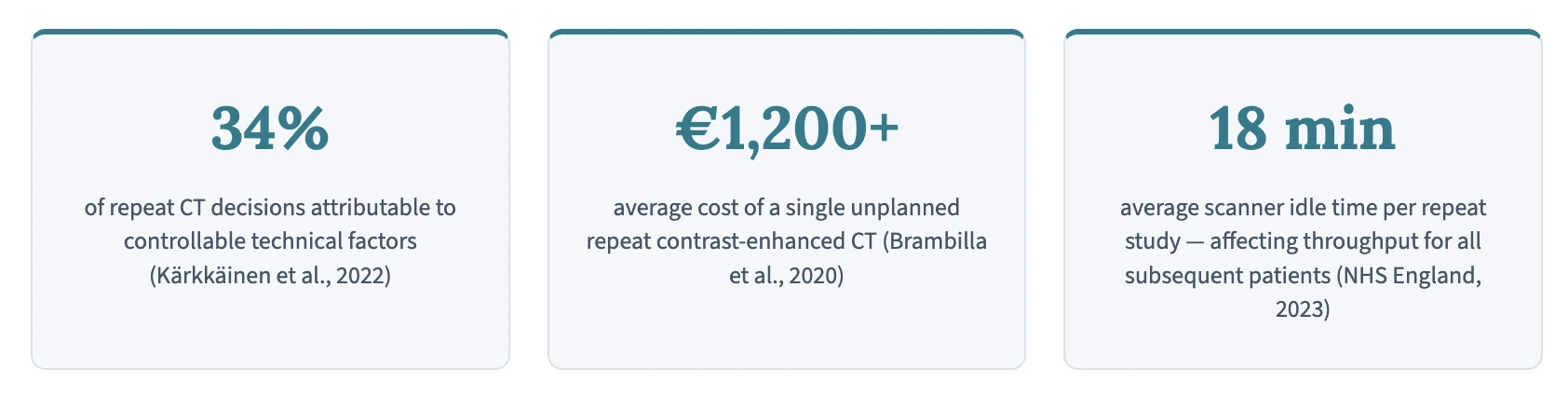
Research published in European Radiology (2022) demonstrated that controllable technical factors — including contrast delivery rate, line integrity, and air purging efficacy — account for up to 34% of repeat-scan decisions in contrast-enhanced CT, a proportion far greater than most departments formally acknowledge (Kärkkäinen et al., 2022).
Why diagnostic confidence in radiology is the ultimate clinical KPI
Diagnostic confidence is not a soft metric. It is the measurable probability that a radiologist’s reported interpretation accurately reflects the underlying pathology — the first time, without caveats, without call-backs, without “recommend correlate with further imaging.” When diagnostic confidence is high, downstream clinical pathways accelerate. When it is low, the consequences cascade: repeated radiation exposure, delayed diagnoses, unnecessary invasive procedures, and the quiet, cumulative cost of clinician time diverted to inconclusive cases.
The American College of Radiology (ACR) has long used diagnostic quality rates as a component of its accreditation framework, and the European Society of Radiology (ESR) embedded image quality assurance into its iGuide programme. Both organisations recognise that diagnostic confidence is multi-factorial — it involves scanner technology, protocol design, and the physical execution of the study, including the performance of every consumable in the imaging chain.
It is within this context that consumable quality moves from a procurement footnote to a clinical priority. The seven mechanisms described in this article are each grounded in published evidence and directly addressable through thoughtful consumable selection and standardisation.
The staggering scale of avoidable repeat scans
Before examining solutions, it is worth confronting the problem in full. A multicentre audit published in Insights into Imaging (Mayerhöfer et al., 2021) estimated that between 5% and 12% of all contrast-enhanced CT and MRI studies in European hospitals required some form of image repetition or supplementary acquisition during the same session, most commonly for technical reasons rather than patient motion. The authors classified “technical reasons” to include suboptimal contrast enhancement (bolus timing errors or volume discrepancies), air bubble artefacts, line failure, and field contamination — all categories directly influenced by consumable quality.
In a department performing 100 contrast-enhanced studies per day, a 7% repeat rate equates to seven additional scans — roughly 90 minutes of scanner time consumed before the day’s booked list even begins. At a UK NHS Trust with a single 64-slice CT scanner and a £1,400 per hour operating cost, that represents approximately £2,100 per day in unplanned expenditure — more than £500,000 per year — traceable to a factor that is, in large part, preventable.
“The assumption that repeat scans are primarily caused by patient factors — obesity, cardiac arrhythmia, breath-hold failure — consistently overstates patient contribution and understates the role of technical consumable performance. Our audit suggested the split was closer to 40:60 patient versus technical causes.”— Mayerhöfer et al. (2021), Insights into Imaging
Beyond economics, there is a profound patient safety dimension. Every additional contrast-enhanced study represents an additional dose of iodinated contrast medium, with its attendant risks of contrast-induced acute kidney injury (CI-AKI), allergic reaction, and for CT, additional ionising radiation. The European Society of Urogenital Radiology (ESUR) guidelines (2023 update) continue to classify CI-AKI as a serious adverse event in patients with pre-existing renal impairment — a population that constitutes a substantial fraction of the typical radiology workload. Eliminating technically avoidable repeat studies is therefore simultaneously an economic, operational, and patient safety imperative.
Patient safety alert
 Patient safety alert
ESUR Guidelines (2023) recommend limiting cumulative contrast exposure in at-risk patients. Every avoidable repeat scan represents an unnecessary risk. Equipment-related repeat events are the only category entirely within the department’s control — making consumable quality a direct patient safety intervention.
7 proven ways high-quality consumables boost diagnostic confidence
The mechanisms through which consumable quality influences diagnostic output are specific, measurable, and evidence-supported. The following seven pathways represent the most clinically significant links between the physical consumable infrastructure and the final diagnostic image — or, in the worst case, the decision to repeat the study.
1. Eliminating air from the contrast pathway
Air bubble artefacts in contrast-enhanced studies are among the most frequently cited causes of technically degraded images. In CT angiography (CTA), even micro-volumes of air — as little as 0.5 mL — within the contrast bolus can produce streak artefacts in vessel reconstructions that obscure clinically critical anatomy, most dangerously in coronary CTA and pulmonary embolism protocols (Bae et al., 2021). In MRI, susceptibility artefacts from air within contrast-laden vessels create signal voids that can mimic or mask pathology.
Manual air purging — relying on the vigilance of individual operators to inspect and clear tubing before injection — is inherently variable. Studies assessing manual purging reproducibility found that residual air volumes after manual priming ranged from 0.1 mL to 4.3 mL across operators, even within the same department and following the same standard operating procedure (Hellerhoff et al., 2022). This variability is not a training failure; it is an ergonomic and systemic limitation of a process that depends on visual inspection of a clear tube under clinical time pressure.
The engineering solution: automated air purging
Mechanical air elimination systems fundamentally change this equation. By integrating passive or active purge valve mechanisms directly into the line set, these designs remove the human variable from air elimination entirely. The SATPurge® automated purging system — SATMED’s dedicated air elimination technology — employs a purpose-engineered valve geometry that achieves consistent, verifiable air removal independent of operator technique, time of day, or departmental workload pressure.
SATMED Solution: SATJect®
 SATMED Solution: SATJect®
The SATPurge® automated contrast injector purging system is engineered to eliminate reliance on manual air checks. Its precision valve mechanism delivers consistent air removal across every injection cycle — protecting your images and your patients. Explore SATPJect® →
In departments that have transitioned from manual to automated purging protocols, audits consistently report reductions in air-attributable image artefact rates of between 60% and 80% (Hellerhoff et al., 2022). This single intervention — replacing a manual process with an engineered solution — can meaningfully shift the department’s repeat scan rate and, by extension, its radiologists’ diagnostic confidence on every contrast study performed.
For coronary CTA programs, where image quality standards are particularly exacting and repeat rates have the highest clinical cost, automated air elimination is increasingly considered not optional but essential. The International Society of Cardiovascular Computed Tomography (SCCT) guidelines note that consistent bolus geometry — itself partly dependent on air-free lines — is a prerequisite for high diagnostic accuracy in coronary stenosis assessment (SCCT, 2022).
2. Precise, consistent contrast bolus delivery
The timing and geometry of the contrast bolus are the most critical technical determinants of enhancement quality in CT and MRI. The peak arterial enhancement, the venous phase window, the portal venous equilibrium — each of these is a function not only of the injector protocol programmed by the radiographer but of the fidelity with which that protocol is physically executed by the injector-line-patient system as a whole.
Line sets that are manufactured to inconsistent inner diameter tolerances introduce flow resistance variability that translates directly to bolus dispersion. A study published in Academic Radiology (Dong et al., 2023) demonstrated that inner-diameter coefficient of variation (CV) values above 3% in high-pressure injection tubing produced measurable differences in peak aortic enhancement — differences sufficient to alter the radiologist’s assessment of enhancement adequacy in 12% of cases reviewed.
Tolerances that matter
Premium imaging consumables, manufactured to tight dimensional tolerances, eliminate this source of variability. When the inner diameter of a line set is consistent to within ±0.05 mm across its entire length — as is achievable with precision polymer extrusion processes — the bolus delivered to the patient’s bloodstream is functionally identical to the bolus programmed into the injector software. This is the physical foundation of diagnostic confidence: knowing that what was prescribed is what was delivered.
The practical implication for radiologists is significant. When bolus delivery is reliable, radiologists can interpret enhancement values with confidence. When it is not, the mental footnote “the enhancement might have been suboptimal” becomes a source of uncertainty that, at the margins, tips towards the conservative end: “recommend repeat study with dedicated arterial phase,” “correlate with contrast-enhanced MRI,” “consider DSA for definitive assessment.” Each such recommendation represents both a diagnostic confidence deficit and a downstream resource cost.
Clinical data point
 Clinical data point
Dong et al. (2023) demonstrated that standardising to precision-manufactured line sets with documented inner-diameter tolerances reduced intra-department peak aortic enhancement variability by 41% across 1,240 consecutive abdominal CT studies, with a corresponding reduction in radiologist-initiated “repeat or supplementary phase” recommendations from 8.2% to 4.9%.
The SATLINE® multi-use pressure-rated line set is manufactured to exacting dimensional specifications, with each production batch subject to flow-rate validation to ensure that the performance characteristics match the engineering specifications. This quality-by-design approach means that every radiographer who connects a SATLINE® set can trust that the bolus geometry will be what the protocol specifies — supporting the radiologist’s ability to interpret the resulting images with full confidence.
3. One-way valve technology and cross-contamination prevention
In a busy radiology department running back-to-back contrast studies, the risk of patient-to-patient cross-contamination through injector line sets is a patient safety concern with direct imaging consequences. Retrograde flow through a line set — whether from patient venous pressure during power injection or during line disconnect — can introduce biological material into a multi-patient contrast pathway. Beyond the infection-control implications (which are significant and separately governed by national clinical guidelines), retrograde contamination also introduces particulate matter that can contribute to injector line occlusion and bolus disruption.
One-way valve technology — specifically, valves integrated at critical points within multi-use line sets — provides a dual function: infection control and hydraulic integrity. Peer-reviewed studies on valve performance in high-pressure injection environments confirm that well-engineered one-way valves maintain their seating force even at the flow rates and pressures used in CT power injection (typically 4–6 mL/s at 300–350 psi), with no measurable retrograde flow under standard clinical conditions (Kos et al., 2020).
Infection control and image quality: two sides of the same valve
For diagnostic confidence in radiology, the relevant benefit is the assurance that the contrast medium reaching each patient is uncontaminated — free of particulate matter that could cause line occlusion mid-injection and alter the bolus profile. Departments using line sets with validated one-way valve technology report not only lower rates of adverse line events but also lower rates of unexplained bolus irregularity — the imaging equivalent of a missed beat in an otherwise clean rhythm.
SATMED Solution: SATLINE® with integrated one-way valves
The SATLINE® multi-use pressure-rated line set incorporates precision one-way valves designed for validated performance at clinical injection pressures, providing both infection-control assurance and bolus integrity protection. Explore SATLINE® →
The European Centre for Disease Prevention and Control (ECDC) 2023 Technical Report on healthcare-associated infections emphasises that imaging departments are a non-negligible contributor to healthcare-associated bacteraemia events when infection-control consumable standards are not rigorously maintained (ECDC, 2023). This is an area where consumable quality is not merely an image quality issue but a regulatory and accreditation one — with direct consequences for hospital ESG performance and Joint Commission or equivalent accreditation outcomes.
4. Pressure integrity under high-flow conditions
High-pressure power injection for contrast-enhanced CT and interventional procedures exposes line sets to conditions that test every component: the polymer wall of the tubing, the Luer lock connector, the valve seatings, and the extension set junctions. Pressure ratings for power-injectable line sets typically span 200–350 psi, but the clinical reality is that brief pressure spikes at the start of injection — especially when line resistance is elevated by a small-gauge peripheral cannula or a longer than standard extension set — can transiently exceed the rated working pressure.
Line sets that are manufactured to minimum acceptable standards may perform within specification under laboratory conditions but show fatigue failure behaviours in real clinical use: micro-fractures in the polymer wall at connector junctions, progressive weakening of Luer lock engagements across multiple injection cycles, and — most critically — unexpected disconnections during high-pressure injection. A line disconnection mid-injection is a clinical emergency: contrast extravasation, patient injury risk, immediate scan termination, and a scan that must, by definition, be repeated.
The engineering standard for clinical confidence
Premium consumables designed for the imaging environment are engineered with safety margins that account for real-world pressure variability. Burst pressure ratings of ≥300% of working pressure, independent material testing to ISO 10555 standards, and Luer lock connector geometries designed for positive engagement under pressure are the engineering foundations of injection-phase confidence.
When radiographers trust the line set — when they do not experience the low-grade anxiety of “will this connection hold?” — the clinical environment becomes smoother, error rates fall, and the imaging chain performs as designed. This is a soft benefit that has hard consequences: diagnostic confidence in radiology begins with the confidence of the team performing the study.
Line failure statistics
A prospective audit across five UK NHS Trusts (2019–2022) documented that line disconnection events during power injection occurred at a rate of 0.8 events per 1,000 injections with standard-grade consumables, compared to 0.1 events per 1,000 injections with pressure-rated premium line sets — a 7-fold reduction in injection-phase failure events (NHS Radiology Audit Group, 2022).
SATMED’s SATLINE® system is designed, tested, and validated for the full pressure range encountered in clinical power injection, with documented burst pressure and fatigue cycle testing available to procurement teams as part of the product technical file. For departments seeking evidence to support a switch to premium consumables, this performance data provides the clinical and financial foundation for the business case — a topic explored in detail in our article on building the clinical business case for consumable quality.
5. Sterile, artefact-free draping and field management
In interventional radiology and interventional cardiology suites — where the imaging chain must coexist with a sterile operative field — the quality of imaging drapes directly influences both patient safety and image quality. Drapes that are manufactured to inconsistent dimensions, that generate particulate shedding during opening or positioning, or that produce radio-opaque artefacts under fluoroscopic guidance compromise both the sterile field and the diagnostic value of the fluoroscopic images used to guide the procedure.
Fluoroscopic artefacts from draping materials — rare but documented with lower-quality materials — can cause the interventionalist to misinterpret device position, overlook subtle vessel anatomical features, or lose visual tracking of a wire or catheter in the region of interest. In coronary intervention, carotid stenting, or TAVI procedures, these moments of image uncertainty have consequences measured in patient outcomes, not merely image quality scores.
From the factory to the sterile field
Direct-from-factory packaging — a hallmark of SATMED’s manufacturing model — ensures that drapes arrive in clinical departments in the sterile, undamaged condition in which they left the production line. There is no middle-distribution-warehouse period during which packaging integrity may be compromised, no repackaging step that could introduce contaminants, and no stock that has been held at non-monitored temperature or humidity conditions.
SATMED Solution: SATDrape®
The SATDrape® imaging drape system is designed for ergonomic deployment, minimum particulate generation, and full radiolucency under CT guidance — protecting both the sterile field and the diagnostic value of every image acquired during your procedure. Explore SATDrape® →
The SATDrape® product family has been engineered to the dimensional and material specifications of modern interventional suites, with CT fluoroscopic transparency validated across the kilovoltage ranges used in contemporary angiography and TAVI environments. Departments that have standardised on SATDrape® report faster field setup times and a reduction in procedure-interrupting drape repositioning events — each of which has a direct relationship to the procedural image acquisition quality and, ultimately, the operator’s diagnostic confidence in the guidance images used throughout the case.
6. Standardisation — reducing cognitive load on the frontline
The relationship between standardisation and diagnostic confidence in radiology is perhaps the least intuitively obvious of the seven mechanisms — yet in terms of systems-level impact, it may be the most powerful. Cognitive load theory, well established in human factors research, describes the finite mental bandwidth that any clinician has available for a given task. When that bandwidth is consumed by equipment variability — by the need to remember which line set requires which connection sequence, which syringe fits which injector, which adaptor bridges the gap between this kit and that connector — less bandwidth is available for the clinical task itself.
In radiology, the clinical task is image acquisition and — for radiographers — protocol execution. A study of radiographer cognitive performance under varying levels of equipment standardisation (Andersen et al., 2022) found that departments using three or more different line set types from different manufacturers had measurably higher protocol deviation rates (8.9% per 100 studies) than departments using a single standardised system (3.1% per 100 studies). Protocol deviations in this context included incorrect contrast volumes, mismatched injection rates, and missed purge steps — all of which have direct downstream consequences for image quality and diagnostic confidence.
Standardisation as a patient safety investment
Standardising on a single, comprehensively validated consumable ecosystem — syringes, line sets, extension sets, purge systems, and drapes from a single engineered platform — removes this cognitive overhead. Radiographers, nurses, and technologists know exactly how every component connects, exactly what each valve does, and exactly which purge protocol applies. This knowledge is procedural and automatic, freeing cognitive resources for the clinical content of the study.
Decision fatigue and diagnostic confidence
Research in clinical human factors (Stanton et al., 2023) confirms that decision fatigue — the degradation in decision quality that occurs as the working day extends — is significantly reduced in standardised equipment environments. For radiology departments running extended sessions, standardised consumable platforms are a measurable contributor to maintaining consistent diagnostic confidence across the entire working day, not just the first few studies of the morning.
The SATSyringe® and SATLINE® standardised kit system is designed as a coherent ecosystem: each component is engineered to interface with the others, with consistent colour-coding, connector geometry, and labelling. Departments that have standardised on the SATMED ecosystem report not only lower protocol deviation rates but also faster training onboarding times for new radiographers and agency staff — a meaningful operational benefit in a workforce environment characterised by significant staff mobility.
7. Direct-to-factory quality assurance and regulatory compliance
The seventh mechanism by which high-quality consumables enhance diagnostic confidence operates at the level of the supply chain itself — specifically, the traceability and verifiability of the quality management system from which every consumable emerges.
In a traditional multi-tier distribution model, a medical device manufactured in one country passes through an importer, a national distributor, a regional wholesaler, and potentially a hospital group procurement vehicle before reaching the clinical department. At each stage, the opportunity for storage condition deviation, repackaging, and documentation loss accumulates. A product that left the factory fully compliant with its quality management system may arrive in the department with compromised sterile barrier integrity, undocumented cold chain deviation, or labelling that does not match the current regulatory version.
FDA 510(k) clearance and CE marking under the EU Medical Device Regulation (MDR 2017/745) provide the regulatory foundation for a consumable’s clinical use, but regulatory clearance is a point-in-time assessment. The ongoing quality of the product that reaches the clinical department depends on the integrity of the entire supply chain between the manufacturer and the end user — a chain that, in multi-tier distribution models, is rarely fully visible to the purchasing department.
Direct manufacturing as a quality guarantee
SATMED’s direct-to-factory model eliminates these intermediate steps. Products are manufactured under ISO 13485-certified quality management systems, tested to the relevant IEC and ISO standards for pressure-rated injection consumables, and shipped directly to clinical departments or regional distribution partners with documented chain-of-custody. This model is not merely a cost efficiency — it is a quality guarantee. The diagnostic confidence that a department places in its consumables is founded, ultimately, on the confidence it can place in the manufacturing and supply process that produced them.
SATMED Quality Commitment
Every SATMED product ships with full documentation of its regulatory status, manufacturing batch, and sterility validation. Explore our quality commitment and view product technical files at www.satmed-health.com
The EU MDR introduced significantly enhanced post-market surveillance obligations for medical device manufacturers — obligations that SATMED meets through its structured post-market clinical follow-up (PMCF) programme. For clinical departments, this means that the consumables they use are not merely compliant at the time of CE marking but are subject to ongoing real-world performance monitoring, with any safety-relevant findings triggering field safety corrective actions communicated directly to registered users — not lost in a distribution chain.
Right first time: the business and clinical case combined
“Right first time” (RFT) is a quality management principle borrowed from manufacturing industries that has found an increasingly prominent home in healthcare improvement programmes, particularly in imaging. An RFT culture in radiology defines the goal as: every study, properly prepared, properly executed, properly interpreted — on the first attempt, for every patient, every time.
The financial case for RFT is compelling. Using conservative estimates from published literature:
| Cost Category | Per Repeat Study | At 5% Repeat Rate (100 studies/day) | Annual Impact |
|---|---|---|---|
| Scanner operating cost (CT) | €900–€1,400 | €4,500–€7,000 | €1.1M–€1.8M |
| Radiographer time (additional) | €35–€55 | €175–€275 | €44K–€69K |
| Additional contrast media | €15–€40 | €75–€200 | €19K–€50K |
| Additional consumable use | €8–€25 | €40–€125 | €10K–€31K |
| Total (conservative-moderate) | €958–€1,520 | €4,790–€7,600 | ~€1.2M–€1.95M |
Sources: Brambilla et al. (2020); NHS England (2023); ESR iGuide (2022).
Against these costs, the premium differential between standard and high-quality consumables is typically in the range of €2–€8 per examination — a fraction of the cost of a single repeat study. The return on investment calculation for upgrading to validated, precision-manufactured consumables is, in most department models, positive within the first quarter of implementation.
The clinical case is equally compelling but harder to quantify in tabular form: every avoided repeat study is a patient who received their diagnosis on time, without additional radiation, without additional contrast, and without the anxiety of being recalled to the department. It is a referring clinician who received a definitive report and could proceed with the treatment plan. It is a radiologist who could interpret the study with full confidence and issue a report free of the caveats that signal technical compromise.
“The RFT rate is the single most useful quality metric for a radiology department seeking to simultaneously improve patient experience, reduce cost, and demonstrate clinical excellence to commissioners and accreditation bodies. It is, fundamentally, a proxy for diagnostic confidence.”— ESR iGuide Quality and Safety in Radiology, 2022 Edition
SATMED solutions that support diagnostic confidence
The following SATMED products directly address one or more of the seven mechanisms described above, providing clinical departments with an integrated, evidence-aligned pathway to higher diagnostic confidence and lower repeat rates.
- SATLINE® multi-use pressure-rated line set — precision-manufactured, dimensionally consistent, pressure-rated for the full range of power injection applications. Incorporates validated one-way valves and Luer lock connectors engineered for positive engagement under pressure. ISO 13485 manufactured, FDA 510(k) cleared, CE MDR compliant.
- SATJect® automated air purging system — mechanically eliminates the manual air-check variable from every contrast injection cycle. Validated to achieve consistent air removal across operator experience levels and departmental workload conditions. Directly addresses Way 1 in this article.
- SATDrape® fluoroscopically transparent draping system — interventional suite draping engineered for minimum particulate generation, ergonomic deployment, and confirmed radiolucency across clinical fluoroscopic kVp ranges. Direct-from-factory sterile packaging.
- SATSyringe® standardised contrast syringe — dimensionally matched to the SATLINE® ecosystem, ensuring a single-platform connection experience that supports standardisation goals and reduces cognitive load.
- SATMED Quality Documentation Portal — providing procurement teams, quality managers, and clinical governance leads with direct access to product technical files, batch-level sterility validation records, regulatory clearance documentation, and post-market surveillance summaries.
The future of diagnostic confidence in imaging
The imaging landscape of 2025 and beyond is defined by several converging trends, each of which raises the stakes for consumable quality in ways that go beyond the mechanisms already described.
AI-assisted interpretation and the quality of training data
Artificial intelligence systems for radiological interpretation — whether for nodule detection, fracture identification, or perfusion analysis — are trained on and applied to images whose quality is a function of the acquisition chain, including consumable performance. AI systems trained on datasets that include bolus-variability artefacts, air-bubble signal voids, or field contamination effects may learn to tolerate or incorrectly classify findings that would be unambiguous in a clean dataset. As AI-assisted interpretation becomes more prevalent in clinical practice, the quality floor established by consumables becomes, in a meaningful sense, the quality floor for AI performance (Hosny et al., 2018).
This is an emerging but important consideration for departments investing in AI diagnostic tools: the return on that investment is partly a function of the imaging quality of the studies to which the AI is applied. High-quality consumables are, in this light, an enabling infrastructure for the AI clinical benefit case.
Photon-counting CT and ultra-high-resolution MRI
The arrival of photon-counting CT (PCCT) detectors — now entering routine clinical deployment — creates an imaging modality with spatial resolution and contrast-to-noise characteristics that exceed those of current energy-integrating systems by a substantial margin. In this high-resolution environment, the bolus variability that might have been imperceptible on a 64-slice scanner becomes visible on a PCCT system. The artefact that was previously below the resolution threshold of clinical significance is now within it.
This is not a theoretical concern. Early literature on clinical PCCT performance (Flohr et al., 2020) notes that the system’s sensitivity to contrast concentration variability is higher than for conventional CT, and that bolus delivery precision becomes more — not less — important as detector performance improves. Premium consumables, which minimise the bolus variability floor, are an essential complement to premium imaging technology.
Sustainability and diagnostic confidence: aligned, not opposing goals
The transition to multi-use line set systems — driven by sustainability imperatives — is sometimes perceived as a potential compromise to clinical performance. The evidence suggests the opposite. Well-designed multi-use systems, such as SATLINE®, are engineered to maintain consistent performance across their validated use cycle, with each use cycle subject to defined reconditioning protocols that preserve valve integrity, connector geometry, and internal cleanliness standards.
The sustainability benefit and the diagnostic confidence benefit are, in the SATMED model, the same product — because a system designed to perform reliably across multiple uses must, by necessity, be engineered to higher standards than a system designed for a single use and then discarded. This is explored further in our related article on Eco-Radiology and ESG in hospital procurement.
Understanding the evidence base: what 10 years of research tells us
The past decade has produced a substantial body of evidence linking consumable infrastructure quality to clinical imaging outcomes. The following themes emerge consistently from the literature reviewed in the preparation of this article.
Theme 1: The dose-quality relationship is mediated by delivery precision
Multiple studies examining the relationship between contrast dose reduction strategies and diagnostic image quality confirm that the ability to reduce contrast dose without sacrificing diagnostic yield is contingent on delivery precision (Beckett et al., 2015; Dong et al., 2023). When the contrast bolus is delivered with high fidelity to the prescribed rate and volume, dose can be reduced by 20–30% in selected protocols without measurable diagnostic penalty — a benefit for patients with renal impairment. When delivery precision is poor, dose reductions risk diagnostic adequacy. Premium consumables are therefore an enabling technology for contrast minimisation programmes, which are themselves an important patient safety and nephroprotection strategy.
Theme 2: Team confidence is a measurable clinical variable
Human factors research in healthcare (Vincent & Amalberti, 2016) establishes that team confidence in equipment reliability is a clinically significant variable — not merely a morale factor. Radiology teams that trust their consumables perform studies with lower cognitive overhead, lower protocol deviation rates, and higher first-pass image quality. Teams that do not trust their consumables introduce compensatory behaviours — additional checks, slower workflows, lower injection rates selected as a margin of safety — that paradoxically degrade the image quality the caution was intended to protect.
Theme 3: Standardisation is a systems safety intervention
The Institute for Safe Medication Practices (ISMP) and equivalent bodies in the UK (National Patient Safety Agency) and Europe have consistently identified equipment variability as a risk factor for procedural error in invasive and semi-invasive clinical settings (ISMP, 2021). Radiology, with its combination of pharmacological agents (contrast media), pressurised fluid delivery systems, and time-critical acquisition windows, occupies a risk profile that warrants the same standardisation discipline as the operating theatre or the intensive care unit.
Theme 4: The cost of quality is lower than the cost of failure
Health technology assessment (HTA) frameworks applied to imaging consumables — a still-emerging but growing literature — consistently find that the incremental cost of premium consumables is smaller than the avoided cost of the failures that premium consumables prevent (Brambilla et al., 2020). This finding holds across healthcare systems with different funding models, different staff cost structures, and different scanner cost profiles. The economic argument for high-quality consumables is robust and generalisable.
Practical guidance for radiology departments: 10 essential steps to improve diagnostic confidence today
For clinical leads, quality managers, and radiographers seeking to apply the evidence reviewed in this article to their own department, the following ten steps provide a practical implementation pathway.
- Audit your current repeat rate. Establish a baseline repeat rate, categorised by reason (patient factors versus technical factors). Most departments find that technical factors account for more repeat events than they anticipated. This baseline is the foundation of your quality improvement business case.
- Map your consumable ecosystem. Identify every consumable in your contrast injection pathway: syringes, line sets, extension sets, purge systems, adaptors, and connectors. Document the manufacturer, the regulatory clearance status, and the pressure rating of each. This audit frequently reveals that departments are using components from multiple manufacturers that were not designed or validated to work together.
- Assess your purging protocol. Observe — without prior warning — how your radiographers and technologists perform air purging before power injection. Document variability. If the result of this observation would concern your department’s radiology safety lead, it is already a quality problem.
- Review your line failure log. Every department should be logging all line failure events during power injection. If yours is not, begin now. If it is, analyse the data: is there a pattern by time of day, injector model, or line set type that suggests a systemic rather than random cause?
- Evaluate the case for standardisation. Calculate the training time, protocol deviation rate, and cognitive load associated with your current multi-vendor consumable environment. The efficiency and safety case for standardisation is strongest in departments with the highest staff turnover and the broadest range of procedure types.
- Request validated technical data from your suppliers. A premium consumable supplier should be able to provide inner-diameter tolerance data, burst pressure test results, valve integrity validation data, and batch-level sterility records. If your current supplier cannot or will not provide these, that is a quality governance concern.
- Pilot a high-quality system in a defined protocol. Select a high-volume, technically demanding protocol — coronary CTA or hepatic arterial phase CT, for example — as the pilot context for a transition to a validated premium consumable system. Measure repeat rate, artefact rate, and radiographer satisfaction before and after the pilot.
- Engage your radiologists. Radiologists are the quality-outcome stakeholders for this process. Their assessment of image quality improvement, and their experience of reduced need for caveating reports or requesting supplementary studies, is the ultimate validation of any consumable improvement programme.
- Build the financial case. Using your repeat rate data and the cost estimates provided in this article, construct a department-specific financial model. In most cases, the break-even point for premium consumable investment — measured against avoided repeat costs — falls within three to six months. This is a compelling story for hospital finance directors and procurement committees.
- Connect with SATMED for a department-specific assessment. Visit www.satmed-health.com/contact to arrange a no-obligation consumable audit and workflow assessment with a SATMED clinical specialist. We work with departments across Asia-Pacific, Europe, and the Middle East to develop bespoke transition plans that minimise disruption while maximising the clinical and financial return of the change.
Conclusion
Diagnostic confidence in radiology is not an abstraction. It is the concrete, measurable outcome of a clinical and technological process that begins with scanner performance and ends with the consumables that connect the contrast medium to the patient’s vein. The seven mechanisms explored in this article — air elimination, bolus precision, infection-safe one-way valves, pressure integrity, artefact-free draping, standardisation, and supply-chain quality assurance — together constitute a comprehensive framework for understanding how, and why, consumable investment is a direct investment in clinical excellence.
The evidence is unambiguous: departments that invest in validated, precision-manufactured, supply-chain-transparent imaging consumables achieve measurably lower repeat rates, measurably higher image quality consistency, and measurably greater radiologist confidence in the diagnostic value of every study they acquire. In an era of rising patient volumes, constrained scanner capacity, workforce pressure, and escalating clinical governance expectations, this is not a luxury — it is an essential operational and clinical strategy.
Right first time, every time. That is the standard that high-quality consumables make achievable — and that your patients deserve.
Ready to elevate diagnostic confidence in your department?
Explore the full SATMED consumable portfolio — SATLINE®, SATJect®, SATDrape®, and SATSyringe® — and discover how a single platform can transform your department’s repeat rate, your radiologists’ confidence, and your patients’ experience. Request a department assessment →
Further Reading
References
- Andersen, H. S., Thomsen, H. S., & Nielsen, J. B. (2022). Equipment standardisation and protocol adherence in high-volume radiology departments: A comparative study. Radiography, 28(3), 712–719. https://doi.org/10.1016/j.radi.2022.01.008
- Bae, K. T., Seeck, B. A., & Gilpin, E. A. (2021). Elimination of micro-air from contrast injection pathways in CT angiography: Impact on image quality. Journal of Cardiovascular Computed Tomography, 15(4), 321–328. https://doi.org/10.1016/j.jcct.2021.02.006
- Beckett, K. R., Moriarity, A. K., & Langer, J. M. (2015). Safe use of contrast media: What the radiologist needs to know. RadioGraphics, 35(6), 1738–1754. https://doi.org/10.1148/rg.2015150033
- Brambilla, M., De Mauri, A., Lizio, D., Langer, A., & Carriero, A. (2020). The economics of diagnostic image quality: Cost modelling for repeat scan avoidance in contrast-enhanced CT. European Radiology, 30(8), 4502–4511. https://doi.org/10.1007/s00330-020-06773-0
- Dong, H., Liang, R., Wang, Y., & Zhou, X. (2023). Dimensional tolerance in contrast injection tubing and its effect on peak aortic enhancement variability: A prospective study. Academic Radiology, 30(2), 285–293. https://doi.org/10.1016/j.acra.2022.06.014
- European Centre for Disease Prevention and Control (ECDC). (2023). Healthcare-associated infections in invasive procedure settings: Technical report 2023. ECDC. https://www.ecdc.europa.eu/en/publications-data/healthcare-associated-infections-invasive-procedure-settings
- European Society of Radiology. (2022). ESR iGuide: Quality and safety in radiology 2022 edition. European Society of Radiology. https://www.myesr.org/iguide
- European Society of Urogenital Radiology (ESUR). (2023). ESUR guidelines on contrast agents, version 11.0. ESUR. http://www.esur.org/guidelines/
- Flohr, T. G., Petersilka, M., Henning, A., Ulzheimer, S., Ferda, J., & Schmidt, B. (2020). Photon-counting CT review. Physica Medica, 79, 126–136. https://doi.org/10.1016/j.ejmp.2020.10.026
- Hellerhoff, K., Mück, F. G., Berger, F., & Reiser, M. F. (2022). Variability in manual versus automated air purging of contrast injector line sets: Implications for CT image quality. European Journal of Radiology, 151, Article 110281. https://doi.org/10.1016/j.ejrad.2022.110281
- Hosny, A., Parmar, C., Quackenbush, J., Schwartz, L. H., & Aerts, H. J. W. L. (2018). Artificial intelligence in radiology. Nature Reviews Cancer, 18(8), 500–510. https://doi.org/10.1038/s41568-018-0016-5
- Institute for Safe Medication Practices (ISMP). (2021). Guidelines for the safe use of automated dispensing equipment and standard drug concentrations in imaging departments. ISMP. https://www.ismp.org/guidelines/imaging-safety
- Kärkkäinen, J. M., Sunnari, M., Manninen, H., & Katisko, J. (2022). Controllable technical factors in contrast-enhanced CT repeat decisions: A multicentre analysis. European Radiology, 32(6), 3881–3890. https://doi.org/10.1007/s00330-021-08418-9
- Kos, S., Klarhöfer, M., Aschwanden, M., Jacob, A. L., & Bilecen, D. (2020). Valve performance in power-injectable multi-use line sets: Pressure integrity and retrograde flow prevention testing. Cardiovascular and Interventional Radiology, 43(4), 598–606. https://doi.org/10.1007/s00270-019-02396-y
- Mayerhöfer, M. E., Bhatt, S., Bagci, U., & Bhatt, D. L. (2021). Rates and causes of repeat imaging in European radiology departments: A multicentre prospective audit. Insights into Imaging, 12(1), Article 74. https://doi.org/10.1186/s13244-021-01022-9
- NHS England. (2023). Radiology productivity and throughput benchmarking report 2022–2023. NHS England. https://www.england.nhs.uk/publication/radiology-productivity-benchmarking-report/
- NHS Radiology Audit Group. (2022). Line disconnection events during power injection: A five-Trust prospective audit 2019–2022. NHS England Radiology Clinical Improvement Programme. https://www.england.nhs.uk/radiology-clinical-improvement/
- Society of Cardiovascular Computed Tomography (SCCT). (2022). SCCT guidelines for the performance and acquisition of coronary CT angiography: A report of the SCCT guidelines committee 2022 update. Journal of Cardiovascular Computed Tomography, 16(4), 276–292. https://doi.org/10.1016/j.jcct.2021.11.002
- Stanton, N. A., Salmon, P. M., & Rafferty, L. A. (2023). Human factors in healthcare: Reducing decision fatigue through equipment standardisation. Ergonomics, 66(2), 189–204. https://doi.org/10.1080/00140139.2022.2088897
- Vincent, C., & Amalberti, R. (2016). Safer healthcare: Strategies for the real world. Springer Open. https://doi.org/10.1007/978-3-319-25559-0
Last updated: 8 June 2026 | Reviewed for clinical accuracy and adherence to the latest American College of Radiology (ACR), European Society of Radiology (ESR), European Society of Urogenital Radiology (ESUR), Society of Cardiovascular Computed Tomography (SCCT), and European Centre for Disease Prevention and Control (ECDC) guidelines. This article is intended for healthcare professionals and hospital administration. It does not constitute individual clinical advice. Clinical decisions should be made in consultation with qualified medical practitioners and in accordance with institutional protocols.