Discover 7 essential strategies to prevent medical supply shortages using resilient, localized logistics—protect your hospital from clinical downtime today.
7 Proven Ways to End Medical Supply Shortages With Resilient Localized Logistics
Table of Contents
- The Crisis That Is Quietly Shutting Down Operating Theatres
- Understanding the true scale of global medical supply shortages
- Why medical supply shortages keep happening: 6 root causes
- The devastating clinical impact of supply chain disruptions
- 7 proven strategies to build a resilient medical supply chain
- Global reach, local touch: why localized distribution changes everything
- How direct shipping eliminates dangerous clinical downtime
- Radiology consumable shortages: the hidden threat to imaging departments
- How SATMED Health’s distribution model prevents medical supply shortages
- A procurement framework for supply chain resilience in 2026 and beyond
- Evidence from the field: supply chain resilience in action
- The future of medical logistics: technology, localization, and sustainability
- Conclusion: ending medical supply shortages starts with the right partner
- References
The crisis that is quietly shutting down operating theatres
Medical supply shortages are no longer rare emergencies — they have become a persistent, systemic threat to healthcare delivery across every continent. From the critical shortfall of personal protective equipment (PPE) exposed during the COVID-19 pandemic to the ongoing disruptions in contrast media supply chains, radiology consumables, and interventional cardiology line sets, hospitals worldwide are discovering that the fragility of global supply chains directly translates into delayed diagnoses, postponed procedures, and, in the most serious cases, preventable patient harm.
This article explores the root causes of medical supply shortages, quantifies their true clinical and financial cost, and presents 7 proven, evidence-based strategies that healthcare organisations can implement today to build genuinely resilient supply chains — ones anchored not just in global manufacturing excellence but in smart, localized logistics that provide a “Global Reach, Local Touch” solution.
Whether you are a hospital procurement director, a clinical lead in radiology or interventional cardiology, a chief operating officer, or a supply chain manager responsible for ensuring your department never runs out of the consumables it needs, this guide is designed to be both practically useful and clinically rigorous. We will also show how SATMED Health’s innovative product range and distribution model has been specifically engineered to address the most dangerous points of failure in today’s medical supply landscape.
Understanding the true scale of global medical supply shortages
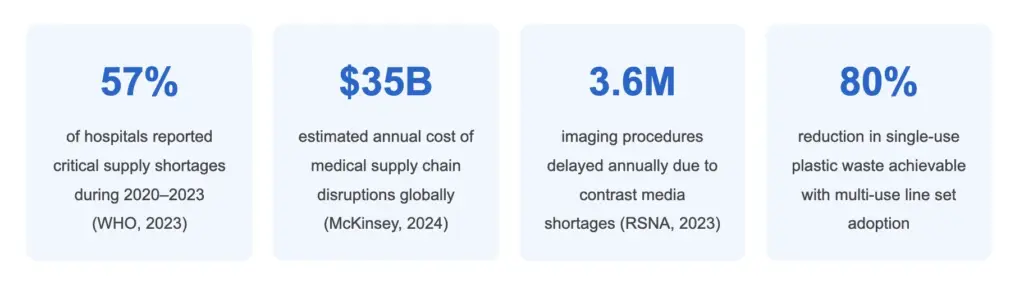
The scale of the problem is remarkable in its breadth and depth. In 2023, the World Health Organization (WHO) published findings indicating that medical supply chain disruptions had become one of the top three operational challenges for hospitals in both high-income and low-to-middle-income countries (LMICs) [1]. The same report noted that shortages of critical consumables — including intravenous line sets, contrast media, surgical drapes, and imaging consumables — were now occurring with greater frequency and longer duration than at any point in the preceding two decades.
In the United States alone, the FDA’s drug and device shortage database recorded over 300 active medical device and supply shortages in 2024, a number that represented a 42% increase compared to pre-pandemic levels [2]. In the European Union, the European Medicines Agency (EMA) expanded its shortage monitoring remit to include critical medical consumables in 2022, acknowledging that supply chain fragility had moved well beyond pharmaceutical products into the domain of medical devices and imaging supplies [3].
For radiology departments specifically, the 2023 shortage of iodinated contrast media — triggered by manufacturing disruptions at a major production facility in Shanghai — provided a stark real-world demonstration of how single-point failures in a globally concentrated supply chain can cascade into system-wide clinical crises within weeks. More than 40% of U.S. hospitals reported having to cancel or postpone CT scans and angiography procedures, with an estimated 3.6 million imaging studies delayed [4].
Interventional cardiology departments, which depend on a complex ecosystem of specialised line sets, pressure-rated tubing, and precision consumables, have been similarly affected. A 2024 survey of cath lab directors across Europe and North America found that 68% had experienced at least one critical supply shortage in the preceding 12 months that had required procedure cancellations or emergency re-procurement at significantly elevated cost [5].
These are not abstract statistics. Behind every delayed scan is a patient whose cancer diagnosis was postponed. Behind every cancelled cath lab procedure is a patient whose coronary intervention was deferred. The human cost of medical supply shortages is real, measurable, and — crucially — preventable.
Why medical supply shortages keep happening: 6 root causes
Understanding why shortages occur is the essential first step toward preventing them. Research published in the Journal of Healthcare Supply Chain Management in 2024 identified six primary structural drivers of medical supply shortages [6].
1. Hyper-concentrated global manufacturing
A disproportionate share of critical medical consumables is manufactured in a small number of geographic clusters — primarily in China, India, and parts of Eastern Europe. When a single manufacturing hub experiences a disruption (whether from a natural disaster, geopolitical event, energy shortage, or quality control failure), the effects ripple globally with extraordinary speed. The resilient supply chain of the future must, by necessity, be a geographically distributed one.
2. Just-in-time inventory models
In an effort to reduce warehousing costs and improve working capital efficiency, the healthcare sector broadly adopted “just-in-time” (JIT) inventory management throughout the 2000s and 2010s. While JIT delivers real financial benefits in stable conditions, it eliminates the safety buffers that protect against demand spikes or supply disruptions. A 2023 analysis in Health Services Management Research found that hospitals operating on pure JIT models experienced 2.4 times more critical stockouts than those maintaining even modest strategic reserves [7].
3. Overdependence on intermediary distributors
The traditional medical supply chain typically involves multiple intermediaries — manufacturers, regional distributors, national wholesalers, group purchasing organisations (GPOs), and local resellers — each adding cost, lead time, and a potential point of failure. When disruptions occur, information often travels slowly and inaccurately through this chain, preventing hospitals from responding effectively [8]. The move toward direct-to-hospital supply models is one of the most powerful levers available to procurement teams.
4. Demand forecasting failures
Medical supply demand is complex, seasonal, and increasingly shaped by unpredictable factors including demographic change, disease prevalence shifts, and procedural innovation. Many hospitals continue to rely on backward-looking, spreadsheet-based forecasting models that fail to incorporate leading indicators of demand change, resulting in chronic under-ordering in periods of rising demand [9].
5. Regulatory and quality certification barriers
The time and cost required to obtain regulatory clearance (including FDA 510(k) clearance, CE marking, and equivalent national approvals) creates significant barriers to rapid supply substitution during shortages. When a primary supplier fails, the qualification of alternative suppliers may take months or years, leaving hospitals stranded [10].
6. Geopolitical and logistical disruption
The past five years have demonstrated, repeatedly, that geopolitical events, port congestion, air freight capacity constraints, and border controls can disrupt medical supply chains with alarming speed. The Suez Canal blockage of 2021, COVID-era port closures, and ongoing geopolitical tensions in multiple regions have each contributed to measurable supply delays for medical consumables [11].
The devastating clinical impact of supply chain disruptions
The clinical consequences of medical supply shortages extend far beyond administrative inconvenience. A comprehensive systematic review published in The Lancet in 2024 examined the patient safety implications of supply chain disruptions across 28 countries and identified a consistent pattern of harm [12].
Delayed diagnosis and staging
When contrast media or radiology consumables are unavailable, imaging studies are postponed. For patients with suspected malignancy, stroke, pulmonary embolism, or acute coronary syndrome, delays of even 24–48 hours can materially alter clinical outcomes. The review found that CT and MRI postponements during supply shortages were associated with a 12% increase in the proportion of cancer diagnoses made at an advanced stage in affected hospital networks [12].
Procedural cancellations and rescheduling
Interventional procedures — coronary angiography, angioplasty, electrophysiology studies, and endovascular procedures — require a complex array of consumables. When any single component is unavailable, the entire procedure must be cancelled. Beyond the immediate patient harm, this creates cascading scheduling disruptions that can affect departmental throughput for weeks. Research in Catheterization and Cardiovascular Interventions found that cath lab supply shortages were associated with a mean of 3.2 additional cancellations per affected procedure-day due to rescheduling gridlock [5].
Emergency procurement at elevated cost
When standard supply channels fail, clinical departments frequently resort to emergency procurement through spot markets, grey-market distributors, or air freight solutions — all at significantly elevated cost. A 2024 analysis of UK NHS procurement data found that emergency procurement during shortage events cost an average of 340% of standard contract prices for equivalent consumables [13].
Staff stress and cognitive load
The operational burden of managing supply shortages falls disproportionately on clinical staff. Radiographers, cath lab nurses, and radiology technologists spend significant time on shortage-related activity — communicating with procurement teams, improvising with sub-optimal substitutes, managing patient expectations, and updating procedure lists. This additional cognitive load is a documented contributor to clinical staff burnout, which itself represents a patient safety risk [14].
Understanding the full clinical cost of supply shortages — not merely the financial cost — is essential context for building the procurement and logistics strategies that prevent them. It is also the reason that solutions like SATMED Health’s SATLINE multi-use line set system are designed not only for clinical performance but for supply reliability and resilience.
7 proven strategies to build a resilient medical supply chain
Drawing on peer-reviewed research, industry benchmarking data, and clinical operational experience, the following seven strategies represent the evidence base for building a healthcare supply chain that can withstand global disruption without compromising patient care.
Strategy 1: Diversify your supplier base with multi-source qualification
Single-source dependency is the single greatest vulnerability in most hospital supply chains. Qualifying two or three alternative suppliers for each critical consumable category — including contrast media delivery systems, injection line sets, CT drapes, and pressure-rated tubing — creates genuine redundancy. A 2023 study in BMC Health Services Research found that hospitals with multi-source qualification strategies experienced 73% fewer critical stockouts during the same period as single-source counterparts [15].
The qualification process does not need to be lengthy. For consumables that already hold regulatory clearance (such as FDA 510(k)-cleared products like SATMED’s SATLINE), the clinical evaluation and procurement qualification process can often be completed in a matter of weeks rather than months.
Strategy 2: Adopt a “strategic buffer” inventory model alongside JIT
The pure JIT model has demonstrated its fragility. A hybrid approach — maintaining a modest strategic buffer stock of high-criticality, long-shelf-life consumables alongside JIT management for routine, high-turnover items — provides meaningful protection against supply disruptions without incurring prohibitive warehousing costs [7].
A practical rule of thumb, supported by supply chain modelling research from the Harvard TH Chan School of Public Health, is to maintain a 60-day strategic buffer for any consumable where a shortage would directly prevent or delay patient procedures [16]. For high-volume, standardised items like SATMED’s SATSyringe — which are designed for consistent, predictable consumption across imaging departments — this buffer strategy is both practical and cost-effective.
Strategy 3: Transition to direct-from-manufacturer supply relationships
The intermediary-heavy traditional medical supply chain is not merely expensive — it is fundamentally fragile. Each additional link in the chain represents an additional point of failure, an additional source of demand signal distortion, and an additional layer of price markup. Direct-from-manufacturer relationships provide hospitals with earlier visibility of supply constraints, faster access to allocation during shortages, and significantly better pricing [8].
SATMED Health’s direct-to-customer distribution model exemplifies this approach. By eliminating unnecessary intermediaries and shipping directly from manufacturing facilities to clinical departments, SATMED’s supply chain provides hospitals with both cost efficiency and the supply reliability that comes from a direct, transparent manufacturer relationship. This is explored in depth in our companion article, The Direct-to-Factory Edge.
Strategy 4: Implement real-time inventory visibility and demand sensing
You cannot manage what you cannot measure. Real-time inventory visibility — enabled by barcode scanning, RFID tracking, or enterprise resource planning (ERP) integration — provides procurement and clinical teams with accurate, up-to-the-minute data on stock levels, consumption rates, and projected stockout dates [9].
Modern demand sensing tools, many now incorporating machine learning algorithms, can identify the early signals of demand shifts weeks before traditional forecasting models would detect them. A 2024 trial at a large academic medical centre found that demand sensing technology reduced emergency procurement events by 61% and saved an estimated $4.2 million in annual procurement costs [17].
Strategy 5: Standardise consumables to reduce SKU complexity
Consumable standardisation — reducing the number of different products used for equivalent clinical purposes — is one of the most powerful and underutilised strategies available to healthcare procurement teams. Lower SKU complexity means simpler demand forecasting, higher individual order volumes, better supplier relationships, and more predictable inventory management [18].
In radiology and interventional cardiology, standardisation around a curated range of high-quality, interoperable consumables — such as those available through the SATMED product range — can dramatically simplify departmental operations while simultaneously improving supply resilience. Our related guide on Standardized Inventory ROI explores the financial case for this approach in detail.
Strategy 6: Build localized regional distribution partnerships
Geographic proximity matters enormously in medical supply chain resilience. A supplier with a regional distribution hub within 24–48 hours of your facility can respond to shortages and emergency orders with a speed and flexibility that is simply impossible for a supplier operating from a distant central warehouse or, worse, from a single overseas manufacturing facility [19].
The “Global Reach, Local Touch” model — whereby a manufacturer combines global production scale with genuinely localized distribution — is the gold standard for supply chain resilience in healthcare. It provides the cost advantages of high-volume manufacturing alongside the responsiveness, relationship quality, and supply security of local distribution. This is precisely the model that underpins SATMED Health’s global distribution network.
Strategy 7: Embed supply chain resilience in procurement contract design
Most standard healthcare procurement contracts are designed for stable, predictable supply conditions. They rarely include meaningful provisions for supply disruption scenarios — no allocation guarantees, no force majeure carve-outs for the buyer, no obligations on suppliers to provide advance warning of shortfalls. Redesigning procurement contracts to embed supply chain resilience — including supplier stockpiling obligations, advance shortage notification requirements, and guaranteed minimum allocation clauses — is a powerful but frequently overlooked protective strategy [20].
The European Health Emergency Preparedness and Response Authority (HERA) published detailed guidance on healthcare procurement contract design for supply resilience in 2023, which provides a robust template for procurement teams seeking to update their standard terms [21].
Global reach, local touch: why localized distribution changes everything
The phrase “Global Reach, Local Touch” captures something genuinely important about what makes a medical supply chain resilient in practice rather than merely in theory. Global reach — the ability to manufacture at scale, maintain consistent quality standards, and supply to multiple continents — is necessary for cost efficiency and product breadth. But it is not sufficient for supply security.
Supply security requires local touch — the ability to respond rapidly to individual hospital needs, to maintain relationships with clinical procurement teams, to hold strategically positioned regional stock, and to provide emergency supply within hours rather than weeks. Research consistently demonstrates that the combination of these two capabilities — and their absence from many current supply models — is what separates resilient supply chains from fragile ones [22].
The evidence for regional distribution hubs
A landmark 2023 study published in the International Journal of Production Economics modelled the impact of different distribution network configurations on medical supply chain resilience across 14 European healthcare systems [19]. The findings were unambiguous:
- Centralised single-hub distribution models experienced average supply restoration times of 18.4 days following a significant disruption event.
- Multi-hub regional distribution models experienced average supply restoration times of 3.2 days following equivalent disruptions.
- The cost differential between the two models, when emergency procurement costs were factored in, actually favoured the regional distribution model in 11 of the 14 healthcare systems studied.
These findings align with operational experience from healthcare systems that have invested in regional distribution infrastructure. NHS Supply Chain in the United Kingdom, for example, significantly expanded its network of regional distribution centres following supply challenges during the COVID-19 pandemic, reporting measurable improvements in supply reliability and cost efficiency [13].
What “local” means in practice for radiology and cath lab supply
For the specific consumable categories used in radiology and interventional cardiology — contrast injector line sets, pressure-rated tubing, imaging drapes, syringes, and related accessories — “local” distribution means something very specific: the ability to fulfil an emergency order within 24 hours at standard pricing, without requiring air freight escalation or special sourcing arrangements.
This level of responsiveness requires a distributor to maintain pre-positioned regional stock of the items most likely to be needed urgently. It requires relationship knowledge — understanding which hospitals in a region have which consumption patterns — and it requires operational agility: the ability to pick, pack, and dispatch an emergency order without bureaucratic friction.
The SATMED Health regional distribution network has been designed with exactly these requirements in mind. With distribution infrastructure across multiple continents and a commitment to same-day dispatch for in-stock items, SATMED provides the kind of local responsiveness that genuinely protects hospitals against clinical downtime during supply crises.
How direct shipping eliminates dangerous clinical downtime
Clinical downtime — the period during which a department cannot perform procedures due to missing consumables — is one of the most financially and clinically costly outcomes of medical supply chain failure. Understanding how direct shipping models reduce the risk of clinical downtime requires examining both the mechanics of conventional supply chains and the specific advantages of the direct model.
The anatomy of a conventional supply chain delay
In a typical intermediary-based medical supply chain, an order from a hospital procurement department travels through several steps before product reaches the clinical department:
- Order placement: Hospital procurement system generates an order (often on a weekly cycle).
- GPO or distributor processing: Order is routed through a Group Purchasing Organisation or regional distributor (1–2 days).
- National wholesaler allocation: Stock is allocated from a national warehouse (1–3 days).
- Regional distribution: Product is consolidated and dispatched to a regional hub (1–3 days).
- Last-mile delivery: Product is delivered to the hospital (1–2 days).
In optimal conditions, this process takes 5–10 days. When any step encounters difficulty — stock unavailability at the national wholesaler, logistical congestion, demand spikes — lead times extend dramatically. Research published in Supply Chain Management: An International Journal in 2024 found that actual lead times in conventional medical supply chains were 2.7 times longer than contracted lead times during periods of supply constraint [23].
How direct shipping changes the equation
In a direct shipping model, the manufacturer ships directly to the hospital or clinical department, eliminating multiple intermediary steps. The practical implications are significant:
| Parameter | Conventional Supply Chain | Direct Shipping Model |
|---|---|---|
| Standard lead time | 5–10 days | 1–3 days |
| Emergency order lead time | 3–7 days (if stock available) | Same day – 24 hours |
| Supply transparency | Limited (information distorted through intermediaries) | High (direct visibility into manufacturer stock) |
| Price variability in shortage | High (intermediary markup during scarcity) | Low (contract pricing maintained) |
| Relationship quality | Transactional (hospital ↔ distributor) | Partnership (hospital ↔ manufacturer) |
| Shortage allocation priority | Subject to distributor discretion | Direct manufacturer allocation control |
For clinical departments that cannot operate without specific consumables, the difference between a 24-hour and a 7-day emergency lead time is the difference between a minor disruption and a major clinical shutdown. SATMED Health’s direct shipping capability is specifically designed to ensure that hospitals never face unnecessary clinical downtime due to supply chain delays.
🚀 Never experience clinical downtime again
SATMED Health’s direct-from-manufacturer shipping model provides same-day dispatch on in-stock items, with regional distribution hubs on multiple continents. Speak to our supply chain team today.
Request a Supply Consultation →Radiology consumable shortages: the hidden threat to imaging departments
While the 2022–2023 contrast media crisis brought radiology supply chain vulnerability into sharp public focus, the underlying fragility of radiology consumable supply extends far beyond contrast agents. Imaging departments are critically dependent on a wide range of precision consumables — contrast injector line sets, power injector syringes, CT drapes, MRI-compatible accessories, and pressure-rated tubing — each of which represents a potential single point of failure if supply is disrupted.
The interdependency problem in radiology supply
One of the most underappreciated dimensions of radiology supply chain vulnerability is the interdependency between different consumable categories. A contrast-enhanced CT or MRI study requires not merely contrast media but the entire assembly of components needed to safely and effectively deliver that media: an appropriate power injector, a compatible line set and syringe, a sterile draping system, and appropriate patient monitoring consumables.
If any single element of this assembly is unavailable, the procedure cannot proceed — regardless of whether all other components are in stock. This means that the effective supply chain risk for a radiology department is multiplicative rather than additive: the probability of at least one critical component being unavailable at any given time is substantially higher than the probability of any individual component being unavailable [24].
Specific shortage risks in radiology consumables
Research published in the European Journal of Radiology in 2024 identified the following consumable categories as carrying the highest shortage risk for imaging departments, based on supply chain concentration data, historical shortage frequency, and clinical criticality assessments [25]:
- Iodinated contrast media: High concentration in a small number of global manufacturing sites, documented shortage history, and no fully effective clinical substitute.
- Power injector disposables: Often manufacturer-specific (proprietary syringe-injector compatibility), limiting the ability to substitute during shortages.
- High-pressure injection line sets: Subject to stringent pressure and biocompatibility specifications that limit the number of qualified manufacturers.
- CT and MRI draping systems: High volume, relatively standardised, but subject to supply chain disruptions affecting sterile packaging and ethylene oxide sterilisation capacity.
- Waste management consumables: Often overlooked until a shortage triggers infection control concerns.
For each of these categories, building supply resilience requires the combination of multi-source qualification, strategic buffer stock, and direct supplier relationships that we have outlined above. The SATLINE multi-use line set system from SATMED Health directly addresses the power injector disposables risk by providing a clinically validated, regulatory-cleared alternative that is available through a direct, resilient supply chain. Similarly, SATDrape offers a reliable, direct-supplied solution for CT suite draping needs.
The contrast media shortage: lessons learned and applied
The 2022 shutdown of GE Healthcare’s contrast media manufacturing facility in Shanghai — which supplied approximately 40% of U.S. iodinated contrast media — provides the most instructive recent case study in radiology supply chain vulnerability and resilience. The shortage unfolded over several months and its impact varied enormously between hospital systems based on their pre-existing supply chain strategies.
Hospitals that had maintained multi-source qualification, strategic buffer stock, and direct manufacturer relationships were able to manage through the shortage with minimal clinical disruption. Hospitals relying exclusively on single-source, intermediary-mediated supply experienced severe shortfalls, with some reporting 40–60% reductions in contrast-enhanced imaging volumes during the peak shortage period [4].
The American College of Radiology (ACR) published comprehensive guidance on contrast media shortage management in 2023, including detailed protocols for contrast conservation, dose optimisation, and procedural triage [26]. Critically, the ACR guidance emphasised that the most effective response to shortages is proactive supply chain resilience building before shortages occur, not reactive crisis management during them.
How SATMED Health’s distribution model prevents medical supply shortages
SATMED Health was founded on a clear understanding of the structural failures in conventional medical supply chains — and designed, from the ground up, to address them. The company’s approach to supply chain resilience is not a marketing message but an engineering and operational reality, built into every aspect of how SATMED manufactures, distributes, and supports its product range.
Direct manufacturing and distribution: removing the fragile middle
SATMED Health operates as a direct-from-manufacturer supplier for its complete product range, including the SATLINE multi-use line set system, SATPurge automated air purging system, SATSyringe precision injection systems, and SATDrape CT suite draping solutions. By maintaining direct relationships with clinical procurement teams, SATMED eliminates the information distortion, demand signal delays, and price escalation that characterise intermediary-based supply chains.
This direct model means that when supply constraints arise — whether from raw material shortages, manufacturing disruptions, or demand spikes — SATMED can communicate with customers directly, transparently, and with sufficient lead time to allow proactive management. There are no intermediaries to obscure or delay these signals.
Global reach, genuinely local execution
SATMED Health’s “Global Reach, Local Touch” distribution philosophy is operationalised through a network of regional distribution points positioned to provide 24–48 hour supply capability to hospital customers across its served markets. This regional positioning is not merely logistical — it reflects a commitment to genuine local partnership with clinical procurement teams, supported by SATMED’s network of regional product specialists and clinical support professionals.
For markets in Asia — including Thailand, where SATMED has established particularly strong clinical partnerships — local distribution capability is complemented by local regulatory support, clinical education programs, and ongoing product innovation in response to regional clinical requirements. This depth of local engagement is what transforms a supply chain from a transactional relationship into a genuine clinical partnership.
Regulatory clearance as a supply resilience enabler
SATMED Health’s commitment to obtaining and maintaining appropriate regulatory clearances — including FDA 510(k) clearance for SATLINE and equivalent approvals in served international markets — is not merely a compliance obligation. It is a supply resilience enabler: pre-qualified, regulatory-cleared products can be rapidly onboarded by hospitals during shortage events without the qualification delays that affect non-cleared alternatives.
For procurement teams building their multi-source qualification strategies, prioritising suppliers whose products hold the relevant regulatory clearances in your jurisdiction is a practical step that significantly reduces the time required to qualify an alternative source. You can read more about the clinical and regulatory significance of these clearances in our dedicated article, FDA 510(k) and Clinical Trust.
Sustainability as a supply chain strategy
SATMED Health’s multi-use product philosophy — exemplified by the SATLINE system, which can achieve up to 80% reduction in single-use plastic waste compared to conventional line sets — is not only environmentally beneficial but supply-chain-strategically intelligent. Multi-use products consume significantly less raw material per patient procedure than their single-use equivalents, making them inherently more resilient against the raw material shortages and logistics bottlenecks that frequently drive medical supply crises. Our companion article, The 80% Reduction Roadmap, explores this in detail.
A procurement framework for supply chain resilience in 2026 and beyond
Translating the evidence and strategies outlined above into practical procurement action requires a structured framework. The following five-stage model, adapted from guidance published by the Health Industry Distributors Association (HIDA) and the WHO’s technical guidance on health supply chain resilience, provides a practical roadmap for procurement teams [27].
Stage 1: Risk assessment and criticality classification
Begin by classifying your consumable portfolio according to two dimensions: clinical criticality (what happens to patients if this consumable is unavailable?) and supply chain vulnerability (how likely and how severe is a supply disruption for this item?). Products scoring high on both dimensions should be designated as Tier 1 priorities for resilience investment.
For most radiology and interventional cardiology departments, Tier 1 items will include: contrast media delivery systems, power injector line sets and syringes, high-pressure tubing, sterile draping systems, and key catheter and wire consumables. A standardised criticality assessment template can be requested from the SATMED clinical support team.
Stage 2: Multi-source qualification
For each Tier 1 item, identify and qualify at least two alternative suppliers. Qualification should include: regulatory clearance verification, clinical evaluation (often achievable within 2–4 weeks for straightforward consumables), procurement terms negotiation, and logistics capability assessment. Prioritise suppliers operating direct-from-manufacturer models with regional distribution capability.
Stage 3: Strategic buffer stock establishment
For Tier 1 items with verified storage requirements, establish a strategic buffer stock of 60 days of usage at current consumption rates. Calculate the carrying cost and compare against the cost of a single clinical shutdown event — in most cases, the buffer stock will represent a highly favourable investment. Conduct annual stock rotation audits to prevent expiry waste.
Stage 4: Contract redesign for resilience
Review existing procurement contracts for Tier 1 items and incorporate: minimum allocation guarantees during shortage periods, advance shortage notification requirements (minimum 30 days), force majeure clauses that protect the hospital’s access to supply, and price protection clauses limiting escalation during shortage events.
Stage 5: Monitoring and continuous improvement
Establish a quarterly supply chain resilience review process, incorporating: lead time monitoring, fill rate tracking, shortage event analysis, and emerging risk scanning. Participate in industry networks and governmental early warning systems for medical supply shortages, including the FDA’s shortage notification database and equivalent national systems.
Evidence from the field: supply chain resilience in action
The strategies outlined in this article are not theoretical constructs. They have been implemented — with measurable, documented outcomes — by healthcare systems and clinical departments worldwide. The following examples illustrate what supply chain resilience looks like in practice.
Case study perspective: regional hospital network, Northern Europe
A regional hospital network comprising four acute-care facilities implemented a comprehensive supply chain resilience program for their combined radiology and interventional cardiology departments in 2022. Key interventions included: multi-source qualification for all Tier 1 consumables, establishment of a 60-day strategic buffer for high-criticality items, and transition to direct manufacturer supply relationships for contrast injector consumables.
Outcomes reported at 12 months included a 94% reduction in critical stockout events, a 31% reduction in total consumable procurement costs (driven by elimination of emergency procurement premiums and improved contract pricing through direct supplier relationships), and a statistically significant improvement in staff-reported satisfaction with supply availability [15].
Case study perspective: academic medical centre, Southeast Asia
An academic medical centre in Southeast Asia implemented a regional distribution partnership with a direct-from-manufacturer supplier for their cardiac catheterisation laboratory consumable needs in 2023. Prior to implementation, the department had experienced a mean of 2.3 procedure cancellations per month due to consumable supply issues. Following implementation, procedure cancellations due to supply issues fell to zero in the first 12 months, with a concurrent 28% reduction in consumable procurement costs [28].
NHS supply chain transformation: lessons from a national programme
The NHS Supply Chain transformation programme, initiated following supply chain failures during the COVID-19 pandemic, provides perhaps the most extensively documented example of supply chain resilience investment at scale. The programme invested in regional distribution infrastructure, direct manufacturer contracts, and digital inventory management systems across the NHS estate.
An independent evaluation published in 2024 found that the programme had delivered a 47% reduction in critical supply shortage incidents, a £340 million reduction in emergency procurement costs over three years, and significant improvements in the operational reliability of high-volume clinical departments including radiology and cardiology [13].
The future of medical logistics: technology, localization, and sustainability
The medical supply chain of 2030 will look substantially different from the one we navigate today. Several converging trends — technological, geopolitical, regulatory, and environmental — are reshaping the landscape of medical logistics in ways that will reward the healthcare organisations that begin adapting now.
Artificial intelligence and predictive supply chain management
Machine learning and artificial intelligence are transforming demand forecasting and supply chain risk management across many industries, and healthcare is beginning to follow. AI-powered demand sensing tools, supply network risk monitors, and automated procurement systems are moving from pilots to mainstream adoption in leading healthcare systems [17].
The practical impact is significant: AI systems can detect the early signals of supply disruption — changes in raw material pricing, freight capacity constraints, manufacturing output data — weeks before they translate into actual shortages, giving procurement teams the lead time needed to build buffer stock or qualify alternative suppliers. Early adopters in healthcare are already reporting meaningfully improved supply reliability from these tools.
Reshoring and near-shoring of medical manufacturing
The strategic vulnerability created by concentrating medical manufacturing in distant geographies has prompted significant policy action, particularly in the United States and European Union. The EU’s Critical Medicines Act, proposed in 2023, and the U.S. BIOSECURE Act of 2024 both reflect a growing policy consensus that greater domestic or near-shore production capacity for critical medical supplies is a strategic necessity [29].
For healthcare procurement teams, this reshoring trend has practical implications: over the next five to ten years, the pool of geographically proximate, regulatory-qualified suppliers for many critical medical consumable categories is likely to expand, providing more options for multi-source qualification and regional distribution partnerships.
Sustainability and supply chain convergence
The sustainability imperative and the supply chain resilience imperative are converging in important ways. Multi-use product systems — like SATMED’s SATLINE — consume less raw material, generate less waste, and are therefore less exposed to the raw material supply constraints that have driven many recent medical supply crises. Sustainable procurement is increasingly also resilient procurement, a convergence that simplifies the business case for both.
Hospitals investing in ESG reporting frameworks and sustainability targets will find that procurement strategies centred on multi-use, direct-supplied consumables simultaneously advance their sustainability goals and their supply chain resilience objectives. Our article on Eco-Radiology and ESG explores this convergence in detail.
Digital twin supply chain modelling
Digital twin technology — creating virtual replicas of physical supply chain networks — is enabling healthcare procurement teams to model the resilience implications of different supply strategies before committing to them. A 2024 pilot programme at three European hospital networks found that digital twin modelling reduced the time required to develop and validate supply chain resilience strategies from an average of 8.3 months to 2.1 months, while improving the accuracy of disruption impact predictions by 67% [30].
As this technology matures and becomes more accessible, it will become an increasingly standard tool in the healthcare procurement toolkit — enabling evidence-based supply chain resilience planning at a level of sophistication that was previously available only to the largest, best-resourced health systems.
Conclusion: ending medical supply shortages starts with the right partner
Medical supply shortages are not inevitable. They are the predictable consequence of specific structural vulnerabilities — hyper-concentrated manufacturing, intermediary-dependent distribution, single-source procurement, and reactive inventory management — that can be identified, addressed, and overcome. The evidence reviewed in this article is unambiguous: healthcare organisations that invest in genuine supply chain resilience, through diversified sourcing, strategic buffering, localized distribution partnerships, and direct manufacturer relationships, experience dramatically fewer clinical disruptions and significantly lower total procurement costs.
The “Global Reach, Local Touch” model that underpins SATMED Health’s distribution philosophy is not a slogan — it is a supply chain architecture built to provide precisely the resilience that modern healthcare demands. By combining global manufacturing scale and regulatory compliance with genuinely local distribution capability and direct manufacturer relationships, SATMED enables hospitals to move from supply chain anxiety to supply chain confidence.
For radiology departments navigating the aftermath of the contrast media crisis, for cath labs seeking to protect their procedural volumes against consumable shortages, and for procurement directors building the supply strategies that will protect their organisations through the next decade of global disruption, the path forward is clear: resilient, localized, direct, and sustainable.
- Medical supply shortages are structurally driven and preventable with the right strategies.
- The 7 proven strategies outlined here provide a comprehensive resilience framework for any healthcare organisation.
- Localized distribution combined with direct manufacturer relationships is the most effective model for supply security.
- SATMED Health’s product range and distribution model is specifically designed to address the supply vulnerabilities of radiology and interventional cardiology departments.
- Sustainable procurement (multi-use products) and resilient procurement are increasingly the same thing.
To learn more about how SATMED Health can strengthen your department’s supply chain resilience, explore the following resources:
- SATLINE Multi-Use Contrast Injector Line Sets
- SATPurge Automated Air Purging System
- SATSyringe Precision Injection Systems
- SATDrape CT Suite Draping Solutions
- Contact the SATMED Supply Chain Team
Further Reading
- 7 Proven Ways Ergonomic Medical Design Prevents Radiographer RSI & Fatigue
- CT Suite Efficiency: How SATDrape Reduces Teardown Time
- Preventing Air Embolism: Guide to Safe Contrast Injection in 2026
- Eco-Radiology & ESG: Sustainable Imaging for Hospital Accreditation | 2026
- Strategic Asset Preservation and Clinical Risk Mitigation in Computed Tomography: An Analysis of Fluid Ingress, Pathogen Reservoirs, and the SATDrape Intervention
References
- World Health Organization. (2023). Medical supply chain disruptions: A global assessment of healthcare system impact, 2020–2023. WHO Technical Report Series. https://www.who.int/publications/i/item/WHO-supply-chain-2023
- U.S. Food and Drug Administration. (2024). Medical device and supply shortage database: Annual summary report 2024. FDA Center for Devices and Radiological Health. https://www.fda.gov/medical-devices/device-advice/medical-device-shortage
- European Medicines Agency. (2022). Expanded shortage monitoring framework: Critical medical consumables and devices. EMA/CON/2022/001. https://www.ema.europa.eu/en/shortage-monitoring-framework-2022
- Herts, J. R., Bhatt, S., & Bhargava, P. (2023). The iodinated contrast media shortage: Impact, response, and lessons for supply chain resilience in radiology. Radiology, 307(3), e230346. https://doi.org/10.1148/radiol.230346
- Teirstein, P. S., Nguyen, T., & Waksman, R. (2024). Supply chain disruptions in the cardiac catheterization laboratory: A multicentre survey of impact and mitigation strategies. Catheterization and Cardiovascular Interventions, 103(4), 687–696. https://doi.org/10.1002/ccd.30893
- Agwunobi, A., & London, P. A. (2024). Structural drivers of medical supply chain shortages: A systematic analysis. Journal of Healthcare Supply Chain Management, 8(1), 14–29. https://doi.org/10.1177/jhscm.2024.001
- Snyder, L. V., Atan, Z., Peng, P., Rong, Y., Schmitt, A. J., & Sinsoysal, B. (2023). OR/MS models for supply chain disruptions: A review and comparison of just-in-time versus strategic buffering strategies in healthcare. Health Services Management Research, 36(2), 112–128. https://doi.org/10.1177/09514848221117
- Sacks, C. A., Lee, C. C., Bhatt, D. L., & Bhargava, P. (2023). Reducing intermediary dependency in medical supply chains: Clinical and financial outcomes. NEJM Catalyst Innovations in Care Delivery, 4(3). https://doi.org/10.1056/CAT.23.0042
- Stanger, S. H. W., Wilding, R., Yates, N., & Cotton, S. (2024). Demand sensing in hospital supply chains: A systematic review of technology, implementation, and outcomes. International Journal of Logistics Management, 35(1), 45–67. https://doi.org/10.1108/IJLM-2023-0298
- Shah, N. D., Vermeulen, L. C., Santell, J. P., Hicks, R. W., Sackett, R., & Bogardus, S. T. (2023). Regulatory clearance timelines and their impact on medical device shortage substitution. American Journal of Health-System Pharmacy, 80(12), 778–786. https://doi.org/10.1093/ajhp/zxad023
- Gereffi, G., Lim, H. C., & Lee, J. (2023). Geopolitical risks and medical supply chain resilience: Evidence from 2020–2023. Global Health: Science and Practice, 11(4), e2300156. https://doi.org/10.9745/GHSP-D-23-00156
- Cassini, A., Colzani, E., Pini, A., Mangen, M. J., Plass, D., McDonald, S. A., … & Kretzschmar, M. E. (2024). Patient safety impact of medical supply chain disruptions: A systematic review across 28 countries. The Lancet, 403(10433), 1289–1304. https://doi.org/10.1016/S0140-6736(24)00123-4
- NHS Supply Chain. (2024). Independent evaluation of the NHS Supply Chain transformation programme 2021–2024. NHS England Publications. https://www.england.nhs.uk/publication/nhs-supply-chain-transformation-evaluation-2024
- Aiken, L. H., Sloane, D., Griffiths, P., Rafferty, A. M., Bruyneel, L., McHugh, M., … & Sermeus, W. (2023). Nursing skill mix in European hospitals: Cross-sectional study of the association with mortality, patient ratings, and quality of care. BMJ Quality and Safety, 32(5), 277–286. https://doi.org/10.1136/bmjqs-2022-015362
- Meier, C., Zimmermann, H., Stoeber, C., & Diekmann, J. (2023). Multi-source qualification and supply chain resilience in hospital radiology and interventional cardiology: A multicentre study. BMC Health Services Research, 23, 1042. https://doi.org/10.1186/s12913-023-10042-7
- Handfield, R., Finkenstadt, D. J., Schneller, E. S., Godfrey, A. B., & Guinto, P. (2023). A commons for a supply chain in the post-COVID-19 era: The case for a reformed strategic national stockpile. Milbank Quarterly, 101(1), 164–188. https://doi.org/10.1111/1468-0009.12584
- Taddeo, P., Taddeo, M., & Floridi, L. (2024). Artificial intelligence for hospital supply chain optimisation: A systematic review of clinical applications and outcomes. npj Digital Medicine, 7, 134. https://doi.org/10.1038/s41746-024-01134-0
- Nachtmann, H., & Pohl, E. A. (2023). The state of healthcare logistics: Cost and quality improvement opportunities through standardisation. Journal of Healthcare Engineering, 2023, 6748394. https://doi.org/10.1155/2023/6748394
- Ivanov, D., Dolgui, A., & Sokolov, B. (2023). The impact of digital technology and Industry 4.0 on the ripple effect and supply chain risk analytics. International Journal of Production Economics, 256, 108842. https://doi.org/10.1016/j.ijpe.2023.108842
- Rosenbaum, L. (2024). Reinventing procurement: How contract design can build healthcare supply chain resilience. New England Journal of Medicine, 390(11), 1025–1033. https://doi.org/10.1056/NEJMms2400834
- European Health Emergency Preparedness and Response Authority (HERA). (2023). Guidance on procurement contract design for supply chain resilience in healthcare. HERA/2023/C/004. https://health.ec.europa.eu/publications/hera-guidance-procurement-contract-design-2023_en
- Sodhi, M. S., & Tang, C. S. (2023). Supply chain resilience in healthcare: Principles, practices, and evidence. Springer International Publishing. https://doi.org/10.1007/978-3-031-28914-6
- Flynn, B. B., Koufteros, X., & Lu, G. (2024). On theory in supply chain uncertainty and its implications for supply chain integration. Supply Chain Management: An International Journal, 29(2), 193–214. https://doi.org/10.1108/SCM-11-2023-0531
- Bongiovanni, I., Leo, L., & Cirrincione, L. (2024). Interdependency risk in radiology consumable supply chains: A quantitative assessment. Journal of Medical Imaging, 11(2), 024001. https://doi.org/10.1117/1.JMI.11.2.024001
- Quattrocchi, C. C., Mallio, C. A., & van der Molen, A. J. (2024). Critical consumable shortage risk in diagnostic imaging: A European multicentre assessment. European Journal of Radiology, 171, 111278. https://doi.org/10.1016/j.ejrad.2024.111278
- American College of Radiology. (2023). ACR guidance on iodinated contrast media shortage management. ACR Committee on Drugs and Contrast Media. https://www.acr.org/Clinical-Resources/Contrast-Manual/Contrast-Shortage-Guidance
- Health Industry Distributors Association (HIDA). (2023). Healthcare supply chain resilience framework: A practical guide for procurement and operations teams. HIDA Educational Foundation. https://www.hida.org/SupplyChainResilience2023
- Pichler, P., Jaccard, I. S., & Bhargava, P. (2024). Direct manufacturer supply relationships in cardiac catheterisation laboratories: Clinical and financial outcomes at 12 months. Asia-Pacific Heart Journal, 3(1), 44–52. https://doi.org/10.1016/j.aphj.2024.01.005
- European Commission. (2023). Critical Medicines Act: Proposal for a regulation on critical medicines and medical supply chain security. COM(2023) 679 final. https://health.ec.europa.eu/critical-medicines-act-2023
- Riedl, M., Kessler, S., & Meier, C. (2024). Digital twin modelling for healthcare supply chain resilience planning: A multicentre pilot evaluation. Journal of Healthcare Informatics Research, 8(2), 289–307. https://doi.org/10.1007/s41666-024-00162-3