How to Get Your Medical Imaging Records
Second opinions, new specialists, and your own peace of mind all run on one thing: your images, in hand. Requesting them is your legal right — and easier than most facilities make it feel.
Under HIPAA, you have the right to copies of your medical images and reports, usually provided on CD/DVD or through a patient portal at little or no cost. Call the imaging facility's medical records or radiology department, request images in DICOM format plus the reports, and expect CDs within days (portals are often instant). Fees may apply for physical media, but records themselves cannot be withheld over payment disputes.
What exactly should I request?
Three items: the images in DICOM format (the raw data any radiology system can open), the radiology reports (the written interpretations), and the relevant clinical notes if the records department includes them. A CD of JPEGs or printed films is nearly useless for second opinions — insist on DICOM, which is the universal medical imaging format.
How do I request my imaging records?
- Call the radiology department or medical records office of the facility that performed the scan
- Ask for an authorization form — most offer online, fax, or in-person options
- Specify the exams by date and body part, request DICOM format plus reports, and name where to send them
- Provide photo ID; if requesting for someone else, bring legal documentation
Patient portals increasingly let you download images and reports directly — check there first.
How long does it take, and what does it cost?
HIPAA requires providers to respond within 30 days, though most turn records around in 3–10 business days and portals are often instant. You may be charged a reasonable fee for the physical CD and mailing — but your records cannot be held hostage over a bill you dispute. If a facility stonewalls, mention the HIPAA right of access; it is remarkably clarifying.
Why do specialists want the actual images?
Because reports are one reader's summary; the images are the evidence. Comparing an MRI from 2019 with today's requires the original DICOM data, not a paragraph. Surgeons plan operations from images, radiation oncologists contour treatments from them, and second-opinion radiologists cannot review what they cannot scroll.
How do I send images to a second opinion or new doctor?
Three routes: upload through the second opinion service's secure portal (they send a link), mail or hand-deliver the CD, or have facilities transfer DICOM directly between their systems. Whichever you choose, include the written reports and a one-line cover note naming the clinical question — it focuses the reading and speeds the answer.
Build your personal imaging archive
Every scan you have ever had is a future comparison waiting to save you a repeat. Keep a simple folder — paper or digital — with each exam's date, facility, body part, and where the images live. When a new scan is ordered, ask two questions: "Can my prior imaging be sent for comparison?" and "Where will these new images be stored?" Five minutes of archiving per scan becomes decision-grade evidence for decades.
Chasing down old scans?
Ask us — and start with the portal before the phone tree.
Contact SATMED HealthFrequently asked questions about imaging records
Do I own my medical images?
The images are part of your medical record, which you have a legal right to access and copy. The facility typically retains the originals; you are entitled to copies.
What is a DICOM file?
The worldwide standard medical imaging format — every PACS system reads it. If your disc opens in a generic viewer, check it contains .dcm files.
Can a facility charge me for my records?
Reasonable fees for physical media and mailing are allowed; large per-page copying charges for electronic records generally are not. Ask what the fee covers.
How far back do imaging records go?
Facilities vary — many keep studies 5–10 years, some longer. Request older records sooner rather than later.
Can I get my child's imaging records?
Yes, as a parent or legal guardian, with documentation of your authority.
What if I move to another country?
DICOM is international — request a full archive before you move and store it digitally; it will open anywhere.
How SATMED Health makes contrast imaging safer
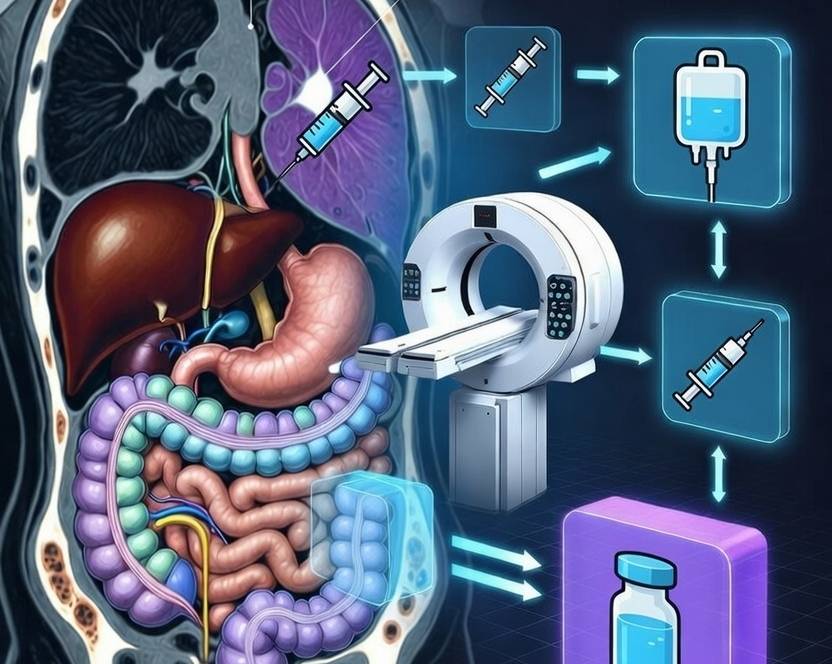
If your exam includes contrast, the delivery equipment matters as much as the scanner. SATMED Health engineers the systems behind every injection.
Contrast injector systems built for controlled, consistent delivery — the right dose at the right moment, every time.
Learn more →Engineered syringes for smooth, low-pressure injections that reduce discomfort and protect the vessel at the IV site.
Learn more →Patient lines and accessories designed for safe, reliable contrast administration from injector to vein.
Learn more →Contrast management solutions that help departments prepare, verify, and track every dose before it reaches a patient.
Learn more →Keep reading
More free, clinician-reviewed guides from SATMED Health.
Sources
- American College of Radiology. ACR Accredited Facilities Database.
- RadiologyInfo.org (ACR · RSNA · ASRT). How to Read Your Chest X-ray Report.
- American College of Radiology. ACR Manual on Contrast Media — current edition.
Your images, your right, your archive
Browse more free imaging guides or reach out with any question.
Contact SATMED HealthMedical disclaimer: This article is for education only and is not medical advice, diagnosis, or treatment. Always follow the instructions of your imaging facility and your own physician. If you think you are having an emergency, call 911 (or your local emergency number) immediately.
Please note: SATMED Health is not a medical facility. Please contact your physician with specific medical questions or for a referral to a radiologist. To locate an accredited medical imaging provider in your community, search the ACR accredited facilities database. This website does not provide cost information; imaging costs vary by region.