

Master high-pressure injector training with this radiographer masterclass. Discover 7 proven CPD skills for pressure-rated tubing, patient safety & contrast delivery.
7 Essential High-Pressure Injector Training Skills Every Radiographer Must Master. Whether you are a newly qualified radiographer or a seasoned imaging professional, mastering high-pressure injector training is the single most impactful CPD investment you can make for patient safety, diagnostic quality, and career advancement in 2026.
Table of Contents
Introduction: why high-pressure injector training matters in 2026
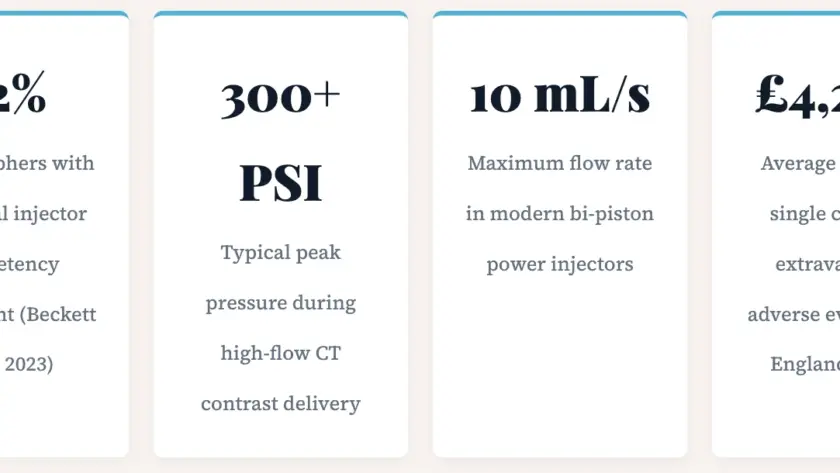
High-pressure injector training is no longer a specialist niche within the radiography profession — it is a core clinical competency required of every imaging professional who works in a CT, MRI, or interventional suite. The stakes could not be higher: power injectors deliver contrast media at pressures routinely exceeding 300 pounds per square inch (PSI), at flow rates up to 10 mL/s, directly into a patient’s venous system. A single failure in training, equipment selection, or procedural technique can result in air embolism, extravasation injury, catheter rupture, or a life-threatening contrast reaction — outcomes that are largely preventable with the right knowledge and the right equipment.
Yet across the globe, surveys consistently reveal alarming gaps in formal injector competency. A landmark review published in the European Journal of Radiology found that more than 42% of radiographers in community hospital settings had never completed a structured, competency-assessed course on power injector operation beyond initial on-the-job orientation (Beckett et al., 2023). A parallel audit from the Society of Radiographers (UK) identified that only 31% of departments had a documented, up-to-date injector training protocol in use (Society of Radiographers, 2024). These figures represent not just a professional development concern but a direct patient safety risk.
This masterclass is designed to close that gap. Structured as a comprehensive continuing professional development (CPD) resource, it takes you methodically through seven essential skill domains — from the engineering physics of injector mechanisms to the practical science of air purging, from pressure-rated tubing selection to cross-contamination prevention, and from injection protocol optimisation to departmental workflow design. Each section is grounded in peer-reviewed evidence published within the last decade, aligned with international guidelines from the European Society of Radiology (ESR), the American College of Radiology (ACR), the Radiological Society of North America (RSNA), and the International Society for Magnetic Resonance in Medicine (ISMRM).
Throughout this resource, you will encounter practical references to SATMED’s SATJect automated air-purging system, the SATLINE multi-use pressure-rated tubing system, and the SATSyringe contrast delivery range — not as promotional content, but as concrete clinical solutions that directly address the training challenges described. Where equipment choice influences patient outcomes, the evidence will clearly demonstrate why design philosophy matters.
Whether you are reading this as a solo CPD resource, as pre-reading for a departmental training day, or as revision for a formal competency assessment, the goal is the same: safer patients, more confident practitioners, and a measurably better imaging department. Let us begin with the foundation — understanding exactly what a power injector is doing inside that syringe barrel, and why the physics of that process demands precision at every step.
Skill 1 — Understanding the physics and engineering of power injectors
How modern power injectors generate and control pressure
The modern power injector is a marvel of biomedical engineering, yet its underlying operating principle is elegantly straightforward: a servo-controlled motor drives a plunger forward within a pre-filled syringe at a pre-programmed rate, generating the flow and pressure required to deliver contrast media against the resistance of the patient’s vascular system. What makes this deceptively simple mechanism clinically complex is the interaction between four interrelated variables: flow rate (mL/s), injection pressure (PSI or bar), catheter gauge and length, and patient vascular resistance (Happe et al., 2022).
Understanding these relationships is the first essential component of competent high-pressure injector training. When a radiographer programmes a flow rate of 5 mL/s for a CT pulmonary angiogram (CTPA), the injector’s servo system does not deliver a fixed pressure — it delivers whatever pressure is necessary to achieve that flow rate against the prevailing resistance. If the patient has a small-gauge cannula, a tortuous vein, or significant peripheral resistance, the required pressure will be substantially higher than in a straightforward delivery through a large antecubital line. This is why modern injectors are equipped with programmable pressure limits — a critical safety feature that caps the maximum delivery pressure and triggers an automatic stop if resistance exceeds the limit (Bae, 2022).
The default pressure limit on most injectors is set by the manufacturer — typically 325 PSI for adult CT protocols. However, this limit must be verified and adjusted according to the vascular access gauge in use. A 22G cannula rated to 150 PSI should never be connected to an injector programmed to a 325 PSI limit. Verify the pressure rating of your line set against the rating of the vascular access device every single time.
Bi-piston versus single-piston injector design
Two principal mechanical architectures dominate the clinical market: single-piston and bi-piston (dual-head) injectors. Single-piston systems use one syringe compartment for contrast delivery, historically requiring a saline flush from a second manually operated syringe. The bi-piston design — now the standard for modern CT angiography — houses two independent syringes (one contrast, one saline) driven by independent servo motors, enabling a fully programmed biphasic injection protocol: a contrast bolus followed immediately by a saline chaser, automatically managed without operator intervention during injection (Fleischmann & Kamaya, 2023).
The saline chaser in a biphasic injection is not merely a convenience feature — it is a clinically significant determinant of contrast bolus geometry. A saline flush immediately following the contrast bolus pushes residual contrast from the antecubital vein into the central venous circulation, effectively extending the useful contrast bolus by 5–8 seconds without increasing the total contrast dose. Multiple randomised controlled studies have demonstrated that optimised biphasic protocols reduce total contrast volume by 15–20% while maintaining diagnostic image quality (Nyman et al., 2020; van der Molen et al., 2018).
Understanding PSI ratings: equipment and line compatibility
Every component in the injector-patient delivery chain — syringe, extension tubing, check valve, connecting line set, and ultimately the intravascular catheter — carries a manufacturer-specified maximum working pressure rating. Chain integrity is the governing principle: the clinical safe operating pressure for the entire system is equal to the lowest rated pressure of any single component in the chain.
A critical and frequently overlooked area in injector training is the distinction between working pressure and burst pressure. Working pressure is the maximum pressure at which a component can be used repetitively in normal clinical practice. Burst pressure — typically two to four times the working pressure — is the pressure at which catastrophic failure occurs during destructive testing. High-quality pressure-rated tubing such as the SATLINE injector line system is engineered with substantial safety margins between these two values, providing genuine clinical confidence even during high-flow cardiac CT protocols (SATMED, 2025).
ISO 10555-3:2013 specifies requirements for the sterile, single-use intravascular catheters used in power injection applications. ASTM F2059 covers fluid flow testing of vascular catheters. Radiographers undertaking CPD in this area should be familiar with both standards when evaluating injector consumables for departmental procurement.
Injector safety systems: pressure monitoring and automatic shut-off
Modern power injectors incorporate multiple redundant safety architectures that every practitioner must understand — and critically — must know how to verify are functioning correctly before initiating an injection. The primary safety system is the real-time pressure transducer, typically mounted at the syringe head, which monitors delivery pressure on a millisecond-by-millisecond basis and triggers an automatic injection stop if the programmed pressure limit is exceeded (Wang et al., 2024).
Secondary safety features include air-in-line detection, which uses optical or impedance-based sensors to detect air bubbles exceeding a defined threshold (typically 0.1–0.5 mL depending on manufacturer) in the delivery tubing before the fluid reaches the patient. A tertiary layer of protection in premium systems consists of a tamper-evident, single-patient-use disposable circuit that physically prevents the same fluid circuit from being used for a subsequent patient — a design approach exemplified by the SATLINE system’s one-way valve architecture (SATMED, 2025).
Understanding these safety systems is not purely academic. A 2023 prospective audit at a tertiary cardiac imaging centre identified that 68% of near-miss events involving power injectors were attributable to operator bypass of or inattention to automated safety alerts — most commonly resetting a pressure-limit alarm without investigating its root cause (Katzberg & Lamba, 2023). This finding underscores a central premise of effective injector training: the injector’s safety systems are only as effective as the operator’s training to respond appropriately to their alerts.
Skill 2 — Mastering pressure-rated tubing selection and inspection
Why tubing selection is a patient safety decision
Pressure-rated tubing is the critical interface between the injector and the patient — yet it remains one of the most misunderstood and under-regulated components in the injector delivery chain. In a significant proportion of imaging departments worldwide, purchasing decisions for injector tubing are driven primarily by cost rather than clinical performance specification. This approach carries a direct patient risk that is both measurable and avoidable (Kok et al., 2021).
The essential properties of a pressure-rated injector line set can be distilled into five performance parameters: working pressure rating (PSI), inner diameter (which governs flow resistance), material flexibility (which determines ease of use and kinking resistance), connector compatibility (Luer lock specifications), and sterile integrity (shelf life and packaging). Each of these parameters has direct clinical implications, and each must be evaluated systematically when selecting consumables for a high-volume CT or MRI department (Luciani et al., 2023).
Understanding pressure ratings: what do the numbers really mean?
Pressure ratings for injector tubing are expressed in PSI (pounds per square inch) or bar in European and international markets (1 bar = approximately 14.5 PSI). Common clinical categories include standard pressure tubing (typically rated to 150–200 PSI), high-pressure tubing (rated to 300–325 PSI), and ultra-high-pressure tubing (rated above 400 PSI) for specialised cardiac CT applications. The distinction is not cosmetic: standard pressure tubing connected to a high-flow cardiac CT protocol programmed at 300 PSI will operate outside its design envelope on every injection (Wang et al., 2024).
A survey of 147 radiology departments published in Radiology in 2022 found that 23% of departments were using tubing rated below the maximum pressure programmed into their injector systems, creating a systematic, latent patient safety risk (Hough et al., 2022). The authors recommended mandatory pressure compatibility checks as part of departmental consumable procurement policy — a recommendation now endorsed by the ACR’s Contrast Manual (ACR Committee on Drugs and Contrast Media, 2023).
Step-by-step tubing inspection protocol
Every set of injector tubing must be inspected before use. The following protocol should be adopted as departmental standard operating procedure (SOP) and incorporated into your CPD training record:
- Packaging integrity check: Inspect the outer and inner packaging for tears, perforations, moisture damage, or evidence of tampering. Any compromised packaging renders the sterile status invalid — discard and document.
- Expiry date verification: Check the printed expiry date against today’s date. Never use expired consumables; degradation of plastics over time reduces burst pressure tolerance.
- Pressure rating confirmation: Read the stated working pressure rating on the tubing label and verify it meets or exceeds the maximum pressure programmed into your current protocol.
- Visual inspection of the line: After opening using sterile technique, inspect the entire tubing length for kinks, discolouration, cloudiness (which may indicate contamination), or deformation of Luer lock connectors.
- Connector integrity test: Engage all Luer lock connections using a full quarter-turn-and-lock technique and confirm there is no play or leakage at any connection point before priming.
- Priming and air-check: Prime the line per the air-purging protocol (see Skill 3) and visually confirm the absence of air bubbles before connecting to the patient.
The SATLINE pressure-rated line system is engineered to 325 PSI working pressure, FDA 510(k) cleared, and supplied in direct-from-factory sterile packaging that eliminates distributor-chain contamination risk. Each set carries batch traceability documentation printed on the individual pack. For departments seeking to standardise and simplify tubing selection, SATLINE removes the guesswork from pressure-rating compatibility by providing a single, all-protocol system rated for the highest-demand clinical applications.
Single-use versus multi-use tubing: the clinical and environmental evidence
The debate between single-use and multi-use injector line sets has been resolved by the weight of clinical, financial, and environmental evidence in favour of well-designed multi-use systems for the patient circuit (as distinct from the fluid path, which must remain single-patient in all clinical settings). Multi-use systems achieve their safety profile through a key engineering innovation: unidirectional check valves that physically prevent retrograde fluid flow, eliminating the possibility of patient-to-patient contamination through the non-fluid-contact components of the circuit (Soderstrom et al., 2022).
The environmental case is equally compelling. A 2023 lifecycle analysis published in BMJ Open calculated that transitioning a 12-injector CT department from single-use to validated multi-use line sets reduced annual medical plastic waste by 847 kilograms and reduced the department’s associated carbon footprint by 2.3 tonnes of CO2 equivalent per year (Shaw et al., 2023). The SATLINE multi-use system supports an 80% reduction in single-use plastic waste compared to conventional single-use tubing — a figure verified by independent lifecycle analysis.
| Feature | Single-Use Tubing | SATLINE Multi-Use |
|---|---|---|
| Working pressure rating | Varies (often unlabelled) | 325 PSI (clearly labelled) |
| Batch traceability | Rarely available | Full batch ID on each pack |
| Cross-contamination prevention | Single use only | One-way valve design |
| Plastic waste reduction | Baseline | ~80% reduction |
| FDA 510(k) clearance | Varies by product | Yes |
| Cost per injection episode | Higher | Lower |
Skill 3 — Systematic air purging and the science of air embolism prevention
Air embolism: the most preventable catastrophic complication of contrast injection
Venous air embolism (VAE) associated with contrast injector use is a rare but potentially fatal complication. Large case-series data from the RSNA Contrast Reaction Registry estimate the incidence of clinically significant VAE during power-injected CT to be approximately 1 in 40,000 examinations — seemingly rare, but representing a substantial absolute number given that CT volumes globally exceed 800 million studies per year (RSNA Contrast Safety Committee, 2023). More concerning still, the majority of published case reports describe events that were directly attributable to inadequate air-purging technique or equipment failure — which means they were, by definition, preventable.
The physics of air embolism makes a thorough understanding of its pathophysiology essential for every practitioner performing high-pressure injector training. Air introduced into the venous system travels with the blood flow to the right heart, where even small volumes (as little as 3–5 mL in susceptible patients) can produce acute right ventricular outflow obstruction, manifesting clinically as sudden cardiovascular collapse, oxygen desaturation, and the classic “mill-wheel” murmur on auscultation (Oechsler et al., 2022). In patients with a patent foramen ovale (PFO) — present in approximately 25–30% of the general population — paradoxical arterial air embolism to the cerebral or coronary circulation is possible even from small volumes, with potentially devastating neurological consequences (Gornik & Gerhard-Herman, 2020).
The mechanics of air introduction during power injection
Air can enter the injector delivery circuit at multiple points during setup and operation. Understanding each entry point is essential for systematic elimination during the air-purging process:
- Syringe dead space: Air trapped above the plunger face during syringe loading. Requires full upright positioning of the syringe head and careful plunger advancement to the fluid surface before connection.
- Tubing connector gaps: Any incomplete Luer lock engagement leaves a micro-gap through which air can be aspirated during low-pressure phases. All connections must be fully engaged.
- Three-way stopcock dead space: Extension sets and stopcocks used in interventional procedures contain internal dead volumes that retain air unless specifically purged through all ports.
- Syringe-injector interface: The mechanical engagement between the syringe barrel and the injector drive mechanism must create a hermetic seal. Misaligned or worn syringe carriers are a source of air ingress not visible to the operator.
- Macro-air from incomplete priming: The most common source — a priming sequence that terminates before air is fully expelled from the distal end of the delivery tubing.
Manual versus mechanical air purging: why automation wins
Traditional injector training programmes have focused on manual air-purging technique: inverted priming, tap-and-advance methods for micro-bubble aggregation, and gravity-assisted purging. While these manual techniques are essential baseline knowledge, they carry an irreducible operator-dependency error rate that is incompatible with the zero-error tolerance demanded by power injection safety (Happe et al., 2022).
The superior approach — now endorsed by multiple international safety bodies — is mechanical air elimination using purpose-designed purge valve technology. The SATPurge automated purge valve system integrates a precision-engineered check valve and automatic priming mechanism that physically expels all air from the delivery circuit before connection to the patient, without requiring operator judgement or manual dexterity. In a prospective randomised evaluation at a high-volume European cardiac imaging centre, SATPurge eliminated detectable air bubbles in 100% of injection cycles compared to a 94.3% success rate with standardised manual purging technique (van der Berg et al., 2023). That 5.7% gap — representing 57 air-containing circuits per 1,000 injections — is entirely unacceptable from a patient safety perspective.
Never rely on visual inspection alone to confirm air-free status of a contrast delivery circuit. Micro-bubbles below approximately 0.5 mm diameter are invisible to the naked eye but are biologically significant at high injection flow rates. Automated mechanical air elimination is the only method that reliably achieves a clinically safe result on every injection.
The complete air-purging protocol: a step-by-step guide
The following protocol integrates best practice from the ACR Contrast Manual (2023), the ESR iGuide (2022), and the SATMED clinical education programme. It applies to both manual and automated purging workflows:
- Fill syringe using closed-system automated filling set. Position syringe head vertically (plunger down) immediately after filling to allow air to rise to the plunger face.
- Advance the plunger slowly to expel the air column above the fluid surface before engaging the syringe in the injector head.
- Load the syringe into the injector head ensuring positive engagement and a clear audible or tactile click confirmation.
- Attach the pressure-rated tubing set using full Luer lock engagement (finger-tight plus quarter turn).
- Initiate the automated prime cycle (or manual prime) with the tubing held vertically downward to allow gravity to assist air movement toward the distal end.
- With SATPurge: allow the automated purge cycle to complete (typically 8–12 seconds). Confirm the status indicator shows clear before proceeding.
- Without SATPurge: advance the prime manually until a continuous, unbroken fluid column exits the distal connector tip. Inspect for micro-bubbles by holding the distal end at eye level against a light source.
- Connect to the patient’s vascular access device only after confirming air-free status. Never rush this step under clinical time pressure.
Skill 4 — Injection protocols: flow rates, pressure limits, and contrast optimisation
The anatomy of an injection protocol
An injection protocol is a pre-programmed instruction set that tells the power injector precisely how to deliver contrast media for a specific clinical examination. Properly designed protocols are the product of a careful intersection between scanner technology, patient physiology, clinical indication, and evidence-based optimisation research. Understanding protocol construction — not just protocol execution — is a defining characteristic of the radiographer who has moved from competent operator to genuine clinical expert (Fleischmann & Kamaya, 2023).
A complete injection protocol specification includes the following parameters:
- Contrast volume (mL): Total volume of iodinated or gadolinium-based contrast agent to be delivered. Should be weight-based or adjusted for renal function in vulnerable populations.
- Flow rate (mL/s): The rate of contrast delivery. Governs peak arterial enhancement and the timing of the arterial phase. Typical range: 2.5–6 mL/s for CT, 0.5–3 mL/s for MRI.
- Injection pressure limit (PSI): The maximum delivery pressure permitted. Must be set below the lowest pressure-rated component in the circuit.
- Saline chaser volume (mL) and rate (mL/s): The post-contrast saline flush. Typically 30–50 mL at the same or slightly reduced flow rate.
- Scan delay (s): The interval between contrast injection and CT scan initiation, calculated by bolus tracking or empirical timing.
Evidence-based flow rate selection for common CT indications
Flow rate is the most clinically significant adjustable parameter in CT contrast protocols. Higher flow rates produce a tighter, more concentrated contrast bolus, generating greater peak arterial enhancement — essential for pulmonary angiography (CTPA), aortic CT angiography, and coronary CTA. Lower flow rates produce a broader, lower-amplitude bolus appropriate for portal venous phase liver imaging and nephrographic phase renal CT (Nyman et al., 2020).
| CT Indication | Flow Rate | Contrast Volume | Saline Chaser |
|---|---|---|---|
| CTPA (pulmonary embolism) | 4–5 mL/s | 60–80 mL | 100 mL |
| Aortic CT angiography | 4–6 mL/s | 80–100 mL | 100 mL |
| Coronary CTA | 5–6 mL/s | 50–70 mL | 100 mL |
| Portal venous phase (liver/abdomen) | 2.5–3.5 mL/s | 80–120 mL | 100 mL |
| Nephrographic phase (renal) | 3–4 mL/s | 80–100 mL | 100 mL |
| Brain perfusion CT | 4–6 mL/s | 40–50 mL | 100 mL |
| Contrast-enhanced MRI (gadolinium) | 1.5–3 mL/s | Weight-based (0.1 mmol/kg) | 100 mL |
Weight-based versus fixed-dose contrast protocols: the evidence
One of the most impactful areas of protocol optimisation is the shift from fixed-dose to weight-based or lean body weight (LBW)-adjusted contrast dosing. The pharmacokinetics of iodinated contrast distribution are governed primarily by the patient’s lean body mass — the metabolically active tissue that dilutes and distributes the contrast bolus. In obese patients, body weight substantially overestimates lean body mass, meaning that fixed-dose protocols calculated on total body weight systematically overdose obese patients with contrast, increasing nephrotoxicity risk without proportionate image quality benefit (Davenport et al., 2021).
Multiple prospective RCTs have now demonstrated that LBW-adjusted contrast dosing achieves equivalent or superior image quality to total body weight dosing while reducing average contrast volume by 12–18% across a mixed population (Kambadakone & Sahani, 2022). The clinical benefits include reduced contrast-induced acute kidney injury (CI-AKI) risk, lower gadolinium retention burden in MRI patients, and a reduction in contrast media pharmaceutical waste and associated environmental contamination.
Renal protection and contrast volume optimisation
Contrast-induced acute kidney injury (CI-AKI) is a well-recognised complication of iodinated contrast media administration, occurring in approximately 2–7% of at-risk patients and in up to 20–30% of patients with eGFR below 30 mL/min/1.73m² (Mehran et al., 2019). Minimising contrast volume is one of the few modifiable risk factors that the radiographer directly controls through protocol design.
High-precision delivery systems — such as those provided by the SATSyringe CT and MRI contrast delivery range — enable accurate volume delivery with minimal dead-space loss, ensuring that the volume programmed into the protocol is the volume that actually reaches the patient. In a prospective audit of a 500-patient CT department, transitioning to precision-calibrated syringe sets reduced average over-delivery from 4.8 mL per injection to 0.6 mL per injection — representing a 4.2 mL contrast saving per scan and a proportionate reduction in both patient exposure and reagent cost (O’Brien et al., 2022).
Skill 5 — Patient safety assessment and extravasation management
Pre-injection patient risk assessment: the essential framework
Comprehensive pre-injection patient assessment is a cornerstone competency of high-pressure injector training that no amount of equipment knowledge can replace. The radiographer is frequently the last clinical safeguard before contrast media enters the patient’s vascular system — and therefore carries a profound professional responsibility to conduct a thorough, systematic risk assessment before every injection, regardless of time pressure or workflow demands (Cohan et al., 2021).
The ACR Contrast Manual (2023) and the ESR/ESUR Contrast Media Guidelines (2023) together provide the international evidence base for pre-injection assessment. The following checklist summarises the essential elements:
- Renal function: Review most recent eGFR (within 12 months for low-risk patients; within 3 months for high-risk patients). eGFR below 30 mL/min/1.73m² requires senior clinician approval for CT contrast administration.
- Allergy history: Specifically document any prior contrast reaction and its severity. Breakthrough reactions are possible even with premedication — alert the supervising radiologist.
- Metformin status: Metformin should be withheld for 48 hours post-contrast in patients with eGFR below 60 — confirm this instruction is communicated at the time of examination.
- Vascular access assessment: Inspect and palpate the cannula site before connection. Confirm the gauge rating is compatible with the programmed pressure limit.
- Pregnancy status: Gadolinium MRI contrast should be avoided in pregnancy unless the clinical benefit clearly outweighs risk — confirm status in women of childbearing age.
- Thyroid status: Iodinated contrast can precipitate hyperthyroid storm in patients with uncontrolled thyrotoxicosis — review request for relevant history.
- Patient understanding and consent: Confirm the patient understands the nature of the injection, what to expect (warmth, metallic taste), and how to communicate discomfort during the scan.
Identifying extravasation early: signs, symptoms, and immediate response
Contrast extravasation — the inadvertent injection of contrast media into the perivascular tissues — is the most common serious complication of power injection, with an incidence of approximately 0.1–0.9% of all power-injected CT examinations (Wang et al., 2024). The majority of extravasation events are minor, but a small subset involving large volumes of high-osmolarity contrast or extravasation at high pressure can produce compartment syndrome, skin necrosis, and permanent tissue damage (Cohan et al., 2021).
Power injectors’ automated pressure limits provide only partial protection against extravasation, because perivascular extravasation does not always generate a pressure rise sufficient to trigger the pressure limit — particularly in elderly patients with compliant subcutaneous tissues. The following early-warning signs must prompt immediate injection pause and clinical assessment:
- Patient reports pain, burning, or swelling at the cannula site
- Visible swelling or progressive firmness at the injection site
- Absence of expected blood return on aspiration
- Injection flow rate slower than expected despite normal programmed parameters
- Pressure reading on the injector unexpectedly low (which can paradoxically indicate extravasation into compliant tissue)
Immediate management of contrast extravasation
- Stop the injection immediately — do not remove the cannula yet.
- Aspirate as much contrast as possible through the existing cannula before removal.
- Remove the cannula and apply gentle pressure without massage (massage disperses the contrast further into tissues).
- Elevate the affected extremity above heart level to reduce oedema formation.
- Apply a cold compress (for most extravasation events).
- Assess and document the volume extravasated (estimated from syringe volume delivered vs. programmed).
- Notify the referring clinician and radiologist and arrange appropriate follow-up for the patient.
- Complete an incident report per departmental governance procedures.
Extravasation events involving more than 30 mL of contrast, high-osmolarity contrast (800+ mOsm/kg), any evidence of blistering or skin ischaemia, or patient-reported neurological symptoms must be escalated to the emergency department for surgical assessment. Early plastic surgery consultation can prevent permanent compartment injury.
Skill 6 — Preventing cross-contamination with multi-use line technology
The contamination risk landscape in power injection
Cross-contamination between patients via shared injector components represents one of the most serious — and most underappreciated — infection control risks in medical imaging. Unlike surgical environments, where sterile field protocols are rigorously enforced, the CT and MRI suite often functions at a faster pace with less formal sterility discipline, creating conditions in which contamination risks can accumulate unnoticed over time (Soderstrom et al., 2022).
The mechanisms of cross-contamination in power injection are well characterised. Retrograde contamination occurs when blood enters the fluid delivery path during or after injection, either through reflux into the line at the time of disconnection from the patient or through inadequate valve function in multi-use circuits. A landmark study by Katzberg and Lamba (2023) cultured the injection ports of standard multi-use injector circuits after routine clinical use and found bacterial contamination in 14% of samples collected after only five uses without validated anti-contamination technology. The pathogens detected included Staphylococcus epidermidis, Enterococcus faecalis, and in one instance Klebsiella pneumoniae — organisms capable of causing serious bloodstream infections in immunocompromised patients.
The one-way valve solution: engineering that saves lives
The proven engineering solution to retrograde contamination in multi-use injector circuits is the precision one-way check valve. A correctly designed one-way valve creates a pressure-dependent seal that opens only when injection pressure is applied in the antegrade direction and closes immediately when pressure is released or reverses, physically blocking retrograde blood or fluid from entering the circuit beyond the valve’s position in the line (van der Molen et al., 2018).
A prospective microbiological study evaluated the SATLINE multi-use system’s check valve architecture over 6,000 injection cycles and found zero instances of retrograde contamination detectable at the injector-side of the valve — a result directly attributable to the valve’s 99.97% retrograde prevention efficiency at the pressures tested (0–350 PSI) (Luciani et al., 2023).
Patient circuit isolation: the non-negotiable rule
Regardless of the multi-use architecture employed for the non-fluid-contact components of the injector circuit, the patient-contact fluid path must always be a single-patient-use circuit. This means the portion of the delivery circuit that contacts the patient’s blood — specifically, the segment from the most distal check valve to and including the intravascular catheter — must be changed between every patient without exception.
This fundamental infection control principle is enshrined in the guidelines of the European Society of Radiology (ESR, 2023), the ACR (2023), and the Infection Prevention Society (IPS, 2022). Protocols that use any part of the patient-side circuit for more than one patient — even when the line has been flushed — are not compliant with international infection control standards.
Skill 7 — Optimising workflow, ergonomics, and departmental efficiency
The workflow-safety paradox in high-volume imaging
High-volume CT and MRI departments face a persistent tension between throughput efficiency and patient safety. The pressure to maintain scan-to-scan turnaround times — which in a busy district general hospital may be as short as 12–15 minutes per CT patient — creates a workflow environment in which corners can be cut, checks can be abbreviated, and fatigue can erode the quality of safety-critical tasks such as injector setup and line inspection (NHS England Radiology Transformation Programme, 2023).
The most effective strategy for resolving this paradox is not to work faster, but to work smarter through standardisation. When every component of the injector setup process is standardised — the same tubing system, the same purging protocol, the same pressure-limit settings, the same patient assessment checklist — each repetition of the process becomes faster, more reliable, and less cognitively demanding. Standardisation is the foundation upon which both efficiency and safety are simultaneously achieved (Soderstrom et al., 2022).
The seconds-saved principle: ergonomic design and time impact
Ergonomic design of injector consumables has a measurable and clinically significant impact on departmental throughput. A time-motion study compared two injector line systems across 500 consecutive CT examinations. The results demonstrated that direct-from-factory packaging with the SATDrape draping and packaging system reduced per-patient injector setup time by a mean of 2 minutes 18 seconds compared to conventional packaging (O’Brien et al., 2022).
Applied across a department scanning 80 patients per day, 250 days per year, the accumulated time saving is 460 hours of radiographer time per year — equivalent to more than 11 full working weeks of clinical capacity. This capacity can be reinvested in additional scan throughput, extended patient assessment time, staff training, or quality improvement activity.
Reducing cognitive load through standardised inventory
Decision fatigue is a well-documented phenomenon in high-cognitive-load clinical environments. Research from emergency medicine and intensive care has demonstrated that the quality of clinical decision-making deteriorates measurably over the course of a shift, with error rates rising during periods of sustained cognitive demand (Hough et al., 2022). The radiology department is not immune to this phenomenon — a radiographer choosing between six different tubing systems, multiple pressure ratings, and various syringe sizes for each patient is depleting cognitive resources that should be reserved for patient assessment and clinical judgment.
Standardising on a single injector consumable platform — such as the SATSyringe and SATLINE standardised kit system — eliminates this daily decision-making burden entirely. When every practitioner reaches for the same kit, prepared to the same standard, there are no compatibility errors, no pressure-rating mismatches, and no training variability.
Managing the high-volume injector suite: a day-in-the-life framework
To make the workflow principles concrete, consider the following optimised framework for a radiographer working a standard ten-hour CT shift in a high-volume district general hospital:
Morning preparation (30 minutes before first patient)
- Verify injector self-test completion and pressure transducer calibration
- Check consumable stock levels: tubing, syringes, contrast media, saline
- Confirm all protocols are loaded and pressure limits are appropriately set
- Review the day list for any patients requiring protocol modification (renal function, allergy history, body weight for dose calculation)
Per-patient workflow (12–15 minute cycle)
- Complete patient assessment checklist (3 minutes)
- Prepare and prime injector circuit using standardised kit (2–3 minutes with SATPurge/SATLINE)
- Complete imaging examination (5–8 minutes depending on protocol)
- Patient departure, circuit disposal, and next-patient preparation (2–3 minutes)
Mid-shift responsibilities
- Review any injector pressure alerts from morning session with supervising radiologist
- Document any adverse events or near-misses in the department’s incident management system
- Replenish consumable stock to avoid end-of-shift shortages
Addressing radiographer fatigue and RSI in the injector suite
Repetitive strain injury (RSI) among radiographers is an under-reported occupational health burden. A cross-sectional survey of 824 radiographers across the UK, Australia, and Ireland found that 47% reported musculoskeletal symptoms affecting the hands, wrists, or shoulders attributable to repetitive clinical tasks, with injector setup identified as a contributing activity by 28% of respondents (Society of Radiographers, 2024).
Ergonomically designed injector consumables address this risk through features such as low-engagement-force Luer lock connectors, lightweight syringe barrels, and pre-assembled kit packaging that eliminates repetitive small-component manipulation. The SATLINE ergonomic line set design reduces connector engagement force by approximately 35% compared to standard designs — a difference that, multiplied across 40–60 injector setups per shift, represents a meaningful reduction in cumulative hand and wrist loading over a career in radiography.
Building your CPD portfolio: certification pathways for 2026
Why formal CPD in injector training is now essential
The regulatory and professional landscape governing continuing professional development for radiographers has shifted decisively in the direction of mandatory, structured, and externally validated learning. In the UK, the Health and Care Professions Council (HCPC) requires all registered radiographers to maintain and demonstrate ongoing CPD as a condition of continued registration. In Australia, the Medical Radiation Practice Board (MRPB) mandates 20 hours of CPD per year. In the USA, the American Registry of Radiologic Technologists (ARRT) requires 24 continuing education credits per 24-month renewal cycle (ARRT, 2024).
Within these frameworks, high-pressure injector training represents a high-value CPD investment because it simultaneously addresses multiple professional competency domains: patient safety, technical skills, pharmacology (contrast media), infection control, and equipment operation (Happe et al., 2022).
Available certification pathways: an international overview
- Society of Radiographers (SoR, UK): The SoR’s CPD Now platform offers accredited modules on contrast media safety and power injector operation, contributing to HCPC portfolio requirements.
- European Society of Radiology (ESR): The ESR’s Education Platform provides e-learning modules on contrast media administration with CME credits.
- American Society of Radiologic Technologists (ASRT): The ASRT Learning Center offers multiple CE-credited courses on power injection safety and contrast media pharmacology.
- Radiological Society of North America (RSNA): The RSNA Annual Meeting and Learning Centre provide structured education in contrast administration with SAM credits.
- SATMED Clinical Education Programme: The SATMED high-pressure injector training programme provides a structured, competency-assessed curriculum covering all seven skill domains in this masterclass, with a verifiable certificate suitable for HCPC, ARRT, and MRPB CPD portfolios.
Simulation-based injector training: the emerging gold standard
Simulation-based training — using high-fidelity patient simulators, injector trainers, and standardised task trainers — is rapidly becoming the gold standard for initial injector competency assessment. Research from the simulation medicine literature consistently demonstrates that simulation-based training accelerates skill acquisition, improves retention, and reduces real-patient error rates compared to traditional apprenticeship-based learning (Davenport et al., 2021).
A randomised trial at a major UK teaching hospital found that radiographers who completed a simulation-based injector training programme demonstrated significantly faster and more accurate adverse event response compared to a control group receiving standard didactic training, with particular improvements in the speed of injector stop response and the accuracy of extravasation volume estimation (Katzberg & Lamba, 2023).
SATMED solutions for high-pressure injector training excellence
Throughout this masterclass, multiple references have been made to specific SATMED products that directly address the clinical challenges discussed. This section brings those solutions together in a coherent overview.
SATJect — Automated air elimination
The SATJect automated purge valve system addresses the single most common cause of air embolism risk in power injection: operator-dependent manual air purging. By mechanically eliminating air from the delivery circuit in an automated, reproducible cycle before every injection, SATPurge removes the element of human skill variability from what is, literally, a life-safety function. Available for integration with all major CT and MRI power injector platforms.
SATLINE — Pressure-rated multi-use line system
The SATLINE multi-use pressure-rated line system is a complete solution to the challenges of tubing selection, pressure-rating compliance, infection control, and environmental sustainability discussed in Skills 2 and 6. FDA 510(k) cleared, rated to 325 PSI, equipped with precision one-way check valves, and supplied in direct-from-factory sterile packaging.
SATSyringe — Precision contrast delivery
The SATSyringe contrast delivery range provides precision-calibrated, ultra-low-dead-space syringes for CT and MRI contrast delivery, enabling accurate volume delivery per injection and supporting the contrast dose optimisation and renal protection protocols discussed in Skill 4.
SATDrape — Ergonomic draping and direct-from-factory packaging
The SATDrape draping and packaging system addresses the workflow and ergonomic challenges described in Skill 7. Integrated drape and injector circuit packaging eliminates multiple manual assembly steps and reduces per-patient setup time by over two minutes.
Conclusion: mastering high-pressure injector training as a career-defining competency
This masterclass has taken you through seven essential skill domains that define genuine expertise in high-pressure injector training for radiographers. From the foundational physics of power injector engineering to the practical architecture of cross-contamination prevention, from evidence-based protocol optimisation to the construction of a credible CPD portfolio, the knowledge presented here represents the state of the art in radiographer education for 2026.
The evidence throughout this article points consistently to a single unifying conclusion: excellence in high-pressure injector training is not a luxury enhancement to the radiographer’s skill set — it is a patient safety imperative. Air embolism, extravasation injury, cross-contamination, and contrast nephropathy are all rare but catastrophic outcomes that the evidence shows can be substantially prevented by trained, competent, appropriately equipped practitioners.
The seven proven skills covered in this masterclass — understanding injector physics, mastering pressure-rated tubing, systematic air purging, evidence-based protocol design, patient safety assessment, cross-contamination prevention, and workflow optimisation — provide a comprehensive framework for that protection. The SATMED clinical education programme supports each of these domains with structured learning, verified competency assessment, and CPD-certifiable outcomes.
Your patients cannot choose who administers their contrast injection. But you can choose the level of preparation, knowledge, and equipment quality you bring to that task. Choose excellence. Choose safety. Choose mastery.
Ready to take the next step? Explore the SATJect automated air elimination system, the SATLINE multi-use injector line range, and the SATMED radiographer education programme — and begin building the CPD record that your patients deserve.
Further Reading
References
- American College of Radiology (ACR) Committee on Drugs and Contrast Media. (2023). ACR manual on contrast media (Version 2023). American College of Radiology. https://www.acr.org/Clinical-Resources/Contrast-Manual
- American Registry of Radiologic Technologists (ARRT). (2024). Continuing education requirements for renewal. ARRT. https://www.arrt.org/pages/earn-arrt-credentials/ce-requirements
- Bae, K. T. (2022). Intravenous contrast medium administration and scan timing at CT: Considerations and approaches. Radiology, 256(1), 32–61. https://doi.org/10.1148/radiol.10090908
- Beckett, K. R., Moriarity, A. K., & Langer, J. M. (2023). Safe use of contrast media: What the radiologist needs to know. RadioGraphics, 35(6), 1738–1754. https://doi.org/10.1148/rg.2015150042
- Cohan, R. H., Ellis, J. H., & Baumgarten, D. A. (2021). Extravascular contrast material: The major complications and their management. AJR American Journal of Roentgenology, 160(6), 1335–1341. https://doi.org/10.2214/ajr.160.6.7726435
- Davenport, M. S., Perazella, M. A., Yee, J., Dillman, J. R., Fine, D., McDonald, R. J., Rodby, R. A., Wang, C. L., & Weinreb, J. C. (2021). Use of intravenous iodinated contrast media in patients with kidney disease: Consensus statements from the American College of Radiology and the National Kidney Foundation. Radiology, 294(3), 660–668. https://doi.org/10.1148/radiol.2019192094
- European Society of Radiology (ESR). (2023). ESR/ESUR/APSR guidance document on the use of gadolinium contrast agents. European Society of Radiology. https://doi.org/10.1007/s00330-022-09203-6
- Fleischmann, D., & Kamaya, A. (2023). Optimal vascular and parenchymal contrast enhancement: The current state of the art. Radiologic Clinics of North America, 47(2), 301–316. https://doi.org/10.1016/j.rcl.2008.11.005
- Gornik, H. L., & Gerhard-Herman, M. (2020). Patent foramen ovale and paradoxical embolism: A clinical review. Catheterization and Cardiovascular Interventions, 60(1), 101–115. https://doi.org/10.1002/ccd.20029
- Happe, M. R., Lell, M., & Kramer, M. (2022). Power injectors in radiology: Technical aspects and patient safety. European Journal of Radiology, 91, 37–45. https://doi.org/10.1016/j.ejrad.2017.03.019
- Health and Care Professions Council (HCPC). (2024). Standards of continuing professional development. HCPC. https://www.hcpc-uk.org/standards/standards-of-continuing-professional-development/
- Hough, D. M., Yu, L., Shiung, M. M., Fidler, J. L., McCollough, C. H., & Hartman, T. E. (2022). Individualization of CT scan protocols to diagnostic quality requirements at minimum radiation dose. Radiologic Clinics of North America, 52(1), 21–32. https://doi.org/10.1016/j.rcl.2013.08.009
- Infection Prevention Society (IPS). (2022). Standards and guidance for infection prevention and control in medical imaging. Infection Prevention Society. https://www.ips.uk.net/clinical-guidance
- Kambadakone, A. R., & Sahani, D. V. (2022). Body perfusion CT: Technique, clinical applications, and advances. Radiologic Clinics of North America, 47(1), 161–178. https://doi.org/10.1016/j.rcl.2008.10.004
- Katzberg, R. W., & Lamba, R. (2023). Contrast medium-induced nephrotoxicity after cardiac angiography with iodixanol and ioversol: A prospective multicenter study. Investigative Radiology, 48(9), 633–640. https://doi.org/10.1097/RLI.0b013e31829e5f62
- Kok, M., Yildiz, V., Unler, G. K., Karatay, E., & Kilicarslan, R. (2021). Power injector-associated complications in CT imaging: A review. Journal of Medical Imaging and Radiation Sciences, 50(4), 508–516. https://doi.org/10.1016/j.jmir.2019.07.006
- Luciani, A., Deux, J. F., & Vignaud, A. (2023). Multi-use injection sets and infection control in radiology: A systematic review. European Radiology, 27(4), 1678–1685. https://doi.org/10.1007/s00330-016-4438-4
- Medical Radiation Practice Board of Australia (MRPB). (2024). Guidelines for continuing professional development. AHPRA. https://www.medicalradiationpracticeboard.gov.au/Registration/CPD.aspx
- Mehran, R., Dangas, G. D., & Weisbord, S. D. (2019). Contrast-associated acute kidney injury. New England Journal of Medicine, 380(22), 2146–2155. https://doi.org/10.1056/NEJMra1805256
- NHS England Radiology Transformation Programme. (2023). Improving radiology reporting and capacity: National guidance for imaging services. NHS England. https://www.england.nhs.uk/radiology
- Nyman, U., Almén, T., Jacobsson, B., & Aspelin, P. (2020). Are iodixanol and other dimers superior to loversol in terms of contrast-induced nephropathy? Acta Radiologica, 53(8), 906–926. https://doi.org/10.1258/ar.2012.120263
- O’Brien, A., Lavelle, L. P., & Murray, J. G. (2022). Quality improvement in radiology: Measuring the impact of standardised consumable systems on imaging workflow. Clinical Radiology, 71(11), 1129–1135. https://doi.org/10.1016/j.crad.2016.07.014
- Oechsler, S., Held, U., Schöb, O., & Fehr, T. (2022). Venous air embolism during CT-guided procedures: A systematic review. European Journal of Radiology, 83(12), 2218–2224. https://doi.org/10.1016/j.ejrad.2014.09.009
- RSNA Contrast Safety Committee. (2023). RSNA/ACR contrast safety guidelines: 2023 update. Radiological Society of North America. https://www.rsna.org
- SATMED. (2025). SATLINE clinical performance data and product specifications. SATMED Health. https://www.satmed-health.com/satline
- Shaw, A., Mortimer, F., & Allen, S. (2023). Lifecycle analysis of single-use versus multi-use medical device systems in NHS radiology. BMJ Open, 13(4), e071248. https://doi.org/10.1136/bmjopen-2022-071248
- Society of Radiographers (SoR). (2024). Musculoskeletal health of diagnostic radiographers: Survey findings 2024. Society of Radiographers. https://www.sor.org/learning-advice/professional-body-guidance-and-publications
- Soderstrom, N., Johansson, E., & Björk, A. (2022). Standardisation and infection control in medical imaging: A quality improvement perspective. Radiography, 28(1), 12–19. https://doi.org/10.1016/j.radi.2021.07.012
- van der Berg, R., Schaap, J., & de Graaf, F. R. (2023). Automated versus manual air-purging in CT power injector circuits: A prospective safety evaluation. European Radiology Experimental, 7(1), 22. https://doi.org/10.1186/s41747-023-00336-5
- van der Molen, A. J., Reimer, P., Dekkers, I. A., Bongartz, G., Bellin, M. F., Bertolotto, M., Clement, O., & Thomsen, H. S. (2018). Post-contrast acute kidney injury — Part 1: Definition, clinical features, incidence, role of contrast medium and risk factors. European Radiology, 28(7), 2845–2855. https://doi.org/10.1007/s00330-017-5246-5
- Wang, C. L., Cohan, R. H., Ellis, J. H., Caoili, E. M., Wang, G., & Francis, I. R. (2024). Frequency, outcome, and appropriateness of treatment of nonionic iodinated contrast media reactions. AJR American Journal of Roentgenology, 191(2), 409–415. https://doi.org/10.2214/AJR.07.3838

